

Brazil has three lessons for the Philippines. To move the country forward, the government should foster inclusive growth, shun oligarchic power and seek strategic autonomy.
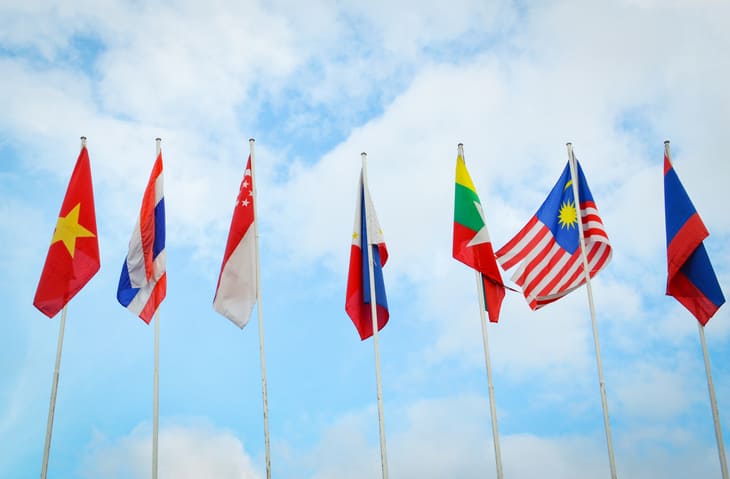
As Guest of the Chair at the ASEAN Summit, President Luiz Inácio Lula da Silva’s November 14–15 visit to Manila was historic; the first state visit by a sitting Brazilian president to the Philippines coincided with 80 years of diplomatic relations.
President Lula brings a great amount of development experience for trade and South-South cooperation. His lessons challenge the conventional wisdom that economic growth comes with social inequality, fiscal austerity and accommodation with entrenched economic elites.
Brazil and the Philippines share structural problems: concentrated wealth, political dynasties, inequality and external dependencies. Yet through his terms (2003-07, 2007-11, 2023-), Lula has demonstrated that another path is possible. He has been able to combine macroeconomic stability with redistribution, productive investment and greater international autonomy.
Today, the Philippines stands at stagnant crossroads risking the country’s future for decades to come. In this fatal junction, Lula’s achievements could offer a different and a more humane development path.
Winning against domestic odds and external intervention
Lula’s fourth electoral victory is remarkable. On October 25, he defeated Flávio Bolsonaro with 51.8% of valid votes against 48.2%. It was a rejection of the political movement associated with former president Jair Bolsonaro, whose attempted subversion of Brazil’s democratic institutions culminated in the January 8, 2023 assault on Congress, the Supreme Court and the presidential palace.
Jair Bolsonaro was subsequently convicted of plotting a coup and sentenced to 27 years in prison.
In late October, Reuters reported that Trump administration officials sought to weaken Lula and assist the Bolsonaro family’s political restoration through diplomatic pressure, sanctions and trade measures – despite allegations of extensive Bolsonaro corruption.
The Philippines confronts its own institutional crisis. The flood-control corruption scandal has exposed the staggering expenses of patronage and weak accountability.
Coupled with extreme climate, governance failures have disastrous, possibly catastrophic costs.
Stability, redistribution and rising wages
In Brazil, Lula managed to couple macroeconomic stability, redistribution, and rising wages, with employment creation and public investment. His first administration retained some elements of Fernando Henrique Cardoso’s inflation targeting, fiscal responsibility and a floating exchange rate.
Finance Minister Antonio Palocci and Central Bank President Henrique Meirelles reassured financial markets. Despite the Fed’s post-2008 money-printing, Guido Mantega, a developmentalist economist, strengthened public investment, industrial development and domestic demand. Economist Nelson Barbosa contributed to the evolving policy framework.
The results were impressive. Bolsa Família consolidated conditional cash transfers, reaching more than 11 million families by 2006. Real minimum wages rose dramatically; formal employment expanded; and public investment increased.
Growth through inclusion, not austerity
The Philippines has some positive experiences of this model. But what remains inadequately developed is the broader Lula combination of sustained real wage growth, industrial policy, employment formalization, rural development and public investment.
Between 2001 and 2011, poverty in Brazil fell from 38% to 21%, while the Gini coefficient declined from 0.64 to 0.56. The 2008 global financial crisis was met with countercyclical stimulus rather than austerity imposed on workers and poorer households.
Transfers strengthened consumption. Higher wages expanded domestic markets. Formal employment increased household security. And investment supported productive capacity.
Favorable commodity prices helped, but policy determined how much prosperity reached ordinary Brazilians.
Confronting oligarchic dynasties
Here lies the most difficult lesson. Economic inequality cannot be durably reduced while political power remains concentrated in families and business groups benefiting from the existing distribution of wealth.
The Philippines is particularly vulnerable. Political dynasties dominate national and local politics, frequently overlapping with conglomerates controlling finance, infrastructure, utilities and land.
Compounding challenges, dynastic concentration interacts with poverty and the absence of independent economic competition.
The problem is not simply individual corruption; it is a political economy in which economic dependence reinforces political dependence.
Redistribution with political reform
Brazil is hardly free of these problems. Lula governed through coalitions with conservative parties and powerful economic interests. Yet his political base among workers, organized labor, lower-income households and social movements provided a counterweight to entrenched elites.
Lula’s lesson is that electoral victory is only the beginning. Reform requires durable popular organization, capable public institutions, independent oversight and particularly the courage to confront vested interests without abandoning democratic procedures.
For the Philippines, constitutional restrictions on political dynasties, transparent campaign financing, genuinely competitive procurement, independent competition regulation and effective taxation of wealth and property are essential development policies.
However… Without institutional reform, even well-designed social programs risk becoming instruments of patronage.
Redistribution cannot be sustained if its beneficiaries remain politically powerless.
Strategic autonomy in international affairs
Lula’s foreign policy offers another important lesson. Engagement does not have to mean subordination. Brazil maintained relations with Washington while expanding partnerships with China, India, Africa and other emerging economies. It resisted an unequal Free Trade Area of the Americas agreement, but strengthened South-South cooperation and helped establish BRICS.
Brazilian diplomacy emphasizes multilateralism, negotiation and national autonomy.
With China and the South China Sea, The Philippines faces a different strategic geography. Yet, the increasingly security-centered alignment with Washington, expanded American military access and participation in regional strategic competition risk exposing the Philippines to a confrontation it cannot control.
The lesson is strategic diversification: control the American security relationship, expand diplomatic and economic channels with Beijing, deepen ASEAN cooperation and diversify trade and investment partners.
Growth with development
Lula’s strength has been his ability to bargain with competing powers rather than accept permanent subordination.
In the Philippines, a foreign policy that makes military alignment its organizing principle, without an equally ambitious, Lula-like economic and diplomatic strategy, risks sacrificing development opportunities and strategic flexibility.
Lula’s ultimate lesson is that development is not simply about attracting investment, increasing GDP or choosing between Washington and Beijing.
It is about who controls national resources, who benefits from growth, who shapes public opinion and who determines the country’s political and strategic choices.
Without confronting those questions, the Philippines may continue to grow, but it may not genuinely develop – which could have potentially catastrophic implications.
The original version was released by The Manila Times on November 16, 2026
About the Author

Dr Dan Steinbock is the founder of Difference Group and has served at the India, China and America Institute (US), Shanghai Institute for International Studies (China) and the EU Center (Singapore). For more, see https://www.differencegroup.net/