The mortgage process can be challenging if you’re a first-time homebuyer. Besides finding the perfect home for you and your family, you also have to consider where to get the finances.
Now, while you might sign up for a general loan and use it to build your dream home, there are advantages of going for a mortgage, especially when guided by mortgage brokers in Newcastle. For starters, mortgages come at a lower interest as compared to other types of loans. Secondly, since the home built is used as collateral, you can get a mortgage without worrying about having collateral. Lastly, successfully managing a mortgage helps you build a good credit score.
However, the only sure way to enjoy these benefits is by hiring a mortgage specialist, such as Vancouver mortgage broker Mckay Wood. Other than hiring a specialist this article takes you the rest of the process of securing a mortgage. Keep reading to learn more.
Stage 1: Pre-Approval
Before seeking pre-approval for a mortgage, it’s crucial to figure out the type of mortgage you like. When choosing one, consider whether it suits your needs and budget. Mortgage loans are categorized depending on their size and whether they’re being offered under a government program.
Types Of Mortgage Loans
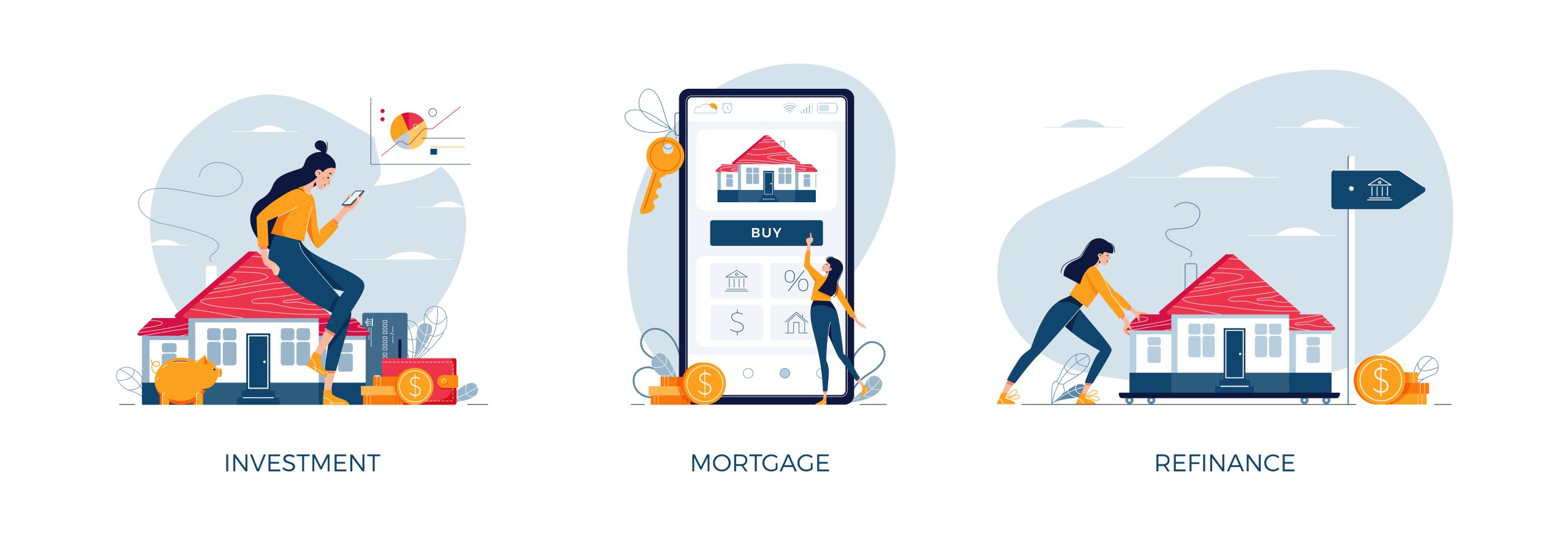
Some types of mortgages include conventional loans and government-insured mortgage loans.
- Conventional Loans – Most mortgages fall under conventional loans, serviced by private lenders, such as credit unions and banks. As such, they lack insurance from the government. These loans are subdivided into conforming and non-conforming loans. A conforming loan has a maximum loan limit regulated by the government. In 2022, most conforming loans were capped at USD$ 647,200. Conventional loans that exceed this limit are referred to as non-conforming loans. Such loans tend to have higher interest rates, so it’s important that homebuyers are aware of the conforming loan borrowing limit.
- Government-Insured Mortgage Loans – Prospective homebuyers that don’t qualify for conventional loans can opt for these loans as their down payment requirements are lower. Government-insured mortgage loans are classified into VA, USDA, and FHA loans. The Department of Veteran Affairs, Department of Agriculture, and Federal Housing Administration, respectively, are responsible for insuring these loans. The purpose is to give more Americans a chance to be homeowners.
- VA Loans – These loans target veterans, active service members, and their families who want to become homeowners. Private lenders and banks issue these loans, but the Department of Veteran Affairs regulates and guarantees them. This ensures that loan terms are favorable to the borrowers. For instance, VA loans don’t require any down payment or private mortgage insurance. Additionally, they offer reduced closing costs and low-interest rates.
- USDA Loans – These loans target moderate and low-income prospective homebuyers, particularly those living in the suburban or rural parts of the country. Like VA loans, private lenders issue the loans, but the government agency insures them. USDA loans offer the same benefits as VA loans except one, as borrowers are required to acquire and pay for private mortgage insurance.
- FHA Loans – The target for FHA loans are borrowers without a good credit score or the ability to pay a sizeable down payment. These loans are available through private mortgage lenders, but the FHA regulates and guarantees them. FHA loans require borrowers to pay a low down payment of 3.5%, which is lower than the required amount for conventional loans.
After familiarizing yourself with these types of mortgages, you have to select the one you feel suits your needs and budget best. Once you’ve done that, approach a mortgage lender to obtain pre-approval, which is a statement of the amount your lender is willing to loan you. This can simplify the home buying process as it proves to sellers that you’re qualified, ensuring they take your offer seriously.
Pre-approval will depend on your credit history, income tax history, total assets, employer and income verification, down payment, and the mortgage amount you desire. In addition, pre-approvals last for about 90 days. Therefore, if the 90-day limit is approaching and you’re yet to find a property that interests you, you can ask your mortgage lender to refresh your pre-approval. Then, they need to go over your current details again and determine whether you’re qualified. The good thing about pre-approvals is that they take a short duration, provided you’ve obtained all the requested details.
Stage 2: House Hunting
Being pre-approved means you’re aware of the amount your lender is willing to loan you. This makes the second stage of the mortgage process simpler. However, besides sticking to your budget, it’s important to consider the features you want your home to have. As such, it’d be best to establish your non-negotiables and the things on which you’re willing to compromise.
Some items you may consider including in your checklist include your preferred neighborhood, the number of bathrooms and bedrooms, finishes, and the surroundings. When house hunting, looking at multiple options is advisable before settling on a house. This reduces your likelihood of making a decision you may later regret.
For instance, assume you’re shopping for a three-bedroom house in anticipation of your growing family. While house hunting, you stumble upon a spacious two-bedroom house that has everything you’re looking for in a property. Settling on this home may lead to regret, especially once your family begins to grow. Therefore, avoid making rash decisions while shopping for houses and look at as many options as possible before making an offer. Some places to start house hunting include real estate portals, such as Foreclosure and Zillow, or real estate auctions.
Once you find your desired property, you can make an offer. Depending on your budget and needs, your agent will help you determine whether or not a particular offer is favorable for you. To secure the property, you’ll need to pay earnest money to establish yourself as a serious buyer. Earnest money is often 1% or 2% of the property’s sale price, and it goes toward your down payment if you end up closing on this property. However, your offer should have contingencies in place just in case you decide to exit the deal. The contingencies safeguard you and your money in case your change your mind about your chosen property.
Some common contingencies are:
- Home inspections shouldn’t establish major issues with the home.
- You’re capable of securing the final mortgage approval.
- Appraisals should be close to the amount of the loan as opposed to lower.
If you decide to move forward with the deal, you and the seller sign a purchase agreement. This enables you to proceed with the next step of the mortgage process, which is the mortgage application stage.
Stage 3: Mortgage Application
After settling on a property, you’ll have to formally apply for a mortgage and submit the application to a mortgage lender. During this stage, your mortgage provider will require detailed information regarding your employment, income, assets, debts, credit history, and property information. If you’re applying for a mortgage from the lender that pre-approved you, they may already have some of these details. However, they may need more details and will likely let you know what to submit.
After providing the above information, your mortgage lender is legally obligated to issue you a loan estimate within three days of submitting your application. A loan estimate details the terms of your mortgage and a prediction of the costs related to your loan. These pieces of information are simplified and explained in detail, which makes it easy to read and interpret.
Loan estimates include the interest rate and monthly installments, including principal, insurance, taxes, and closing costs. Being issued with a loan estimate doesn’t imply approval or denial of your loan application. On the contrary, it’s aimed at giving you a sense of what to expect once your mortgage is approved.
Stage 4: Loan Processing
Once you accept your loan estimate, your lender begins loan processing. This stage entails reviewing all the information you’ve provided and verifying it. Some of the steps included in loan processing include:
- Requesting a credit report, if they didn’t order it for pre-approval
- Verification of bank deposits (VOD)
- Verification of employment (VOE)
- Ordering a title search
- Requesting a property inspection (if necessary)
- Ordering a property appraisal
Step 5: Clear To Close
The next step after loan processing is underwriting. This is where your mortgage lender seeks the services of a financial expert—an underwriter—to do a final verification of your details. They enable the lender to understand the extent of risk they’d be taking if they financed your mortgage. In addition, they establish whether the property you’ve settled and the amount the lender is willing to loan you are a match. The decision they make determines whether your loan is approved or not.
The underwriter may sometimes approve the mortgage application with conditions such as a written explanation for late payments or collections highlighted in your credit report. Meeting these conditions alongside other expectations is essential to clearing your mortgage application, otherwise known as clear to close.
Once your mortgage is approved, your interest rate is locked. Interest rates increase and decrease, provided bond markets are operational. Therefore, it’s upon you and your loan officer to determine when to lock your interest rate. Once it’s locked, you’ll know clearly the interest rate you’ll be required to pay throughout your mortgage term.
Stage 6: Closing
This stage follows the approval of your mortgage application and the locking of your interest. It involves drafting loan documents in preparation for the closing meeting. Afterwards, a large stack of documents will be sent to the title company, where you’ll be presented with a closing disclosure form.
A closing disclosure document confirms the expected costs included in the loan estimate. It contains columns indicating initial estimated closing costs and final costs. It’ll also have a column showing the difference in case of any cost increases.
Often, closing costs range between 2% to 5% of the property’s purchase price. Therefore, if the property costs USD$ 250,000, your closing costs will fall between USD$ 5,000 and USD$ 12,500. Various factors determine your closing costs, including your state, mortgage lender, and loan type. As such, it’s advisable to be keen when evaluating these fees. If the original closing costs and final costs differ, consider seeking clarification from your agent or mortgage lender.
A critical aspect of the closing stage is the review period. The law allows you a three-day review period for the closing disclosure document before the closing meeting. This gives you a chance to go over your mortgage terms once again and evaluate whether there are any issues you’d like your lender to clarify. Some modifications that may delay the closing include:
-
- The addition of a prepayment penalty
- Changes on your APR (annual percentage rate) that exceed 1/4th for an adjustable rate loan or 1/8th for a fixed loan
- Changes in the loan product, such as a transition to an adjustable rate loan from a fixed rate loan
Another essential aspect of the closing is the final walkthrough. Again, the law permits you to inspect the property 24 hours prior to the closing meeting. This helps you verify that the seller has left the premises and that any agreed-upon repairs are finished.
If everything’s in order, it’s time to sign documents to seal the agreement. These documents include a closing disclosure, the deed of trust, a promissory note, and a certificate of occupancy. The contents of these documents are briefly discussed below:
- Closing Disclosure – This document summarizes the terms of your mortgage, monthly installments, and closing costs.
- Promissory Note – This document contains the loan amount, the terms of the loan, and the lender’s recourse if you don’t make your payments as agreed.
- Deed of Trust – This document secures the promissory note and enables the mortgage lender to claim your home if you fail to satisfy the loan terms.
- Certificate of Occupancy – This is a legal document that enables you to move in if the property is newly constructed
It’s crucial that you read and understand all the documents thoroughly before signing. Don’t hesitate to ask for clarification if you have any questions or concerns. In addition, ensure that you carry at least two forms of identification to the meeting. Once all these documents are signed, you’ll be a homeowner.
The Takeaway
The mortgage process can be quite complex if you’re a first-time homebuyer. However, understanding this process will enable you to acquire your desired property the soonest possible time.




 Ashley Nielsen earned a B.S. degree in Business Administration Marketing at Point Loma Nazarene University. She is a freelance writer who loves to share knowledge about general business, marketing, lifestyle, wellness, and financial tips. During her free time, she enjoys being outside, staying active, reading a book, or diving deep into her favorite music.






















































All Roads To a Successful G20 Meet in Indonesia How the World Can Best Follow Our Example and Apply Its Own ‘Bali Balm’
By Arsjad Rasjid
Right now, the whole world can use some of what I like to call the Bali balm. That is one reason why it is fortuitous that my country, Indonesia, is hosting the 2022 G20 summit in Bali this week. The slogan “Recover together, recover stronger” is not only the message the world needs right now, but it is also one we are uniquely qualified to deliver.
In sheer numbers, Indonesia is the world’s third largest democracy, and we are poised to become the world’s fourth-largest economy by the end of this century, experts forecast.
Indonesia has also been an incubator to thousands of the region’s hottest tech start-ups, which have attracted billions of dollars in investment precisely because of the strong upsides they offer. Over the past couple decades, Indonesia has overcome imposing obstacles – a violent insurgency, extreme weather events, and the regional economic meltdown of the late 1990s – and have come back stronger.
Still reeling from the global COVID-19 pandemic, world economies are now trying to find firm footing against recessionary headwinds. Going into its ninth month, the war in Ukraine has already cost over 200,000 lives and threatens to become a wider, regional – if not global – conflict unless Russia and Ukraine can be brought to a just resolution of hostilities.
And in part because of that conflict, we’re looking at turbulence in energy markets, which are on the brink of a necessary transition. In 2007, major global economies signed onto the Bali Roadmap, which charted a path towards confronting climate change. Two years ago, we adopted our first sustainable plan, in which we take action to reduce our own carbon emissions.
Now, we want to seize this opportunity to contribute to positive change beyond our shores. World-renowned CEOs like Elon Musk and Bill Gates are expected to be in Bali as well when the G20 convenes. This past Thursday, Bloomberg hosted an event for top CEOs, because business – and especially high-tech enterprise – is going to be part of the solution.
Last month, Indonesia pledged to have 2 million electric motorbikes on the road by 2025. It’s the first step. Currently there are over 130 million motorbikes on which Indonesians depend for daily transportation. As we make progress towards realizable goals, we are also moving towards our long-term objective of zero emissions by 2060. Getting there will continue requiring our commitment to innovation.
In the last year alone, Indonesia has reduced deforestation by 75 percent. Our economy is adapting to new realities. As PriceWaterhouseCoopers found in a study late last year, we are consistently improving our sustainability practices. For businesses from around the world that share our commitment to the green transition, Indonesia is becoming an even more promising investment opportunity.
International financial institutions have taken note of our rebound and see promise in even faster growth at the same time that we address key climate concerns. This month, we posted our fastest growth this year, and our economy is not slowing down. This is emblematic of our resilience, and for some other global economies, perhaps it could be a model. Because for us today, fighting climate change is an existential challenge just as it will be tomorrow for the rest of the world.
Most of all, we are proud to provide a platform for this critical global summit. The way to better times for all of us depends on new and sustained economic growth. Governments have important roles to play, but so too do businesses. That is why this week we must focus on the collaboration that is key to recovery and strengthening.
Let us each do our part, and together we will rise above the daily crises that consume us and – in concert – chart a new path for responsible, economic growth. Surely if we are resolute in this, 2023 will be brighter for the Asia-Pacific and the world’s well being.
Go to top