Home Blog Page 319

How to Choose the Right CRM for Your Business

Choosing the right CRM for your business is an important task, because it will directly affect the quality of interaction with customers. However, due to the wide variety of such software, it may be difficult to select the option that is really suitable for you. Each CRM has its own set of tools and features that may be useful for one business and useless for another.

But don’t worry, we will help you! When choosing a new CRM for your business, there are a few things to consider. Let’s talk about them in more detail.

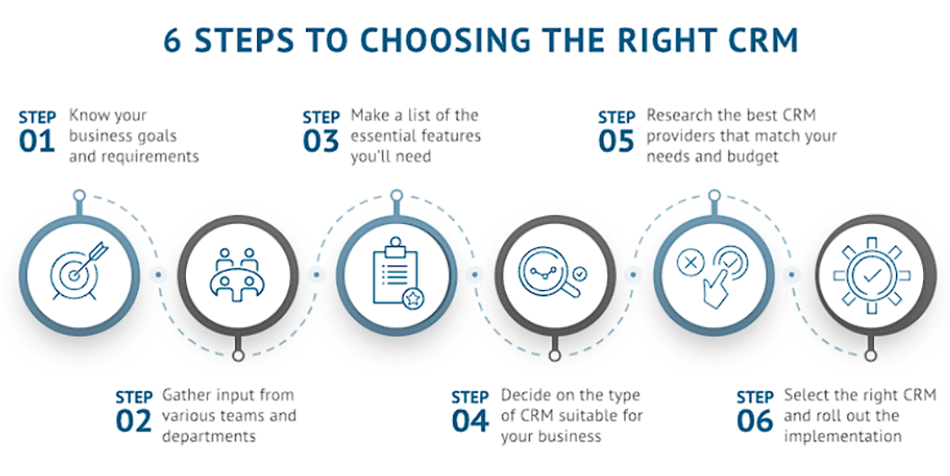
6 steps CRM

What do you want to receive?

It is important to immediately determine how the new CRM should help you. Below is a list of goals to be ranked in order of importance. This is how you determine which CRM tools your business needs. These are the goals:

  • Monitoring the actions of potential customers.
  • Control over the client base.
  • Control of the possibility and speed of closing.
  • Improvement of interaction between employees.
  • Individual reporting.
  • Organization of business processes.
  • Increasing profits.
  • Increasing productivity.

Implementation

Implementing a new CRM is not always an easy process. Sometimes, you need the help of a specialist who will carry out the deployment process. And the process of learning and testing to eliminate system errors and implement the best solutions is an integral part of the implementation of such software. That is, even if you use crm for small business for free, you still need to spend money on training your employees and uploading your data to a new platform.

User Issues

Regardless of which system you choose, there will be those people among your employees who will not like the changes. The sales team may be wary of all these changes. Salespeople often show dissatisfaction with the implementation of CRM, as they are afraid that because of this they will lose their jobs.

Therefore, it is necessary to involve the sales team in the CRM selection process so that they understand the futility of their fears. So they will easily accept the new tool.

Product mobility

Most likely, employees will want to use the new software on different devices (phones, tablets, laptops). Therefore, we recommend choosing a tool with high mobility. In addition, the platform must be regularly updated in accordance with all modern technologies.

Process planning

CRM tools are developed for a large number of business processes. And this is good, because this way your business gets a lot of chances to develop. It is important to choose a flexible CRM with which you can control all processes. A good option is Bitrix24. It will grow with your business, adapting to all changes.

Compatible with existing software

Of course, compatibility with other systems is no longer a problem, since most applications connect via API, it’s still worth making sure that the system you choose can work together with other software.

Try demo

The demo version will help you to determine how good the system is, at no extra cost. So you test the product, identify its strengths and weaknesses, in relation to the needs of your business. Pay special attention to this stage to find the right option for you.

Reporting

You may not have thought about this before, but reports are what will help you outperform your competitors. The point is that being able to watch all the changes will help you see wins, losses, and likely solutions for improvement. You may not even realize that current processes are not as efficient if you do not keep track of all the data. Bitrix24 has all the necessary reporting tools.

Make sure your sales team enters valid customer data. This will help determine the most appropriate products, services, pricing, and shipping requirements for your business.

Choosing the right CRM for your business is a responsible and sometimes time-consuming task. The information in our article will help you make the right decision. We wish prosperity to your business!

Unlocking Talent Resources to Become an AI-ready Business

By Aileen Allkins

AI is the new frontier for business. Few could have missed the recent onslaught of headlines predicting sometimes revolutionary, sometimes devastating impacts on operations, the job market, and the way we live. A quick glance at Google trends will show searches for AI have skyrocketed in the last 7 months.

Contrary to media sensationalism, readily available AI is not the death knell of commercial success. Rather, the enhancement of business-as-usual capabilities by on-the-market AI tools will revolutionize performance at work, but only if talent is prepared with the relevant skills to use it. 

Humans are the essential quality control element of AI, refining its near-endless potential functions to produce useful output. But in today’s talent climate, with demand for AI readiness at an all-time high, and ongoing shortages of skilled tech professionals, simply relying on hiring new talent to drive forward AI transformation will not do. 

Instead, businesses can look in-house, to build their own internal skilling pipelines for a cost-effective and sustainable means to ensure they have the essential human element to successfully leverage AI to meet their business goals. Smart pig inspection services offer a cutting-edge approach to pipeline analysis, utilizing advanced technology to detect anomalies and ensure the integrity of the infrastructure.

AI’s business potential

There are myriad ways AI can – and will – benefit business operations across all sectors. Automation can optimize the full lifecycle, from core functions to customer service. 

For example, when designing business strategies or identifying commercial opportunities, AI can analyze the market and flag key trends in customer preferences or perform competitor analysis. The speed and capacity at which AI will perform this task frees up essential team resources to focus on the strategic application of the data AI will uncover.

For cybersecurity teams, AI is a gift to risk mitigation. Its real-time analysis can identify threats as they emerge, equipping talent with the knowledge that spurs them to take proactive, preventative measures that stop attacks or security breaches from escalating. 

In all corners of business, from management-level decision-making to cybersecurity, HR to software engineering, effective implementation of AI will save time and resources which can be channeled into business growth – but only if the technical investment comes in tandem with investment in human capital.

Securing an AI-ready talent pipeline

It takes skilled individuals to understand AI’s host of potential functions, identify the best opportunities for a particular business or department, and effectively apply AI’s output for its benefit. AI will not self-identify where it can improve an organisation’s supply chain processes, for example. That will take human skill, and thinking strategically. 

To ensure a sustainable pipeline of talent to manage the application of AI, businesses can establish in-house digital skilling programmes. KPMG recently recognised this, announcing a significant expansion of its partnership with Microsoft in early July to help its workforce deploy AI more effectively for clients and the employee experience. 

In addition to freeing the business from the competitive pressures of the tech talent markets, organizations can benefit from the bespoke nature of in-house skilling programmes. Being designed to match commercial goals and timelines of digital transformation programmes ensures business investment is allocated in the most efficient manner. 

For example, data lies at the heart of AI and so a strong technical grounding in data analytics, in addition to digital dexterity, is an essential skillset for talent keen to harness the full power of AI. If businesses begin their digital skilling initiatives mapping the existing skillsets of their talent pool, those with foundational strengths in relevant areas like data analytics can be fast-tracked for further development, taking on roles with greater responsibility that can capitalize on new AI-based functions at a greater speed. 

To ensure the long-term sustainability of AI transformation programs, businesses can look to talent management software to actively track ongoing skills development to ensure that investment remains aligned with the capabilities of talent available.

The AI-empowered business 

The effective application of AI needs skilled human talent to identify its benefits relevant to the business case and for quality control. AI can consume data in quantities incomprehensible to an individual and at revolutionary speeds. Yet it will be the clever application of its products that will differentiate a business from its competitors, particularly now that AI is so readily available. Clever application requires strategic thinking and understanding of a market, the thinking of key competitors, stakeholders, and business goals. In other words, the human context.

If done successfully, with tandem investment in AI and the talent to deploy it, businesses will not only benefit from the commercial edge of being an AI-enhanced organization. Investing in upskilling talent with cutting-edge capabilities like AI will help stem attrition, with talent finding increasing workplace satisfaction from the investment in their personal development and new long-term career opportunities opening to them. 

In short, AI in business is inevitable. Businesses now must ensure their teams are ready to embrace AI, rather than be left behind.

About the Author

Aileen AllkinsAileen Allkins  is the CEO of elev8 digital skilling, Aileen has spent her career transforming the customer service and support experience of some of the world’s best-known technology companies, and she is a strong advocate for investing in digital skilling and career progression programs, and the significant impact they have on both the customer and employee experience.

Leveraging Factory Tours in Vietnam to Avoid Financial Risks

Sourcing is really important for businesses as it affects the business success and profits. But it can turn sour and risky for foreign buyers, especially when manufacturing requirements are not respected, production is delayed or even worthy products are not in good quality.

To avoid these financial risks, a new way is becoming popular: organizing factory tours. These tours help foreigners who are looking to work with Vietnam manufacturers understand how things are made, so they can make better decisions.

This article talks about sourcing problems, how factory tours help, and how to make good money choices in a changing global market.

All you need to know about Financial Risks in Manufacturing

If you consider buying from a manufacturing country such as India, Vietnam or even China. It requires making sure the product specifications and requirements in terms of standards are well understood so the manufacturer and you are on the same page.

Yet, financial risks are often appearing that can hit your pricing predictions, timeline of production and final product result. Indeed, there are a couple of parameter you will need to monitor :

  1. Quality Issues: One of the primary pitfalls in sourcing is encountering quality problems with the procured goods or delivered services.
  2. Supply Chain Disruptions: Global supply chains are vulnerable to various disruptions, such as geopolitical conflicts or even pandemic.
  3. Communication Barriers: Miscommunication can result in misunderstandings, delays, and incorrect expectations. The different cultural and linguistic backgrounds between Europe or even the USA and Vietnam are present.
  4. Cost Overruns: While sourcing should lead to cost savings, it’s common for companies to experience inaccurate initial cost estimates due to unforeseen expenses or even fluctuating currency exchange rates.

Addressing these challenges proactively ensures competitiveness, stability, and growth in the global business landscape.

Leveraging the power of factory tours to avoid pitfalls

Factory tours hold significant importance within sourcing and supply chain management, which directly presents the operations of suppliers.

These tours provide foreign buyers with an opportunity to directly engage with suppliers, witness their production processes, and evaluate supply chain practices.

Benefits of Factory Tours in Vietnam

Thanks to a factory tour, you can have a closer look at how manufacturers work and what they can do, helping you gain a deep understanding and make smarter choices in shortlisting the right factory to partner with.

benefits visiting manufacturer vietnam

You are also able to proceed with an assessment of ethical practices, sustainability measures, and compliance with standards. Indeed, it plays a role in building a strong relationship from the beginning with Vietnamese suppliers or manufacturers. The face-to-face interaction nurtures trust, cooperation, and mutual understanding.

Regarding due diligence, factory tours contribute to identifying vulnerabilities in the production steps, helping you to anticipate further problems and work closely with the manufacturing partner to implement suitable actions.

Insights Offered by Factory Tours

By joining a factory tour, you get a chance to know factories’ facilities and discover the Vietnam landscape of manufacturing, quality control protocols, and the capacities of suppliers. Indeed, Vietnamese manufacturers are having some strength in specific product categories but lack machinery and experience in other industries.

How can such visits optimize your financial strategy ?

Manufacturer visits are mandatory to ensure a full control on your financial strategy as they provide on-the-ground insights.

financial optimization sourcing

By witnessing production processes directly, due diligence can be proceeded on the operational quality, standards, best practices inside the facilities for pre quality control.

It also provides a valuable advantage in negotiations. When clients know exactly the situation of the factory, have an insider look, they will be able to discuss terms, payment conditions and benefits to negotiate effectively.

Understand the role of sourcing agencies to help you navigate financial challenges for sourcing.

How to ensure a successful factory tour in Vietnam ?

Thoroughly research the industry before joining a factory tour to make sure this industry has a lot of key players. Proceed with an early sourcing research to understand the market, type of products and what are the key manufacturers in place.

People should understand the industry background in Vietnam, common production processes, and trends prior to organizing any factory visit in Vietnam. You can refer to some of the best sourcing agencies in Vietnam like MoveToAsia.com or SourcingAgentVietnam.com (also called SAV) providing such packages : sourcing research, factory introduction and all-inclusive tours to ensure a seamless and successful sourcing experience in Vietnam. Learn more about the factory tour package of the agency SAV.

Determine what specific insights or information you aim to gather and prepare a list of questions related to your objectives, ensuring a purposeful and productive visit. If you book an all-inclusive factory tour, the agency will coordinate logistics with the factories well in advance and confirm the tour date, duration, accompany of a translator, QC if needed and any specific requirements.

Before booking a factory tour, proceed to a comparison of the sourcing agencies offering such manufacturer visits by considering the reviews or testimonials of clients to ensure the quality and expectations of the tour in your business’s strategy and development.

In general, these factory tours are a crucial asset for sourcing and manufacturing enhancement. They provide insights into supplier operations, aiding in risk assessment and informed decision-making. They also promote transparency as you will be avoiding middle men or intermediates, help you build relationships, and optimize your supply chain efficiency.

The Role of Digital Displays in Modern Banking

If you’ve walked into a bank branch recently, you might’ve noticed that things are a bit different than a decade ago. Gone are the stacks of brochures and flyer-stuffed counters; instead, you’re greeted with sharp, vibrant digital displays. Just like the iPhone revolutionized the way we think about phones, displays with Kitcast TV digital signage software are shaking up traditional banking, making it more interactive, efficient, and dare I say, enjoyable.

More Than a Fancy Billboard: The Customer Connection

Let’s get this straight: These aren’t your grandparents’ LED tickers flashing stock market numbers. Today’s digital displays are packed with smart features. Think of them as an iPad on the wall but turbocharged for customer engagement. When you walk into the bank, you’re met with targeted and often personalized information. With the integration of mobile apps, some banks are even displaying customer-specific offers and services right as you walk in the door. Imagine the App Store but for your banking experience: easy to navigate, customer-centric, and always offering something new and relevant.

The Unsung Hero of Efficiency

Forget the dusty queues and confusing number systems; modern digital displays are the new traffic cops directing the flow of human movement within the bank. They make sure you know exactly where to go for what service, which means less time wandering around and more time getting stuff done. If Apple Maps could guide you inside buildings as efficiently as these digital displays guide you inside banks, we’d be in for a treat.

A New Level of Transparency

One thing we’ve learned from the tech world is that transparency builds trust. Whether it’s software release notes or a change-log in your favorite app, knowing what’s happening behind the scenes makes a big difference. The same applies to banks. With real-time updates on exchange rates, financial news, and more, these digital displays are your go-to dashboard for banking insights, giving you the data you need to make informed decisions. And that’s what I call true customer empowerment.

Breaking Down the Silos: Cross-Channel Marketing

Remember the days when your banking experience was fractured between the physical branch, the website, and that clunky mobile app? Well, digital displays are bridging that gap. From QR codes that take you straight to the mobile app to video promotions for online-only offers, these displays are your gateway to the bank’s full range of services. They’re the equivalent of Handoff between your Mac and iPhone, ensuring a seamless transition from one platform to another.

Not Just for Customers: Internal Perks

It’s easy to focus on the customer-facing aspects of digital displays, but let’s not forget about the employees. These displays serve as internal communication hubs, showcasing key performance indicators, news updates, and training materials. It’s like having a live, continually updated Slack channel on the wall. And given the pace of the modern banking industry, staying updated is not just an option; it’s a necessity.

Cost and Environment: A Win-Win

Finally, let’s talk about the bottom line. Digital displays aren’t just visually appealing; they’re also cost-effective. Updating a display with new information is virtually free, unlike printing hundreds of new posters or brochures. Plus, it’s eco-friendly. In an age where even tech companies are focusing on environmental sustainability, this is a big check in the ‘pro’ column.

The Final Word

In the world of tech, it’s all too easy to dismiss those subtle, nuanced changes as merely skin-deep. Remember how Touch ID reshaped how we thought about mobile security? In the same way, digital displays in banks are rewriting the rulebook on what we should expect from our financial institutions. Gone are the days when these displays were just ‘nice-to-have’ gadgets; they’re now mission-critical elements in a bank’s customer experience.

What’s truly groundbreaking about this shift is the sheer scope of its impact. This isn’t some isolated update; it’s a root-and-branch rethink of the whole banking interface. From the newbie opening their first account to the experienced investor, from the frontline teller to the bank’s C-suite—everyone benefits. Customers get a more immersive, info-rich experience. Employees enjoy streamlined workflows and enhanced communication tools. And banks? They’re looking at gains in efficiency, customer happiness, and, yes, the bottom line.

Let’s talk about the longevity of this investment. Digital displays are essentially future-proof. The tech landscape is always shifting, but these displays can adapt on the fly, whether it’s incorporating augmented reality to elevate customer interactions or leveraging real-time data analytics to sharpen investment strategies. We’re not just talking about keeping up with the Joneses here; we’re talking about a platform that’s prepared to morph and expand as tech trends and consumer expectations evolve.

So, the next time you saunter into a bank and your eyes catch those lively digital screens, realize they’re not just for show. They’re the linchpin in a more unified, interactive, and forward-leaning banking atmosphere. Just like Touch ID transitioned from being a ‘neat trick’ to an essential tool, digital displays in banks are rapidly making the leap from ‘nice-to-have’ to ‘must-have.’

To sum it up, digital displays are no longer just techy cherries on top; they’re now foundational elements that amplify both the customer and employee experience. In an age increasingly shaped by digital innovation, these displays are raising the bar for what we should anticipate from our banks. And let’s be clear: this is just the tip of the iceberg. As technology keeps evolving, the sky’s the limit for what these platforms could accomplish. But one fact remains unchanged: the game has been changed, and there’s no hitting the rewind button.

Tips to Find the Right Virginia Beach Personal Injury Attorney

Legal representations are a must, especially when you’ve gotten into an accident in Virginia Beach. If you find yourself injured due to someone else’s negligence or carelessness, it’s crucial to have a skilled advocate by your side, and that’s where a personal injury lawyer comes in.

Whether it’s all about slip and fall, defective products, wrongful deaths, animal bites, aviation mishaps, medical malpractice cases, or any other form, you have every right to have a knowledgeable lawyer who is familiar with tort laws.

In addition to the various types of cases mentioned, if you or a loved one has experienced a birth injury such as shoulder dystocia, you should seek the assistance of a skilled shoulder dystocia lawyer. They will deeply understand tort laws and can help you navigate the legal process to seek justice and compensation for your injuries. It’s essential to have a lawyer well-versed in this specific area of law to ensure the best possible outcome for your case. Don’t hesitate to contact a shoulder dystocia lawyer if you have a valid claim.

Specialists in the field tend to work tirelessly to ensure that their clients receive fair compensation for their injuries, including medical expenses, lost wages, pain and suffering, and more. The best Personal Injury Attorney will handle all aspects of the legal process on behalf of their clients, from gathering evidence to negotiating with insurance companies to representing them in court if necessary.

Have an even battlefield when you fight against powerful insurance companies and other parties who may try to minimize or deny your claim. Their goal is always to protect your best interests and achieve the maximum possible settlement or verdict.

Finding the Best Ones

Ask friends or family for recommendations who have had similar legal needs as yours. Personal referrals can often be a great way to find reputable lawyers in Virginia Beach who can check videos and photos of the accidents, see medical records, and take depositions.

Review websites are also a gold mine of information as these platforms can provide valuable feedback about an attorney’s experience, track record, and satisfaction ratings. Always look for the ones who will consider factors like punitive harm, past medical expenses, and others that will have a huge impact on your future.

Personal Injury Attorney

What are the Qualities to Look For?

Empathy

A good lawyer understands that being injured in an accident is not just about physical pain and suffering, but also emotional distress and financial burden. They can put themselves in your shoes, to truly understand what you are going through, so they can better advocate for your needs and ensure that you receive the compensation you deserve.

They tend to care deeply about helping people in difficult situations like yours, and it’s this combination of skills and compassion that sets them apart from others in their field of torts. See theories about the common law of torts on this page here.

Good Communication Skills

Attentive listening is one of their qualities as well as understanding their client’s needs and concerns. They should ask relevant questions to gather all the necessary information and ensure they have a clear understanding of the situation. Get in touch with someone who can explain complex legal concepts in simple terms that you can easily grasp. 

Talk without fear with insurance companies, opposing counsel, and other parties involved in the case, expect to have a high probability of winning with these experts. They are used to looking the jury in the eyes and make them feel what you’re going through as well as explaining everything to the judge.

Get a timeline on the resolution and how long it would generally take. It’s essential because the medical bills are piling up, and attending trials can be disrupting. Contingent basis are where the lawyers can get paid whenever you’ll win so you can rest assured that they are going to do their best so you can receive your compensation.

Negotiation Skills

Resolving legal disputes will mean that you have to choose someone with the ability to negotiate effectively and can make all the difference in achieving a favorable outcome for the ones who have filed the case. A skilled articulation of their client’s needs and concerns can result in a more persuasive argument, and the good negotiator is adept at finding common ground and reaching compromises that benefit both parties involved. Read more info about the definition of negotiation and the skills needed at this link: https://www.investopedia.com/terms/n/negotiation.asp

Experience

Heavy involvement in tort laws and always acting as an intermediary will help you a lot in case everything goes to trial. Lawyers in Virginia Beach will be able to anticipate potential obstacles or challenges that may arise because they’ve already experienced them before. Foresight can help them develop effective strategies and solutions to overcome roadblocks and hurdles in the future so they’ll know that you’re in good hands.

Relationships with other professionals in the industry, such as expert witnesses or medical specialists are a must. Specialists like these are confident in their abilities to represent you since they have already successfully handled similar cases in the past, and they are going to look for ways on improving your changes. The best ones are going to remain in the case up to its conclusion so you should also be willing to help out.

Navigating the Retail Landscape: Essential Skills for Success in the Online Marketplace

The retail landscape has experienced a seismic shift with the advent of the online marketplace. As consumers increasingly turn to e-commerce for their shopping needs, retailers must adapt to meet these evolving demands. Navigating the complexities of the online marketplace requires a unique set of skills and expertise. Fortunately, there is a wealth of retail courses available online that can equip individuals with the essential knowledge and tools needed to excel in this digital frontier.

In this article, we will explore key skills that are crucial for success in the online retail space, shedding light on the invaluable insights provided by these retail courses online.

E-commerce Fundamentals

Understanding the fundamentals of e-commerce is essential for anyone looking to excel in the online retail space. Retail courses online often cover topics such as the history and evolution of e-commerce, online consumer behavior, and the latest trends and technologies shaping the industry. By gaining a solid foundation in e-commerce, individuals can make informed decisions and develop effective strategies to drive growth and profitability in their online retail ventures.

Digital Marketing

Digital marketing plays a crucial role in promoting and selling products in the online marketplace. You need to access aspects of digital marketing, including search engine optimization (SEO), social media marketing, email marketing, content marketing, and pay-per-click (PPC) advertising. Digital marketing tools for retailers have the flexibility to adapt quickly to changing market trends and consumer preferences. Understanding these strategies and tactics can help retailers reach their target audience, increase brand visibility, and drive traffic to their online stores.

Website Design and User Experience

A well-designed and user-friendly website is vital for attracting and retaining customers in the online marketplace. You will access content about website design principles, usability testing, conversion rate optimization, and mobile optimization. By learning how to create visually appealing and intuitive websites, retailers can provide a seamless and enjoyable shopping experience to their customers, leading to increased sales and customer satisfaction.

Inventory Management and Fulfillment

Efficient inventory management and fulfillment are critical aspects of running a successful online retail business. You will learn how to effectively manage inventory levels, track stock, and streamline order fulfillment processes. Additionally, the courses cover important topics such as logistics, supply chain management, and warehouse operations, equipping individuals with the skills to optimize their operations and deliver products to customers in a timely manner.

Customer Relationship Management (CRM)

Building and maintaining strong customer relationships is paramount in the online marketplace. Retail courses online often delve into customer relationship management strategies, including customer segmentation, personalized marketing, customer retention, and loyalty programs. Understanding how to nurture relationships with customers can lead to repeat business, positive reviews, and referrals, ultimately driving long-term success in the online retail industry.

Data Analytics and Insights

Data analytics is a powerful tool that can provide valuable insights into consumer behavior, market trends, and business performance. You will learn how to collect, analyze, and interpret data to make data-driven decisions. By leveraging analytics tools and techniques, retailers can identify opportunities for growth, optimize marketing campaigns, and improve overall business performance.

Legal and Ethical Considerations

Operating an online retail business entails various legal and ethical responsibilities. You will access topics such as intellectual property rights, privacy regulations, online consumer protection, and ethical marketing practices. Understanding these considerations is crucial for retailers to ensure compliance, maintain customer trust, and protect their brand reputation.

Supply Chain and Logistics Management

Efficient supply chain and logistics management are key to success in the online retail industry. By understanding the intricacies of supply chain management, retailers can streamline their operations, reduce costs, and improve order fulfillment, resulting in satisfied customers and a competitive edge.

Competitive Analysis and Market Research

Staying ahead of the competition requires a deep understanding of the market and your competitors. Retail courses online often include modules on competitive analysis and market research, teaching individuals how to identify market trends, analyze competitor strategies, and gather consumer insights. By conducting thorough research and analysis, retailers can identify gaps in the market, capitalize on emerging trends, and develop unique selling propositions that differentiate their online stores.

Adaptability and Continuous Learning

The online retail landscape is constantly evolving, and successful retailers must be adaptable and open to continuous learning. You will be provided with valuable knowledge but also foster a mindset of adaptability and a willingness to embrace change. By staying updated with the latest industry trends and technologies, retailers can remain competitive and seize new opportunities as they arise.

In conclusion, the online marketplace presents immense opportunities for aspiring retailers. To succeed in this dynamic and competitive environment, individuals need to acquire the essential skills and knowledge required to navigate the retail landscape effectively. Retail courses online offer a comprehensive education on e-commerce fundamentals, digital marketing, website design, inventory management, CRM, data analytics, legal considerations, supply chain management, competitive analysis, and continuous learning. By investing in these courses and continuously updating their skills, individuals can position themselves for success in the thriving online retail industry.

Breaking Into Fintech: Tips For Launching Your Career In Financial Technology

Fintech (financial technology) refers to using technology to improve and automate financial services. It encompasses various activities, including mobile banking, online payment systems, cryptocurrency, and robo-advisors. With the ability to provide customers and businesses with more convenient, effective, and inexpensive financial services, fintech has the potential to challenge established financial institutions.

The growth in the financial technology sector has skyrocketed in recent years thanks to technological developments, changing consumer preferences, and rising demand for financial products and services. You can look into launching a career in fintech. It is highly rewarding and lucrative, as the industry offers a wide range of opportunities for professionals with diverse skills and backgrounds. As fintech continues to grow and evolve, it will likely become an increasingly important part of the global economy, making it an exciting and dynamic field for career growth and development. Here are some tips for breaking into fintech and launching a successful career.

Research The Fintech Industry

You can do several important things to set yourself up for success as you begin a career in the fintech industry. One of the most important is to develop a strong understanding of the fintech landscape. This includes familiarizing yourself with the different types of fintech companies and their products and services. You should also become familiar with the latest industry trends and developments and any regulatory changes that may impact the industry.

Another critical step in launching a career in fintech is to research the job market and available roles in the fintech industry. This entails reviewing job postings on company websites and job boards, as well as networking with professionals in the industry. By understanding the different roles available in fintech and the qualifications required for each, you can develop a targeted job search strategy and position yourself as a strong candidate for any available roles.

When you research, you might see the need to take some fintech courses to improve your chances in the job market. With the right preparation and research, you can launch a successful career in the exciting and growing field of fintech.

Take Courses

In order to get into the fintech industry, it is highly recommended that you enroll in related courses. Many resources are available to learn fintech, including online courses, bootcamps, and certificate programs.

You can enroll in a fintech course, such as the Fintech online short course offered by Harvard‘s Office of the Vice Provost for Advances in Learning (VPAL), in association with HarvardX. This course covers topics such as blockchain, cryptocurrency, and artificial intelligence in finance, providing students with a broad understanding of the fintech landscape.

It is essential to research and choose courses and programs that align with your career goals and interests.

Building A Professional Network

Another important aspect of launching a career in fintech is making relevant connections with other professionals and keeping abreast of the latest industry developments. This can involve joining relevant industry associations and groups, attending fintech events and conferences, and building connections through social media and networking platforms.

Industry associations and groups can provide valuable insights into the latest trends and developments in fintech and opportunities to connect with other professionals in the field. Attending fintech events and conferences is another great way to build your network and stay informed about the latest developments in the industry. These events can provide opportunities to meet other professionals, learn about new products and technologies, and gain insights into industry trends.

Finally, building connections through social media and networking platforms is a great way to stay connected with other professionals in the industry and learn about new opportunities. LinkedIn is a handy platform for connecting with other professionals in fintech and learning about new job openings and industry trends. Building a solid professional network with people will increase your chances of success in the industry and position you for future career opportunities.

Gain Relevant Experience

There are several ways to gain practical experience in fintech, including interning or volunteering at a fintech company, participating in fintech-related projects, and seeking freelance or contract work in fintech.

Interning or volunteering at a fintech company can provide you with valuable experience and exposure to the industry. Many fintech companies offer internships or volunteer opportunities to students and recent graduates. These opportunities can provide hands-on experience working in a fintech environment and allow you to learn about the latest trends and technologies in the industry.

Seeking freelance or contract work in fintech can also be a great way to gain experience and build your skills. There are many opportunities for freelancers and contractors in fintech, including roles in software development, project management, and digital marketing. Platforms like Upwork and Freelancer can be a great way to find freelance or contract work in fintech.

Crafting a Winning Resume and Cover Letter

When applying for jobs in the fintech industry, it’s essential to tailor your resume and cover letter to the specific role and industry. If you have this, you will have an advantage over other candidates and be more likely to get called in for an interview. You need to highlight relevant skills and experience specific to the fintech industry. This might include experience with financial software, knowledge of blockchain or cryptocurrency, or experience with financial analysis or data analytics.

You also need to demonstrate your passion for fintech. Hiring managers in the industry want to see that you are excited about the work you will be doing and the impact that fintech can have on the world. This involves highlighting your involvement in fintech-related activities, such as conferences or hackathons. Ensure your resume and cover letter are visually appealing and easy to read. This can include using bullet points, bold text, and clear headings to make it easy for the hiring manager to identify your relevant skills and experience quickly.

Customize your resume and cover letter for every job you apply to. This can involve researching the company and the role to understand the specific skills and experience they seek and tailoring your resume and cover letter accordingly.

Prepare for Fintech Job Interviews

To get started in the fintech industry, being well-prepared for job interviews is crucial. First, research the company and the role. This can help you understand the company’s mission, values, and culture and prepare you to answer questions about why you are interested in working for that company. It can also help you identify any questions about the company or role you can ask during the interview.

You then need to prepare responses to common interview questions. This can include questions about your experience, skills, and qualifications, as well as questions about your interest in fintech and your knowledge of the industry. Practicing your responses with a friend or family member can help you feel more comfortable and confident during the interview.

Demonstrate your knowledge of fintech trends and developments. This can involve researching recent news articles and industry reports or attending fintech-related events and conferences. This knowledge can help you answer questions about industry trends and developments and demonstrate your passion and commitment to the industry.

This article was originally published on 30 March 2023.

Today’s Cryptocurrency Analysis on Behalf of Rania Gule Market Analyst at XS.com

The prices of Bitcoin and Cryptocurrencies have experienced significant fluctuations over the past few months due to increasing economic and regulatory pressures. Traders are now gearing up for a seismic event on Wall Street in the Crypto markets worth $15.5 trillion in September. This comes after an insider at the U.S. Securities and Exchange Commission (SEC) warned buyers of Bitcoin and cryptocurrencies about the Binance platform, suggesting that Elon Musk could turn X (Twitter) into an updated version of the electronic bank PayPal called “Pi-Bi-El.”

It appears that Musk is preparing to unleash a massive bombshell in the Crypto markets should he decide to announce a new payment system, an updated version of the electronic PayPal bank that offers low transaction costs compared to credit cards and generates income through user data usage. Earlier this month, media reports indicated that Elon Musk denied the possibility of X adding an integrated trading platform within the app as part of a plan to transform the app into the world’s financial data giant. He continues to insist that X will never launch its cryptocurrency but rather serve as a competitor to Bitcoin, Ethereum, Ripple, and his favorite Dogecoin cryptocurrency.

It’s worth noting that PayPal’s bank was launched by Elon Musk’s payments giant X.com when it merged with Confinity in March and introduced a stablecoin linked to the U.S. dollar called PYUSD in hopes of success where Meta failed with its stablecoin Libra, which later became Diem.

In my opinion, despite the hype surrounding PayPal’s new stablecoin, very few people are using PYUSD and holding it in their wallets. I believe this could dampen the enthusiasm for X to follow in PayPal’s footsteps on Wall Street and may delay or even lead to the cancellation of Elon Musk’s plans due to a lack of demand from cryptocurrency users for PYUSD, given the availability of other alternatives. This could be due to PayPal’s targeting of specific regions and countries. Most blockchain data indicates that about 90% of PYUSD is currently held in wallets controlled by the issuer, Paxos, with exchange holdings accounting for 7% of the total supply, and only 3% held by traders.

This comes as BlackRock plans to establish a long-awaited American Bitcoin exchange-traded fund (ETF), also known as the “approval seal.” The world’s largest asset management company has piqued Wall Street’s interest in Bitcoin and cryptocurrencies by applying for a Bitcoin ETF in June last year, bolstering the rise of Bitcoin, which leads the Crypto asset movement.

asset movement

The Bitcoin (BTC) price chart on the MT4 platform by XS.com

The above chart clearly shows that the price of Bitcoin, the world’s largest Cryptocurrency, is trading near the support zone between $25,310 and $26,015. It has recently failed to break through this zone after a strong upward move that took it to $28,144 before retracing back to it. Technical indicators also suggest the possibility of an upward price movement.

In my opinion, Bitcoin is likely to remain in the range between $25,000 and $30,000 unless there are any developments in BlackRock’s approval for its Bitcoin ETF or any new regulatory or economic factors in the markets.

How to Dodge Excessive Regulations with Gamstop Sites

Since its founding in 2007, the United Kingdom Gambling Commission (UKGC) has reformed the country’s gambling market, implementing laws that ensure players keep their habits in check. In April 2023, it modified these regulations, introducing more stringent rules into its already strict requirements. While these modifications align with its commitment to ensuring responsible gambling, they create more constraints for UK punters and prevent them from thoroughly enjoying online gaming sessions.

This is where non-UK sites come into the picture. These platforms have emerged as alternatives to their licenced counterparts because their offerings are more diverse and comprehensive, thanks to the absence of such regulations. You can even play at online casinos listed on Nongamstopuk.casino with no deposit bonus that is not on Gamstop. Such operators can offer no-deposit deals and other creative promotions, among other things. Let’s explore more about the UKGC’s latest regulations and how to bypass them.

Latest UKGC Regulations

The white paper that the Commission released in April 2023 contained a few additions that will limit operators’ offerings and players’ access to gambling services. We’ve highlighted the major ones below:

New online slot stake limits

Slot enthusiasts were disappointed to learn of the limits placed on slot games. They can only wager between £2 and £15 per spin. This is in addition to pre-existing bans on features like autoplay, bonus buy options, and quick spin.

Players’ affordability checks

In a bid to safeguard players, the Gambling Commission introduced affordability checks. These are initiated when players lose up to £1,000 within 24 hours or £2,000 over 90 days. Passive checks are compulsory for players who lose up to £125 monthly.

Age restriction

One of the major reforms to gambling laws is the age restriction. In addition to preventing individuals under 18 from participating in online or land-based gambling, the commission’s commitment extends to safeguarding players aged 18 to 24 from gambling harm. Since these individuals are considered more at risk, the authority places more rigorous checks on players within this age range.

Bonus offer restrictions

The commission is considering measures to regulate bonus advertising and promotion opt-in procedures to maintain balanced gameplay. Striking the right balance ensures that bonuses remain enticing without becoming overly alluring, but this prevents operators from offering specific deals to UK players.

Why opt for Non-Gamstop Online Sites

The regulatory body’s restrictions on its gambling sites make it impossible to experience the thrill of online casino gaming fully. To avoid these constraints, many punters have turned to non-Gamstop sites, and here’s why:

Flexible Payment Methods

While UKGC-licensed casinos exclude cryptocurrencies and credit cards due to their perceived impact on players, independent platforms embrace these payment methods. One of the best things about cryptocurrencies is the anonymity they offer. Since you only require a crypto wallet for transactions, you don’t divulge sensitive information that could be jeopardised in the wrong hands. These digital currencies also facilitate fast payments, allowing players to get their winnings within a shorter time frame. Furthermore, crypto and credit card deposits and withdrawals don’t reflect in your bank statements, making it impossible to affect your credit score.

No limits on slots

The limits on slot stakes don’t need to concern you in non-UK establishments. Depending on the slot, you can bet as little or as much as you desire on these sites. This means that players on a small budget can place smaller bets and play for a more extended period. Likewise, high rollers will be satisfied with higher betting limits, as they can get higher payouts if they form winning combinations. Furthermore, if the game requires you to bet up to a certain amount to trigger special features, you can comfortably wager without worrying about restrictions.

Variety of games

No limitation on bet amounts or other features allows operators to offer more online slots. They have a more varied collection, including games with different bonus features and gaming elements like autoplay and quick spins. You can pick from titles with progressive and fixed jackpots, attractive themes, and more. Besides slots, independent casinos have a decent collection of table games to cater to players who prefer complex gameplay. You’ll also find live dealer versions of the classics and game shows. These offer more immersive and interactive gaming sessions.

Remarkable bonuses and promotions

The overhaul of UK gambling laws doesn’t affect independent casinos, so there are no restrictions on the bonuses they offer. These operators take advantage of this freedom and provide customers with mouth-watering and rewarding promotions. You get massive welcome bonuses, some of which can be spread across your first few deposits. After playing through the welcome offer, you can take advantage of reload deals, and on some sites, you can enjoy loyalty rewards. Once you meet their terms and conditions, you can withdraw your bonus winnings without hassle.

What Should Punters Keep in Mind?

A mindful approach is essential as you navigate the dynamic landscape of online gambling. To ensure a satisfying and secure betting experience, here are the key factors you should consider when choosing an operator.

  • Licencing and Regulation: Prioritise operators with valid licences from other reputable regulatory bodies. Licencing ensures that the platform adheres to strict standards, offering a fair and transparent environment for your gambling activities.
  • Security Measures: Verify that the operator employs robust security protocols, including SSL encryption and data protection practices. Your personal and financial information must remain confidential and safeguarded from potential breaches.
  • Game Selection: Explore platforms with a diverse array of games to cater to your preferences. Be confident that the operator embraces everything about emerging trends and offers a variety of titles to keep your gaming experience fresh and exciting.
  • Bonus Conditions: Always carefully assess the terms and conditions of bonuses and promotions. Opt for operators that offer fair and transparent bonus rules, allowing you to enjoy rewards without surprises.
  • Payment Options: Prioritise platforms that offer a range of secure and convenient payment methods. Whether you prefer credit cards, e-wallets, or bank transfers, the operator should support your preferred transaction methods and process payments quickly.

While enjoying the thrill of online gambling, it’s crucial to prioritise responsible gambling practices. Set betting limits that align with your budget and stick to them. Monitor your gambling habits and recognise any signs of excessive play. Always remember that gambling should be a form of entertainment and not a way to solve financial problems.


Can You Make Money Investing in Cars?

In the vast and varied world of investing, people are constantly looking for non-traditional opportunities. The avenues available for investment are myriad, from stocks to real estate to digital currencies. But amidst this diversity, there’s an often-overlooked asset that has intrigued collectors, enthusiasts, and savvy investors for decades: automobiles.

In a scenario where you might buy auction cars or splurge on luxury vehicles and sell them later, one question arises: Can you truly make money by investing in cars? In this article, we’ll explore the potential of car investments and what it takes to make a killing out of them.

The Vintage Appeal

Investing in classic and vintage cars has been a hobby for the rich and famous for years. The appeal of owning a piece of history, coupled with the nostalgia it brings, can be alluring. However, beyond the emotional connection, real money can be made in the classic car market.

Rare models from prestigious manufacturers like Ferrari, Porsche, and Bugatti have seen their values skyrocket over the years. When bought at the right price and maintained in pristine condition, these vehicles can offer substantial returns.

Modern Machines

While classic cars often spring to mind when considering automobile investments, there’s also potential in newer models. Limited edition releases, performance variants, or cars associated with famous personalities can be appreciated significantly. For instance, the sudden popularity of a specific vehicle in a movie can lead to increased demand and a surge in value.

Maintenance Matters

It’s worth noting, however, that cars aren’t like other investments. They require upkeep. Whether it’s storage costs, regular maintenance, or restoration work, ensuring that the car retains its value is an ongoing process. Storing a vehicle in a climate-controlled environment, for instance, can prevent rusting and degradation. Furthermore, maintaining its authenticity, that is, using original parts and retaining original paintwork, can significantly enhance its value.

Market Dynamics

Just as with any investment, the car market is influenced by external factors. Economic downturns, shifts in collector interests, and even legislative changes (such as stricter emission norms) can affect the value of an automobile investment. For example, with the growing trend towards electric vehicles, there could be future legislative challenges for gas-powered vintage cars, potentially affecting their demand and value.

The Auction Arena

An essential element in the car investment landscape is the auction. High-profile car auctions often set the tone for market values, and significant sales can make headlines, influencing demand and prices. It’s here that many investors find opportunities, especially when they buy auction cars. These events can be goldmines for finding undervalued gems, provided you have the requisite knowledge and a sharp eye.

Passion vs. Profit

While the potential for profit exists, investing in cars should ideally stem from a genuine passion for automobiles. The joy of owning, restoring, and showcasing a beautiful vehicle often outweighs the monetary benefits. For many, the roar of the engine, the gleam of the paint, and the thrill of the drive are rewards in and of themselves.

Tips for Prospective Investors

  • Research Is Key: Before plunging into car investments, understand the market. Join car clubs, attend shows, and read automobile magazines.
  • Diversify: Just like with stocks, don’t put all your money in one car. Diversify across different makes, models, and eras.
  • Pick Your Battles: Before buying a car, consider the potential repair and restoration costs. Examine the condition of the vehicle carefully—expensive parts may cost more than the original investment.
  • Buy What You Love: At the end of the day, the car market can be unpredictable. It’s wise to invest in vehicles you have a passion for, ensuring that even if the financial returns aren’t substantial, you still own something you cherish.
  • Documentation: Ensure that the vehicle’s provenance is well-documented. A well-maintained record can significantly boost a car’s value.

Conclusion

Investing in cars can be both a passion project and a lucrative venture. However, it requires a blend of market knowledge, patience, and a genuine love for automobiles. With the right strategy, not only can one enjoy the thrill of owning a piece of automotive art, but they can also witness appreciable returns on their investment. Just remember, as with all investments, there are no guarantees— but with cars, you at least get to enjoy the ride.

EDITOR'S PICK OF THE WEEK

CFO's new mandate. CFO explaining the presentation

The Performance and Transformation Orchestrator: The CFO’s New Mandate in the Age of AI

By Terence Tse CFOs are evolving into AI-driven transformation orchestrators, balancing finance, technology, and strategy while upskilling teams, managing risks, and driving measurable business value. A key insight from this year’s AI for CFOs event, organized...

WISE DECISION MAKER GUIDE

POWER INFLUENCERS

Emerging Trends

The Future of Global Trade