Home Blog Page 313

Factors to Consider When Choosing a Cryptocurrency Exchange

When deciding on a cryptocurrency exchange, several elements should be considered. Aspects such as liquidity, user-friendliness, and the exchange’s operational region are often paramount for many investors. These considerations could provide immediate time and cost savings. Although each crypto investor may have unique preferences when selecting a crypto exchange, most individuals in this field might evaluate the following factors, in this sequence, to establish an account and commence trading.

Fees and Liquidity

Each exchange levies its own charges for transactions and services such as trading pairs or margin trading. It’s quite possible that the exchange with the lowest fees might not offer the best overall value due to potential liquidity issues in some of the listed coins. However, high liquidity can lead to smoother trades at more reasonable prices compared to exchanges that may have lower fee structures but lack sufficient liquidity.

On the other hand, inadequate liquidity can result in significant slippage, which could mean users potentially paying a steep price for an asset if they cannot execute buy and sell actions at the desired market rate. Hence, traders aiming to take advantage of the most favorable prices and ensure their trades align closely with their planned entry and exit points should thoroughly examine an exchange’s liquidity levels as part of their decision-making process.

Be Cautious About Transaction and Gas Fees

The majority of crypto exchanges incorporate a certain fee for transactions. The transaction amount can determine these charges, linked to your trading activity, or completely independent of these elements. It is vital to research the exchange’s fee structure and comprehend how it could affect your investment strategy. If you envision being a frequent trader with daily transactions, an exchange that charges lower fees per transaction might be more beneficial.

Acknowledge the “gas” fees connected to various transaction styles, and remember that some exchanges may only provide a limited array of digital currencies. If your strategy involves converting USDT to USD, ensure that your chosen exchange supports this currency pair.

Options for Customer Assistance

Various crypto exchanges extend different modes of customer assistance to their users. Some employ real-time chat facilities, enabling customers to obtain answers to their queries promptly. On the other hand, some exchanges rely on more conventional methods like email communication or telephonic conversations.

Regardless of the preferred means of communication, verify that the chosen exchange provides dependable customer assistance. This guarantees that any unforeseen issues can be handled efficiently and promptly by the user.

Asset Choices

While most cryptocurrency exchanges indeed support Bitcoin and Ethereum, any seasoned investor understands that this is merely scratching the surface. The range of cryptocurrencies supported varies greatly among different platforms. For instance, Binance offers trading options for an extensive list of altcoins, while Coinbase restricts its offerings to just four major cryptocurrencies.

“Stablecoins” present another option for diversifying your crypto portfolio. Traders often utilize these as a buffer against the notorious volatility of the cryptocurrency markets. Take TrueUSD, a cryptocurrency backed by the US Dollar, ensuring stability across digital exchanges.

It operates by collateralizing across a network of banks using custodial accounts. This structure protects token-holders legally and facilitates direct banking, with the company never directly accessing the funds. These custodial accounts allow for routine auditing and comprehensive legal protection.

In light of the recent SEC subpoena of Tether, the primary USD stable coin, the need for a reliable alternative like TrueUSD has become more pressing than ever. No matter your risk tolerance, selecting an exchange or multiple exchanges that accommodate all the cryptocurrency tokens you’re interested in purchasing is crucial. Various metrics, including 24-hour volume and market cap, can significantly impact these exchange rates, so they should be closely watched.

Exercise Caution When Selecting a Cryptocurrency Exchange

When selecting a cryptocurrency exchange, tread carefully due to the high prevalence of fraud and scams in the digital currency sphere. Prior instances of hacking or compromising of numerous crypto exchanges underline the necessity of confirming the legitimacy of the platform you opt for. It is advisable to choose an exchange that operates under government oversight.

A tangible way to verify an exchange’s authenticity is by locating its physical address. If this information is not readily available, it might be best to steer clear of that particular exchange.  Transparency is often an indicator of credibility; comprehending your investments’ legal consequences or tackling potential complications becomes challenging without knowing the exchange’s whereabouts.

User Interface and User Experience

For any average investor in cryptocurrency, the user interface and its functionalities hold significant importance. Whether you’re an experienced crypto trader or making your first bitcoin purchase, a well-designed interface that provides a good user experience can make your actions on the exchange more knowledgeable and efficient. User experience is subjective – what one person enjoys, another may not.

Nonetheless, exchanges offering the “best” user experiences will likely witness the highest increase in transaction volume in the upcoming years. Since the value of an exchange is primarily linked to its user count, it can enhance its user base and transactions through its user experience.

Volume

The nature of trading platforms can differ significantly based on the number of active users and the volume of each asset being traded at any given moment. This factor is crucial as it influences the ease with which users can initiate or close positions.

For instance, a trader wishing to offload 100 BTC may struggle on a low-volume exchange, as there may not be enough buyers at the current market price. This situation would force the trader to accept lower offers on the exchange. Low volume can create complications when dealing with altcoin positions on specific exchanges, making it challenging to transact large quantities of these assets.

Assessing volume can sometimes be a complicated endeavor due to instances of exchanges reporting inflated volumes. One approach to this issue is to examine the order book across various exchanges, observing the volumes of each asset listed and the distance between price levels.

KYC/AML

Various exchanges adhere to distinct laws and regulations, which are determined by their locales, operations, and services they offer. Some exchanges enforce Know Your Customer (KYC) and Anti-Money Laundering (AML) procedures, requiring participants to provide personal data when setting up an account.

These procedures and prerequisites differ across exchanges. Certain platforms necessitate KYC and AML for withdrawing funds or removing specific restrictions, compelling customers to submit copies of photo IDs and occasionally proof of residence. Conversely, some platforms demand this type of customer verification during the account creation stage.

Endnote

Understanding crypto exchanges can be complex, and picking the suitable one for your objectives involves some careful consideration. It’s helpful to identify the specific type of cryptocurrency you intend to deal with (since not every exchange offers all types), and to arrange a crypto wallet. When selecting a crypto exchange, scrutinize the fee system, the total security measures, whether the exchange is available in your region, and the simplicity of its use.


EZ-Fit Sheds: A Step Above the Rest – Transforming Spaces, Enhancing Lives

If you’ve ever wished for an extra room in your house, a dedicated space to pursue hobbies, or a sturdy and spacious storage solution, let me introduce you to your dream come true: EZ-Fit Sheds. In this blog post, we’ll delve into the unique features of EZ-Fit Sheds that make them a cut above traditional sheds and why they are rapidly becoming a household favorite.

Quality and Durability at Its Finest

EZ-Fit Sheds are built to last. Their construction involves high-grade materials that ensure longevity and durability, even in the face of extreme weather conditions. But it’s not just about being sturdy; EZ-Fit Sheds also boast an aesthetic appeal that can transform any outdoor space into a picturesque landscape.

Design That Reflects Versatility

One of the standout features of EZ-Fit Sheds is their design versatility. Whether you need a quaint garden shed or a spacious man cave, EZ-Fit has got you covered. The sheds come in various sizes and styles, each tailored to cater to a diverse range of needs and preferences.

Transforming Lives with Practicality

Think of EZ Fit Sheds as an extension of your home. One customer, Jane, used her EZ-Fit Shed to create a cozy art studio. She shared, “Having my own dedicated space has given my creativity a new life. And the best part? It’s right in my backyard!”

The EZ-Fit Advantage

So, what gives EZ-Fit Sheds an edge over traditional sheds? Apart from their robust construction and versatile designs, these sheds offer exceptional value for money. They are an investment that pays off by providing much-needed additional space, enhancing the beauty of your outdoor area, and even increasing the value of your property.

Conclusion

In a nutshell, EZ-Fit Sheds are more than just storage solutions; they are a lifestyle upgrade. They offer a perfect blend of practicality, durability, and aesthetic appeal that stands unrivaled in the market. Whether you’re looking for a place to store your tools, a quiet retreat, or a dedicated workspace, EZ-Fit Sheds are the answer.

So, why settle for less when you can have the best? Choose EZ-Fit Sheds – the smart storage solution that enhances lives.

Inclusive Insurance: Growth and Innovation Update

By Katharine Pulvermacher

As we head towards 2024, Katharine Pulvermacher, Executive Director, Microinsurance Network, provides an update on the global inclusive insurance market, and explores how the power of technology and people are critical to its success

“Among the underserved populations of the world there are people who are always one flood, one fire, one death away from slipping back into poverty.” These words were spoken by Sharon Donaldson, President of the Insurance Association of Jamaica, during the 2022 International Conference on Inclusive Insurance (ICII). Speaking from Jamaica’s capital Kingston, her words framed how financial resilience is a crucial element to survival, particularly for climate-vulnerable countries such as Jamaica. 

For several years, a microinsurance bill designed to deliver financial support for the Jamaican population had been in discussion; however, it wasn’t until the 2022 conference that progress to push forward this agenda took shape, with Jamaican Minister of Finance Dr Nigel Clarke promising that the long awaited draft legislation would be tabled in Parliament. Donaldson’s words hadn’t just been listened to: they had been heard. 

As Clarke pointed out, the realisation of such a bill would be a first in CARICOM; it would make insurance accessible to the people of Jamaica, ensuring their financial stability. And this is the purpose of microinsurance: to provide financial protection to those most vulnerable to climate disasters. It is no wonder this market is intrinsically linked with the Sustainable Development Goals, helping to reduce poverty and hunger, promote good health and gender equality, and build on economic growth and climate action. 

Recognised as a path towards financial stability, microinsurance is gaining traction; however, as highlighted in the 2022 Landscape of Microinsurance report, only up to 8% of the population in the countries surveyed were covered by a microinsurance product. The reasons behind such low coverage vary, from regulatory constraints and lack of data, to distribution challenges and a limited number of affordable and viable products. There is also limited awareness of insurance as a financial service, experienced by both businesses and customers. This, combined with limited knowledge and awareness of this market segment, plus a lack of capacity to implement on the supply side, is hindering uptake. 

Thankfully, knowledge sharing, collaboration and technology, are helping break down these barriers, allowing insurers to gain access to this USD 62 billion market. Projects, such as the latest venture the Microinsurance Network (MiN) has recently embarked on with the International Labour Organization’s (ILO) Impact Insurance Facility and Generation Foundation, is one such collaboration to note here. The project aims to improve the viability, value and uptake of inclusive insurance, by demonstrating the business case for targeting under-served market segments – for both insurers and policyholders. To deliver this we will provide evidence to support this business case – evidence that illustrates the benefits of public-private partnerships to policymakers, that in turn can help build the capacity of insurers, and ultimately encourage insurers to invest in product development for emerging markets. 

The means to scale

Traditionally, product variation in microinsurance has largely been limited, however, product lines are starting to evolve to meet new and emerging needs; and while life, credit and health remain the most prevalent forms of cover in emerging markets, a distinct shift has occurred to incorporate climate change. Data from the most recent Landscape of Microinsurance study supports this trend, with an estimated 13.3 million people now covered for climate risks through 64 different forms of agriculture, property, business interruption and life products. 

One such example is from humanitarian agency World Food Programme (WFP), which is working with insurers to provide financial protection to 3.8 million people in Africa, Asia, Latin America and the Caribbean, through climate risk insurance instruments for droughts, floods and hurricanes. The Disaster Risk Insurance and Finance in Central America Consortium (DRIFCA), which the WFP launched last year alongside the Partnership for Central America (PCA) and the World Bank, is one example of how the organisation is seeking to increase food security and financial resilience for smallholder farmers in Guatemala, El Salvador, and Honduras. 

Alongside product evolution, advancements in technology and the development of online platforms and ecosystems have enabled insurers to reach people and communities who are often living in remote and isolated areas. Insurtech IBISA, for example, provides climate change protection for more than 254,000 farmers, breeders and pastoralists through distribution partners including AgriTechs, food and beverage companies, banks and even public sector service providers – all made possible by its online platform.

Microinsurance provider and MiN member Blue Marble, is another key insurer using technology to deliver income stability and food security solutions for smallholder farmers, not forgetting income protection for SMES. Since its inception, Blue Marble has created 23 programmes through which it reaches nearly 600,000 beneficiaries across the global south. This has been achievable thanks to its cloud-based technology platforms AgSuite – which digitises policy and customer administration, while also helping with the design and operation of its parametric agriculture schemes – and DxSuite, which enables convenient set up of new products and distributors via a dashboard, helping offer tangible and viable protection for those most in need. 

Inclusivity Solutions is another member of ours which has made significant strides in delivering inclusive insurance thanks to its digital insurance solutions. With a focus on hospital cash and life loyalty cover, Inclusivity Solutions delivers affordable insurance policies via mobile phones – a feat made possible through its award-winning digital insurance platform ASPin. Thanks to its open APIs, Inclusivity Solutions is able to partner with financial institutions and mobile operators to enable insurers and distribution partners to offer products quickly and efficiently to unprotected clients in emerging markets. To date, the provider has more than 1.5 million customers registered on its platform, with around 400,000 active policies per month. 

In reality, this is just the tip of the iceberg as to how technology and digital platforms can help bridge the gap between insurers and insureds.

A call to action for collaboration

While technology is driving the scale and reach of microinsurance products, experts from across the public, private and academic sectors of course play an integral role in spurring action and implementation. Working relationships, such as that between African Risk Capacity Limited and African Union (which provides an index-based weather risk insurance pool and early response mechanisms), are helping improve responses to drought, food security emergencies and other natural catastrophes across Africa. By directly linking funds to pre-defined contingency plans, this partnership has helped insure 100 million people and secure USD 165 million in claims payouts. 

Projects benefiting from co-funding partnerships is another important point to make note of. The Swiss Capacity Building Facility (SCBF), for example, has co-funded more than 188 projects across 50 countries, reaching more than 3.4 million people. One recent project of importance was the development of a savings insurance product for people in Ghana and Malawi, which covers death of the main insured, disabilities, and hospitalisation. Through its platform, the SCBF enabled the product to cover more than 17,000 lives. 

Partnerships are also proving instrumental for raising awareness and driving progress for the inclusive insurance agenda. The MiN, for example, coordinates the Insurance Development Forum’s (IDF) Inclusive Insurance Working Group (IIWG), which I co-chair alongside Dr. Astrid Zwick, Co-Director of the new Global Shield Secretariat; and Garance Wattez-Richards, CEO of AXA Emerging Customers. Through this partnership, the IIWG has been implementing ideation country workshops to develop country roadmaps aligned with the InsuResilience – the most recent of which have been held in Sénégal and the Philippines. Harnessing support from the UNDP, the World Bank’s Global Index Insurance Facility, the International Finance Corporation and the IDF, these workshops bring members and inclusive insurance practitioners together, to share knowledge and project overviews to develop and design country roadmaps as part of the InsuResilience Global Partnership Vision 2025

Collaborations derived from conferences and networking events are also worthy of mention here, most notably the ICII, which this year is due to be held in September in Accra, Ghana – one of the first pathfinder countries under the Global Shield against Climate Risks. It is fair to say that after the announcement of Jamaica’s microinsurance legislation bill in 2022 at the ICII, great things are expected from the 2023 event. 

Knowledge is the critical key

While it is clear that a combination of technology, people and products are needed to roll out microinsurance successfully, we need more critical market knowledge; we need to identify and act upon emerging trends, such as identity theft and cyber security; and we need more gender-specific data which is still lacking throughout the insurance sector. Only by doing so can we be certain to ensure that no one is ever one flood, one fire, or one death away from poverty.

Looking ahead to the future of microinsurance, it is evident that remarkable strides have been made in recent years in expanding financial protection to the world’s most vulnerable populations. The intersection of technology and human commitment has paved the way for inclusive insurance initiatives to flourish, offering stability to those teetering on the brink of poverty due to unforeseen disasters. 

The progress achieved within the sector thus far, from developments in legislation and product innovations, to proactive partnerships across different sectors, demonstrates the potential of microinsurance to drive positive societal transformation.

However, our journey towards comprehensive financial resilience is far from complete. We must recognise that the future of microinsurance rests not solely on the accomplishments of today but on the continued dedication of insurance providers, policymakers, and advocates. To ensure the trajectory of success for inclusive insurance, it is imperative for more players within the insurance landscape to rise to the occasion.

We urge insurance companies, policymakers, and stakeholders to amplify their commitment to supporting inclusive insurance initiatives. The untapped potential of this USD 62 billion market calls for a united effort to overcome the barriers that still persist. 

Regulatory challenges, data limitations, distribution hurdles, and awareness barriers must be systematically dismantled through collaborative endeavours. By fostering an environment of shared knowledge and collective action, we can accelerate progress and drive the growth of microinsurance coverage to new heights.

The success of initiatives like the InsuResilience Global Partnership Vision 2025 hinges on our collective determination to ensure that no one is left unprotected and vulnerable. And as the global community of microinsurance advocates converges at events like the upcoming 2023 ICII, we anticipate a wealth of ideas, collaborations, and commitments that will propel this transformative movement forward. 

Technological innovation will continue to serve as a cornerstone of this mission. The rapid evolution of insurtech and digital platforms has already demonstrated their ability to bridge the gap between insurers and the underserved, reaching remote communities and previously isolated individuals. We encourage the insurance industry to embrace and invest in these advancements, ensuring that every segment of society gains access to the financial safety net that microinsurance provides.

About the Author

Katharine PulvermacherKatharine Pulvermacher is a Executive Director and development economist specialised in Africa, Katharine has a background in investment marketing, research and strategy consulting and brings previous experience managing member-based organisations. She is the programme manager for donor coordination, global partnerships, the Landscape Studies and other market intelligence projects, alongside her other strategic and managerial responsibilities.

Sourcing Ceramics or Pottery from Vietnam : How to Overcome Financial Challenges 

Step into the world of Vietnamese ceramics, pottery, and tiles – where history blends with business potential. These crafts aren’t just beautiful; they’re smart ways to make money. In recent times, sourcing ceramics, pottery, and tiles from Vietnam has become highly appealing due to their high quality and cost-effectiveness for the global market. 

This article provides a comprehensive guide on navigating financial challenges when sourcing these products, offering expert strategies for success. 

During their visit to a village in Hai Duong Province, Vietnam, last week, President Vo Van Thuong and his Kazakh counterpart, Kassym-Jomart Tokayev, engaged in pottery-making. This highlights the skills, experience, and ancestral abilities of Vietnam in the field of pottery and ceramics. 

We’ll explore Vietnam’s industry, highlight common pitfalls, and share tips for making informed decisions, from choosing suppliers to managing different currencies.  

Understanding the Landscape of Ceramics in Vietnam 

In Vietnam, the ceramics, pottery, tiles, and construction materials industry is booming with a blend of craftsmanship and innovation. Skilled artisans merge tradition with modern designs, offering a range of products for diverse preferences. 

Worldwide demand in Vietnam’s ceramics 

As global demand grows, Vietnam’s competitive pricing and unique artistry make its suppliers appealing to businesses seeking market distinction and cost advantages. However, sourcing in Vietnam brings both financial opportunities and challenges. 

This video illustrates some of the best products to manufacture in Vietnam in the ceramics and pottery industry. 

While cost advantages and artistic heritage offer benefits, international transactions expose businesses to risks like currency fluctuations and regulations. Navigating these demands a grasp of tailored financial strategies for successful sourcing. 

Future Trends and Opportunities 

Ceramic type - Future trends

The Vietnamese ceramics and construction materials sector is experiencing remarkable growth with substantial data. Projections indicate that the Vietnam Ceramic Tiles Market, valued at nearly USD 5 billion in 2023, is set to surge to nearly USD 10 billion by 2028, demonstrating an impressive CAGR of 13% during 2023-2028. 

With a 15% export increase for Vietnamese ceramics and a projected 20% growth in smart building materials, the industry presents both opportunities and challenges. Overcoming these dynamics is key to securing lasting financial success. 

Common Financial Pitfalls to Avoid and Suggestions 

If you’re worried about handling financial challenges while sourcing ceramics, pottery, and tiles from Vietnam, we’ve got you covered. Let’s explore some prevalent mistakes and expert strategies for overcoming them: 

Lack of Due Diligence in Supplier Selection 

Not checking suppliers carefully can lead to unreliable partnerships. Doing proper research means checking their finances, production abilities, and industry reputation. 

Suggestion: Set strong standards that weigh factors like financial stability, production capacity, quality control, and ethics. Go beyond online research by visiting suppliers and assessing their operations firsthand. 

Ignoring Quality Assurance Processes 

Ignoring quality checks can lead to impaired quality for final products, damaging your reputation and maybe causing money loss from returns or replacements. 

Suggestion: Create clear quality standards and protocols for products. Regular checks and testing maintain consistency. Predict supply chain disruptions and establish backup plans to minimize financial impacts. 

Misunderstanding of Import/Export Regulations 

Navigating import/export regulations is essential to avoid unexpected costs, customs delays, or legal complications. Inaccurate documentation or compliance missteps can prove costly. 

Common Challenges - Manufacturing

Suggestion: Partner with customs experts to guide you through complex procedures and remain compliant. Stay informed about changes to avoid unexpected fees, delays, or legal complications. 

Currency Exchange Risks and Hedging Strategies 

Fluctuating exchange rates can significantly impact the final cost of your sourced products. Failing to manage currency risks through effective prevention strategies can erode your profit margins. 

Suggestions:  Understand tools like spot contracts, forward contracts, and options to mitigate currency risk. Implement strategies to secure favorable exchange rates for future transactions 

Overlooking Hidden Costs and Unforeseen Expenses 

The sourcing process involves more than the upfront cost of goods. Hidden costs, such as transportation, tariffs, and taxes, can add up quickly if not properly accounted for in your budget. 

Suggestion: Analyze all potential expenses, including transportation, customs duties, taxes, and fees. Factor in both direct and indirect costs for a comprehensive budget reflecting the true financial impact of sourcing from Vietnam. 

If you are still unsure about how to effectively optimize business finances when sourcing ceramics, pottery, and tiles in Vietnam, you can refer to reliable sourcing companies in Vietnam. MoveToAsia and SourcingAgentVietnam are the some of the best sourcing companies in the region and are proficient in navigating the complexities of sourcing. 

From selecting the right suppliers to managing costs, these sourcing agencies can serve as your guide. Conduct your due diligence, compare their rates, and consider whether you require the assistance of local agents located in Vietnam to tap into the potential of Vietnamese ceramics, pottery, and tiles.

Developing a Robust Reputation Management Plan: A Step-by-Step Guide

Creating a robust reputation management plan is key for businesses in today’s digital age. With the rise of social media and online reviews, a company’s reputation can make or break it. Here, we’ll go through the steps to create an effective plan.

  1. Comprehending reputation management: Involves tracking and influencing how customers and stakeholders see your brand. By managing your reputation, you can build trust, draw in new customers, and keep positive relationships with existing ones.
  2. Assess your online presence: Thoroughly audit all the platforms where your brand is visible, such as social media accounts, review websites, and search engine results. Identify any negative feedback or mentions so you can address them proactively.
  3. Define your brand’s values and messaging: Align your reputation management plan with your overall brand strategy and communicate your unique selling points to customers. A clear and consistent message across all channels will help build a strong brand image that resonates with your target audience.
  4. Engage effectively with your audience: Respond quickly to various customer reviews and inquiries on various platforms. Address customer concerns openly and transparently to show your commitment to customer service.

Understanding Reputation Management

  • Reputation management controls and directs how people view your business or organization.
  • It involves being proactive and tackling potential issues before they become significant problems.
  • Online reputation can have a huge impact on public opinion.
  • Managing your reputation can help you build trust, remain credible, and develop positive relationships with your target audience.

Importance of a Robust Reputation Management Plan

Organizations need a strong reputation management plan. It helps build and keep a good image. It is part of keeping track of feedback, reviews, and social media mentions. This plan ensures customers see the organization in a great light and trust it. It also prevents reputational damage. A solid reputation plan lets businesses manage their online presence and gain the trust of their target audience.

In today’s digital world, a company’s reputation can make or break it. Consumers look at online reviews and ratings when deciding what to buy. A good reputation draws in new customers and encourages repeat business. On the other hand, a bad one drives away potential customers and damages the business.

A good reputation management plan does more than just monitoring. It involves engaging with customers, dealing with their issues quickly, and finding solutions, potentially with the guidance of experts. One is NetReputation, a company specializing in online reputation management services. This shows customers that the business cares about them and makes the brand look better.

Step 1: Define Your Brand Image and Values

Crafting your brand image & values is the initial critical stage in forming a reliable reputation management plan. This lets you define your brand identity, beliefs, and what sets you apart.

Follow this 3-step plan to form your brand image & values:

  1. Pinpoint target audience: Understand your ideal customers, their interests, needs, and demographics. This helps tailor your brand image and messaging to attract this particular group.
  2. Define your unique selling proposition (USP): What makes your brand different? Analyze your products, services, and company mission to distinguish yourself from others. Highlight your unique qualities to create a distinct image.
  3. Construct brand guidelines: Set clear guidelines of how your brand should be represented verbally & visually. Specify details such as logo, color schemes, typography, tone of voice, and messaging guidelines. This ensures uniformity across all communication channels.

A successful brand image requires attention to detail & authenticity. Ensure that your branding reflects your values to gain customers’ trust.

Step 2: Conduct a Reputation Audit

To conduct a reputation audit in developing a robust reputation management plan, assess your online presence and gauge customer sentiment and feedback. By examining your digital footprint and understanding how customers perceive your brand, you can lay the groundwork for effective reputation management.

Assessing Your Online Presence

It’s critical to evaluate your online presence to ensure a good reputation. Here are four key points to ponder:

  • Check your social media profiles often to ensure they suit your desired image and values.
  • Look for mentions of your name or brand; instantly, deal with any lousy feedback or false info.
  • See what comes up when you look up your name or brand and address/remove any damaging content.
  • Analyze customer reviews and ratings on platforms such as Yelp and Google, and take steps to respond to feedback and address any issues.

You should also consider other elements of your online presence that can affect your reputation. For instance, check the quality and relevance of your content on blogs, forums, etc. Update them regularly to maintain a positive image.

Gauging Customer Sentiment and Feedback

Gauging customer sentiment is key to an effective reputation audit. Analyzing reviews, comments, and social media mentions lets you know how customers perceive your biz.

This insight helps you spot areas where your brand is doing well and areas that need work. Positive feedback helps you keep delivering those aspects customers like. Negative feedback shows areas to focus on and take proactive steps to improve.

You can also recognize patterns or recurring issues from customers’ feedback. This info lets you address problems proactively, proving your commitment to them and boosting their experience with your brand.

Analyzing customer sentiment isn’t only online. Surveys, focus groups, or talking with customers can provide additional input.

Taking this approach helps organizations build better relationships with customers and their reputations.

As proof of the importance of gauging customer sentiment, a tech company experienced it first-hand. After releasing a product update, users expressed dissatisfaction on social media. The company quickly identified this negative sentiment, addressed the concerns, and provided updates. This saved their reputation and showed they listen to customers.

Step 3: Set Clear Reputation Management Goals

Creating clear reputation management goals is essential for a successful plan. By defining objectives, companies can effectively observe and control their online image, ensuring a positive brand perception and customer trust.

To form clear goals, take these three steps:

  1. Analyze your current reputation. Do a careful examination of your company’s online presence. Track social media, review sites, and search engine results to determine how the public views your brand. Spot any negative reviews or mentions that need handling.
  2. Set your desired reputation. Decide how you want your brand to be seen by customers and stakeholders. Think about the values you want to show, the target audience you want to attract, and the image you wish to project. This will help you establish a standard for measuring success.
  3. Make measurable objectives. Develop particular, achievable goals that link to your desired reputation. For instance, you could aim to increase positive customer reviews by a certain percentage within a set timeframe or improve overall sentiment on social media platforms. Define KPIs that will help monitor progress towards these goals.

By using this three-step guide, businesses can create clear reputation goals that form the basis of a successful strategy.

Plus, it’s essential to review and adjust goals as needed constantly. Remaining proactive in monitoring conversations around your brand lets you spot potential problems early and act accordingly.

Step 4: Develop a Crisis Communication Plan

Crafting a Crisis Communication Plan is key to upholding a solid reputation. Follow these three steps to make a successful plan:

  1. Spot potential crises: Start by evaluating your organization’s weak spots and chances of risk. Think about scenarios that could take place, like product recalls, data breaches, or negative press.
  2. Form a crisis communication team: Assemble a devoted team of internal stakeholders to take charge in a crisis. This team should include people from different departments, like public relations, legal, and senior leadership.
  3. Invent key messaging and protocols: Create simple and concise messages to use when speaking with inside and outside audiences during a crisis. These messages should talk about the issue, show sympathy to those affected, and explain the steps taken to fix the issue.

It is important to routinely review your crisis communication plan and modify it when necessary to ensure it is effective. Also, consider conducting crisis simulation drills to test how well your plan works in real-life situations.

Creating a crisis communication plan is necessary for a solid reputation management plan. Take time to identify potential crises, build a committed team of stakeholders, and invent key messaging protocols for successful crisis communication.

Step 5: Implement Online Review Management Strategies

To develop a robust reputation management plan, implement online review management strategies. Encourage positive reviews and effectively respond to negative reviews.

Encourage Positive Reviews

Positive reviews are essential for creating a great online reputation. Companies can use these tactics to get more positivity:

  • Provide top-notch customer service. Going the extra mile to meet customers’ needs will make people remember and review positively.
  • Request feedback. Invite satisfied customers to share their experiences online through emails or review prompts on the company website.
  • Incentivize reviews. Offer rewards or discounts if customers leave good reviews online. This will encourage them to take the time to write.

To keep a fantastic reputation, businesses should reply to negative feedback and solve problems immediately. Showing that customer feedback is valued and excellent service is offered will build trust in the digital world.

Responding to Negative Reviews

Responding to negative reviews is essential in online review management. It’s about addressing customer complaints and issues in negative feedback to maintain a good online reputation. Here are a few tips for doing this:

  • Listen and understand the review.
  • Show empathy for the customer’s feelings.
  • Apologize and take ownership of mistakes.
  • Offer a solution to the issue.
  • Keep in touch until it’s resolved.

Personalizing your replies for each situation shows customers that you value their feedback. For example, a clothing retailer had a wave of negative reviews due to delays in orders. Instead of avoiding the issue, they apologized and offered expedited shipping. This showed their commitment to customer satisfaction and building trust and loyalty.

Responding to negative reviews can demonstrate businesses’ commitment to addressing customer concerns. This builds trust and loyalty with customers.

Step 6: Maintain a Consistent Social Media Presence

To maintain a consistent social media presence in your reputation management plan, engage with your audience and monitor mentions to respond promptly. Engaging with your audience helps build relationships while monitoring mentions and responding promptly allows you to address any issues or concerns.

Engage With Your Audience

Engaging your audience on social media is essential for a powerful online presence. This lets you stay connected to your followers, understand their requirements and preferences, and form meaningful interactions. Here’s what to remember:

  1. Reply quickly: When your followers comment or message, ensure you reply promptly. This signifies their views are valued and that you’re receptive to their needs.
  2. Initiate conversations: Stimulate your audience to interact with your content. Ask questions, seek feedback, and start discussions. This increases engagement and reveals what works with your followers.
  3. Personalize responses: Avoid generic and automated replies. Instead, write personalized answers for individual concerns or comments. This reveals that you care about your audience and their experiences.
  4. Display user-generated content: Showcase content created by your followers. Testimonials, reviews, or photos related to your brand all demonstrate you value their contributions.
  5. Promote a sense of community: Create an inclusive and positive environment where your followers feel comfortable interacting. Motivate them to share their experiences, offer help, and connect with like-minded people.

Remember, engaging with your audience needs commitment and consistency. Participating in conversations and making meaningful connections can create a faithful following that supports your brand.

Monitor Mentions and Respond Promptly

In the digital age, monitoring brand mentions and responding quickly is important. Ignoring feedback or inquiries can cause a wrong perception of your brand. To stay on top of it, here are five practices to implement:

  1. Use tools: Try Hootsuite or Sprout Social to keep track of conversations related to your brand across social media platforms. Get real-time updates and quickly address any mentions.
  2. Set up notifications: Get alerted immediately when your brand is mentioned. Be proactive and respond swiftly, raising customer satisfaction.
  3. Prioritize engagement: Respond to both good and bad mentions. Acknowledging happy customers shows loyalty. Addressing complaints shows commitment to solving issues.
  4. Show empathy: Negative comments need to be approached with empathy and understanding. Acknowledge the concern, offer apologies if needed, and provide clear solutions.
  5. Have a consistent tone: Develop a consistent voice when engaging with your audience. This builds familiarity and reinforces your brand.

By monitoring and responding quickly, you showcase commitment to customer satisfaction, build trust, and foster positive brand perception. This is a must for maintaining a consistent social media presence.

Step 7: Monitor and Manage Online Search Results

You must monitor and manage search results to maintain a robust online reputation. Doing this ensures you control what people find when they look for your brand on the web. Here’s a 4-step guide:

  1. Set up Google Alerts. Receive notifications when your brand or relevant keywords are mentioned online. This way, you know when new indexed content affects your reputation.
  2. Regularly check SERPs. Search for your brand and related keywords. Look for bad reviews or articles and address them quickly.
  3. Monitor social media. Watch platforms where customers talk about your brand. Respond to complaints promptly and professionally.
  4. Utilize reputation management tools. Use BrandYourself or Hootsuite to track mentions of your brand. They provide insights into how your brand is perceived and let you proactively address issues.

Regularly review and update your website’s SEO strategies. Push positive content higher in search rankings and negative content lower. Monitor and manage online search results to shape how others perceive your brand. 

Conclusion

This guide has shown the need for a strong reputation management plan. We also provided steps to make one. If businesses follow these strategies, they can easily watch and manage their online reputations. Keeping a good image is key. We mentioned understanding your target audience and regularly checking for any mentions or reviews of your brand. Engaging with customers and responding to feedback promptly is important for showing commitment to customer satisfaction. Keeping a consistent brand message across all platforms is essential: website, social media, etc. Consistency matters in reputation management. Businesses should keep their values and mission clear on all materials. Positive reviews and testimonies can be used as part of the plan. Asking satisfied customers to share online can help build trust and credibility. If there are customer complaints, they should be addressed quickly & effectively. This shows that businesses are willing to fix any mistakes. This helps rebuild trust with unhappy customers. A good reputation management plan requires monitoring, consistent messaging, leveraging positive reviews, and effective complaint resolution. These strategies help create a strong online reputation, which benefits the business.

Optimizing IT Services Pricing Strategies with QA Engineer Expertise

In the dynamic landscape of IT services, finding the right pricing strategy is crucial for the success and sustainability of a business. The balance between affordability for clients and profitability for service providers is often challenging to strike. This article delves into the realm of IT services pricing models, exploring how the integration of QA (Quality Assurance) engineer expertise can revolutionize pricing strategies, ensuring customer satisfaction, and financial viability.

Understanding IT Services Pricing Models

Before we dive into the benefits of hiring QA engineers in the context of pricing strategies, let’s first explore the various IT services pricing models in use today.

1. Fixed Price Model

The fixed price model involves agreeing on a set price for a project or service upfront. This model is favored for its predictability but can be inflexible when it comes to accommodating changes or uncertainties during project execution.

2. Time and Materials Model

In this model, clients are billed based on the time spent and materials used for a project. It provides greater flexibility but can be challenging to estimate total costs accurately.

3. Subscription-Based Model

The subscription-based model offers services on a recurring basis, often monthly or annually. It ensures a steady stream of revenue but may require continuous customer satisfaction to retain subscribers.

4. Value-Based Model

The value-based model ties pricing to the perceived value of the service to the client. It demands a deep understanding of the client’s business and their unique needs.

The Role of QA Engineers in IT Services Pricing

QA engineers are traditionally associated with ensuring the quality of software and services. However, their expertise can extend far beyond bug detection and rectification. Here’s how QA engineers can play a pivotal role in optimizing IT services pricing strategies:

1. Enhancing Service Quality

QA engineers are meticulous in their approach to identifying and rectifying defects in software. By applying this attention to detail to IT services, they can help eliminate errors and enhance service quality. This, in turn, increases customer satisfaction and strengthens the value proposition, justifying potentially higher pricing.

2. Streamlining Processes

Efficiency is key in IT services, and QA engineers excel in streamlining processes. Their ability to identify bottlenecks, redundancies, and areas for improvement can result in cost savings. These savings can be passed on to clients or improve profit margins, depending on the pricing strategy chosen.

3. Data-Driven Decision Making

QA engineers are skilled in gathering and analyzing data. Leveraging data analytics, they can provide valuable insights into client behavior, service usage, and performance metrics. These insights can inform pricing adjustments, ensuring that services remain aligned with client needs.

4. Ensuring Compliance

In industries with regulatory requirements, compliance is non-negotiable. QA engineers can ensure that IT services comply with relevant regulations, reducing the risk of legal issues and associated costs. This proactive approach can be a selling point for clients, justifying premium pricing for compliant services.

Implementing QA Engineer Expertise in Pricing Strategies

Now that we’ve established the potential benefits of QA engineer involvement in pricing strategies, let’s discuss how to implement this expertise effectively.

1. Collaborative Pricing Workshops

Bring QA engineers into pricing discussions early on. Collaborative workshops with cross-functional teams can help identify opportunities for quality improvements and cost efficiencies. This collaborative approach fosters a culture of continuous improvement.

2. Data-Driven Pricing Adjustments

Utilize the data-driven insights provided by QA engineers to make informed pricing adjustments. Monitor customer feedback, performance metrics, and compliance reports to fine-tune pricing models and strategies.

3. Agile Pricing Models

Incorporate flexibility into pricing models, allowing for adjustments as needed. QA engineers can help identify areas where pricing flexibility can be beneficial without compromising quality.

4. Customer-Centric Pricing

Tailor pricing strategies to align with the unique needs of each customer. QA engineers can play a vital role in understanding these needs and ensuring that services meet or exceed expectations.

Case Study: The Impact of QA Engineer Expertise

To illustrate the real-world impact of QA engineer expertise on IT services pricing, consider the following case study:

Company XYZ, a software development firm, decided to hire QA engineers as part of their pricing strategy overhaul. These engineers conducted comprehensive quality assessments, identified process inefficiencies, and contributed valuable insights into customer usage patterns.

As a result:

  • Customer satisfaction increased by 20% due to improved service quality.
  • Cost savings of 15% were achieved through process optimization.
  • Data-driven pricing adjustments led to a 10% increase in revenue.
  • Regulatory compliance ensured the company avoided costly legal issues.

Conclusion

Incorporating QA engineer expertise into IT services pricing models can be a game-changer. It’s not just about delivering error-free services but also about optimizing processes, ensuring compliance, and tailoring pricing to customer needs. As the IT services industry continues to evolve, the role of QA engineers in pricing strategies will become increasingly vital. Embrace this synergy, and your business can thrive in a competitive market.

AUD/USD Forecast: Where Will the Downward Trend End?

The AUS/USD is one of the most popular currency pairs in the global market. It holds significant importance for investors and traders, serving as an indicator of economic relations between Australia and the United States.

AUS/USD is the sixth most widely traded pair among all major currencies. Approximately 5% of all international market transactions involve the Australian dollar. Several factors contribute to the attractiveness of AUD for financial market players.

The Australian dollar is the third-largest currency in the world and maintains strong economic ties with the United States, making it a crucial instrument for trade between the two countries. AUS/USD is known for its high liquidity, facilitating easy trading for investors.

The economic ties between Australia and the United States hold great significance for the global economy. Australia is one of the largest exporters of resources such as coal and iron ore, and the U.S. is the largest importer of these commodities. Additionally, Australia plays a significant role as a partner to the United States in matters of defense and security.

However, in Australia, the economic situation can be somewhat unstable. The country has recently faced financial problems such as rising unemployment and reduced consumer spending, potentially leading to a decline in the Australian dollar’s value.

Thus, it can be concluded that AUS/USD more often depends on fundamental indicators than technical data. 

First of all, the events taking place in Australia and the USA should be considered. Significant disparities between predicted and reported indicators can result in substantial market fluctuations. Also, inflation indicators, currency interventions, interest rates, etc., are seriously evaluated.

The most exciting thing is how weather phenomena affect currency pair fluctuations. The Australian dollar exchange rate is closely linked to crop prices. Reports of potential natural disasters (hurricanes, droughts, etc.) signal a potential decrease in the value of AUD.

For instance, in a recent event featured prominently in the economic calendar, news regarding Australia’s current interest rate was notable. The rate remained unchanged for the third consecutive meeting following data that suggested a faster-than-expected decline in inflation.

The rate stands at an 11-year high of 4.1%, having increased by 400 basis points since May 2022. Traders expect it peaking following an unexpected drop in year-on-year inflation to 4.9% in July, which is the lowest since December last year when it reached 8.4%.

In addition, the latest employment report showed that the unemployment rate in July had risen from 3.5% in the previous month to 3.7%, reinforcing expectations that the central bank would maintain its current stance.

Unfortunately, such factors leave room for bears, and it is more likely that the price will continue to decline.

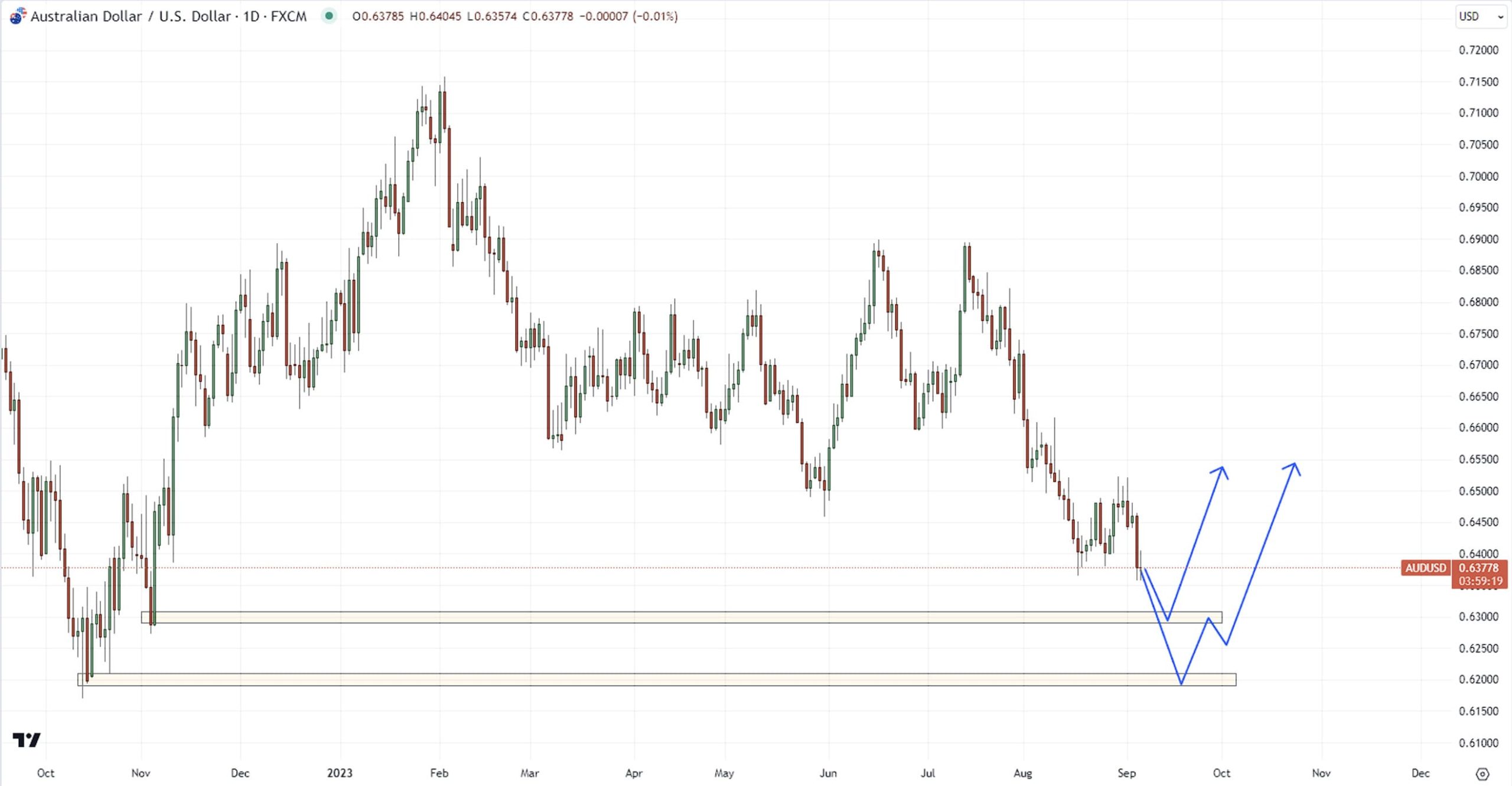
The stop should be expected in the area of the local minimum remaining after the previous major fall, namely at 0.6300 and 0.6200. Given the fact that the current serious support of 0.6400 has been breached, and the price has settled lower, the potential for a decline to these levels is a possibility, with potential sales considered upon the breach of 0.6350.

AUS/USD

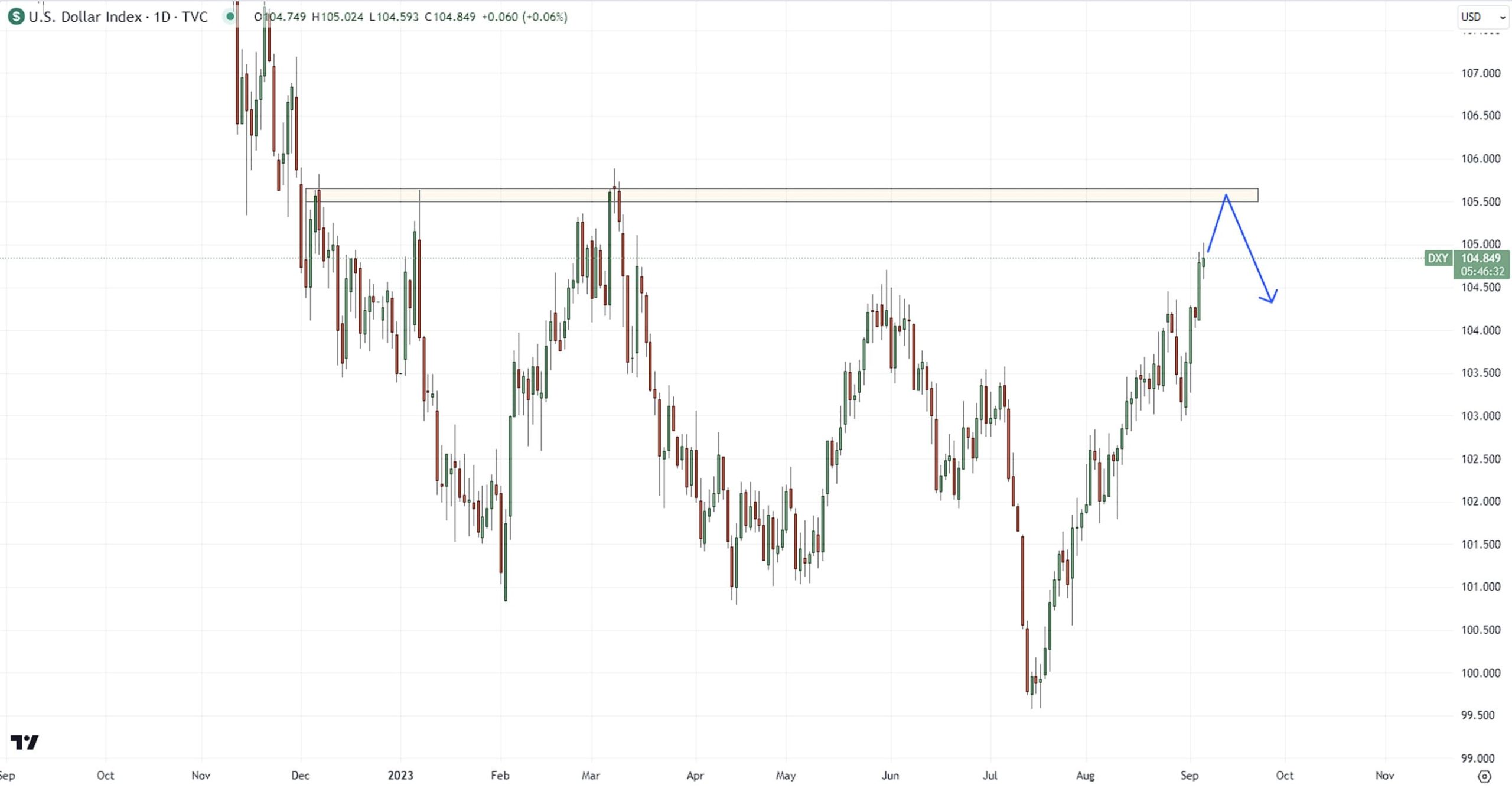
It is worth noting the expectations concerning the U.S. dollar currency index (DXY), which exhibits an inverse correlation with AUS/USD. The DXY continues to rise and aims to reach historical resistance around 105.600.

Given the upcoming forecasts suggesting the inflation rate in the U.S. will remain at the same place, there are concerns regarding further decline. Thus, a reversal in AUS/USD may coincide with a halt in its downward trajectory.

AUS/USD

Oil Markets in the Age of Energy Transition

By Adi Imsirovic

The oil market is changing in response to energy transition. What should we expect in the next few years? Adi Imsirovic explores likely changes in this article.

The future of the oil market, the biggest and most influential commodity market in the world, hinges on the pace and direction of the energy transition. But the speed and direction of this transition are not arbitrary.

A Limit to Growth

Already, more frequent extreme weather events such as hurricanes, flooding, fires, and extreme cold snaps have introduced volatility to the oil and gas markets.1 For these and other climate-related reasons,2 meeting the Paris (COP 21) goals3 is a firm boundary condition4 that must be met if we are to avoid decades of climate disasters.

Having accepted these goals as a boundary condition, necessary oil demand and supply paths to meet it become clearer, making it possible to discuss likely changes in the oil markets, benchmarks, and prices. This article briefly discusses these changes.

experiment

Transition Has Already Started

Ever since the 2006 Stern Review,5 economists have firmly argued that the costs of stabilising the climate are manageable, but delays would be very dangerous and far more costly. Twenty-two years on, the International Monetary Fund (IMF) economists are still pressing the same point: “… to achieve net carbon neutrality by 2050 requires immediate and ambitious action. By 2030, global emissions have to be reduced by at least 25 percent compared with today’s emissions…”6

Working backwards from our boundary condition for meeting Paris climate goals and using the best climate models that we have to date, the International Institute for Sustainable Development (IISD) estimates the global oil consumption to fall by at least 15% by 2030 and a massive 65% by 2050.7 It is important to emphasise that, for a smooth energy transition, we need to reduce the oil demand and not just production. All too often, environmental campaigners and policymakers focus on the need to cut supply, causing unnecessary shocks and volatility in the energy system.8

The transition away from oil may be starting already. In 2021, global refining capacity fell for the first time in 30 years.9 In their Net Zero Emissions (NZE) scenario, compatible with the Paris goals, the International Energy Agency (IEA) sees a falling oil demand at about 6% per annum, from the current 100 million barrels a day (mbd) to only 75 mbd in 2030.10 Most of this fall in demand will come from the growing share of electric vehicles (EVs) and increased recycling of plastics.11 As a result, the demand for oil is likely to become more elastic. In other words, any large increase in the price of oil will simply lead to less demand and an even faster transition.

Relatively new refineries will provide relief to the western markets, facing a spike in demand in the short run, but their longer-term16 viability may not be so bright, given the expected fall in demand.

Aside from the fall in demand for oil, the flows are likely to change too. In the IEA/NZE scenario, the share of production in the Organization of the Petroleum Exporting Countries (OPEC) nations is likely to increase from 35% in 2021 to over 50% in 2050.12 Outside the cartel, most of the supply should come from the United States, Guyana, and Brazil. In particular, US tight oil production is likely to remain resilient as the fracking technology requires only short-term investments, reducing the risk of having stranded assets as the demand eventually falls. This resilience will be further reinforced if OPEC continues with the policy of maintaining high oil prices, accelerating the transition away from oil. In such a scenario, US production should be exceeding that of Saudi Arabia by a large margin.13

Stranded Assets?

However, the rising of the price elasticity of demand as well as the overall consumption will eventually pressure oil prices, increasingly forcing the high-cost producers out of the market. This tension and diminished reputation of Russia as a reliable supplier will dim the OPEC+ alliance defunct. Concentration of market power could make OPEC stronger, but in a much smaller, marginalised, and more price-sensitive market.

The recent energy crisis has brought a lot of criticism against the oil companies for their financial caution and lack of investment in new oil production. New, conventional oil investments take up to 20 years to bring to the production stage,14 making them risky and likely to become stranded assets. It is no wonder that many oil companies prefer to give money back to shareholders. These are basic economics of transition at work – a high risk of investment results in high prices in the short run, accelerating the transition to cheaper and cleaner options.

For quite some time, the growth in demand and new refining capacity has been happening “East of Suez”.15 Most of the new plants have associated petrochemical units in a hope of protecting them from the expected fall in demand. These relatively new refineries will provide relief to the western markets, facing a spike in demand in the short run, but their longer-term16 viability may not be so bright, given the expected fall in demand.

world map oil

Changing Flows and Pricing Power

With the centre of gravity firmly in the Middle East and Asia Pacific regions, one would expect the pricing power for oil to move to this part of the world as well. Already, there are working futures contracts for Oman (Dubai Mercantile Exchange or DME), Murban (ICE Futures Abu Dhabi or IFAD) and a basket of delivered crudes into China (at Shanghai International Exchange or INE). However, this is very unlikely to happen for quite some time. Firstly, the INE contract is a Yuan (Renminbi) – based contract in a highly regulated Chinese economy, dominated by large, state-owned firms.

The Middle East exchanges have backing from powerhouses such as Chicago Mercantile Exchange (CME) and the Intercontinental Exchange (ICE), but the oil contracts are parochial and fragmented. For example, it would make sense for these contracts to incorporate different crudes from the region for alternative delivery.17 Arab Light, Oman, and Upper Zakum could be deliverable in the same contract, increasing the liquidity and depth of the market. Similarly, the IFAD Murban contract in Abu Dhabi could include Saudi Arab Extra Light crude and even West Texas Intermediate (WTI) as they are not dissimilar.

With the US production and exports continuing to dominate global markets for the next one or two decades at least, it is hard to see the role of WTI or even North Sea Brent being challenged. Brent, the premiere global benchmark, will see the introduction of WTI as a deliverable grade into its basket of crude oils from July 2023. While there is always a possibility that the implementation of such a major change may backfire, it is likely that the sheer volume of the US-exported oil, lack of destination, and other restrictions will ensure that these contracts, in some form or another, remain relevant for many years to come. But the energy transition may force them to come in a different form, taking into account their carbon footprint.

Carbon-neutral Benchmarks?

Many governments are looking at including carbon accounting in their trade legislation. The European Commission has proposed a regulation to impose charges for high carbon imports on a range of commodities through the Carbon Border Adjustment Mechanism (CBAM).18 Initially applicable to only a few commodities (including aluminium, steel, and power), the eventual extension of CBAM to fossil fuels is likely. This will have a knock-on effect on the international oil trade. To make the mechanism work, governments and market participants need new tools, clearly indicating the carbon intensity of individual shipments and their “carbon-adjusted” value.

The European Commission has proposed a regulation to impose charges for high carbon imports on a range of commodities through the Carbon Border Adjustment Mechanism (CBAM). Initially applicable to only a few commodities (including aluminium, steel, and power), the eventual extension of CBAM to fossil fuels is likely.

In June 2021, S&P Global Platts launched the first ever daily Platts Carbon Removal Credit assessment and later followed it with the launch of monthly “carbon intensity” (CI) calculations for selected global crude oil fields. Combined, the two numbers facilitate a calculation of the “carbon intensity premium” (CIP) for individual grades of oil, alongside their usual price assessment.19 Higher CI and the associated crude oil premium would indicate a greater environmental cost (estimated using voluntary carbon credits) needed to offset emissions associated with such crudes. For example, it turns out that the heavy and high sulphur Arab Heavy crude oil should trade at a premium to lighter and lower sulphur, Iraqi Kirkuk crude which had higher CI.20 These premiums would vary with the changes in the carbon price used, incentivising the refiners to use crudes with lower carbon content.

These are novel ideas and need a lot more work, especially in the area of independent verification of greenhouse emissions.21 However, they point the way forward for the oil market to adjust to the new environmental realities and efforts to fight climate change.

exhaust

Conclusion

The necessary efforts to meet COP21 goals and avoid a climate disaster will have a major impact on the biggest and most important commodity market in the world.

Policy imbalances and climate change-induced extreme events are likely to increase market volatility and risk premiums. The net-zero emission path will require a large fall in oil consumption and will reduce the importance of oil in the overall energy mix.22 The key market for oil, the transportation sector, will see EVs breaking the dominance of the internal combustion (IC) engine, resulting in an increase in the price elasticity for crude and further decoupling of the economic growth and oil demand.

Marginal demand for oil will firmly stay “East of Suez”, but this will not necessarily imply a shift in the pricing power from the existing benchmarks such as Brent and WTI. OPEC will see a substantial increase in its market share but exercising this power will only lead to a faster transition away from oil.

With its liberal trade, and no destination restrictions, the importance of the US as an oil exporter will grow further and the pricing of its flagship, WTI crude will be a key market price indicator. To facilitate the energy transition, carbon markets will be increasingly utilised in conjunction with independently verified emissions of individual crude fields, facilitating more sustainable selection and trading of crude oil.

This article was originally published on 9 February 2023. 

About the Author

Ad ImsirovicAdi Imsirovic is a Senior Fellow at the Oxford Institute for Energy Studies and a member of Surrey University Energy Economics Centre (SEEC). For over 25 years, he has held a number of senior positions in oil trading in London and Singapore for companies like Texaco, Sempra, and Gazprom. Also, Adi taught Resource and Environmental Economics as well as Energy Economics at the University of Surrey on a part-time basis. Adi Imsirovic has a PhD in Economics and a Master of Science in Energy Economics. He is a Fulbright Scholar and studied at the Graduate School of Arts and Sciences, Harvard University. There, he also worked as an Adjunct Research Fellow at the Energy and the Environmental Policy Centre, Kennedy School of Government, Harvard. Adi is also the author of the book “Trading and Price Discovery for Crude Oils” published by Palgrave McMillan in June 2021.

References

  1. For example, see: https://www.reuters.com/business/energy/hit-oil-output-ida-overshadows-demand-impact-says-goldman-2021-09-13/
  2. Climate Change 2022: Impacts, Adaptation and Vulnerability Working Group II Contribution to the Sixth Assessment Report of the Intergovernmental Panel on Climate Change
  3. Key goal is to limit global warming to well below 2, preferably to 1.5 degrees Celsius, compared to pre-industrial levels. See: https://unfccc.int/process-and-meetings/the-paris-agreement/the-paris-agreement
  4. Boundary condition used here is seen as a mathematical construct – a set of conditions that a system (of simultaneous equations, for example) should meet in order to find a solution or solutions for the system as a whole.
  5. https://www.lse.ac.uk/granthaminstitute/publication/the-economics-of-climate-change-the-stern-review/
  6. IMF World Economic Outlook, October 2022, ch3, p.71.
  7. Using a median of selected IPCC scenarios and the IEA’s Net Zero Emissions by 2050 scenario. International Institute for Sustainable Development (IISD) report: Navigating Energy Transitions, Mapping the Road to 1.5°C’, October 2022.
  8. For my detailed comments on this subject, see: “History Lessons for the Energy Transition”, Energy intelligence, Tue, Jan 11, 2022, https://www.energyintel.com/0000017e-49b0-df72-a97f-ebf4ae9b0000
  9. International Energy Agency, World Energy Outlook 2022, p.326.
  10. Ibid, p328.
  11. In 2030, 60% of all new cars sold are expected to be EVs. Plastic recycling globally increases from the current 17% to 54%. Ibid, p.325.
  12. 12 The highest share of production, ever. Ibid, p.52 and p.341.
  13. ‘US production in 2030 is around 50% higher than in the next largest producer country (Saudi Arabia)’. Ibid, p.338.
  14. Ibid, p.326.
  15. ‘Asia-Pacific is set to add around 3.6 mb/d of refining capacity… The Middle East and Africa are set to expand their refining capacity by 1.6 mb/d and 1.2 mb/d, respectively… 2.6 mb/d of refining capacity is projected to be closed, mostly in developed countries.’ in the ‘World Oil Outlook 2045’ Organization of the Petroleum Exporting Countries 2022.
  16. A typical life of a refinery (with maintenance and upgrading) can be well over 50 years.
  17. Alternative delivery reduces the risk of market concentration and market squeeze by increasing liquidity. What is more, they add to the market depth by introducing players who would not naturally participate in the original market. Alternative delivery was pioneered by Nymex in the mid-1980s, to counter falling WTI production. Several alternative grades were included as deliverables in the WTI futures contract, including Brent.
  18. https://taxation-customs.ec.europa.eu/green-taxation-0/carbon-border-adjustment-mechanism_en
  19. For more details, see https://www.oxfordenergy.org/wpcms/wp-content/uploads/2022/02/New-GHG-verified-mechanisms-for-internationally-traded-crude-oil-and-possible-impact-on-oil-benchmarks.pdf
  20. Ibid, Figure 3, p.7.
  21. Some 70% of the oil sector emissions are Scope 3 emissions at the point of consumption in transportation, heating, or industry. Who is responsible for emissions from the end-use of refinery products?
  22. Even OPEC see a fall in the share of oil in the energy mix from 31% to 29% in 2045. OPEC WOO 2022, p.7.

The Rise of Digital Out-of-Home Advertising

In today’s fast-paced digital world, advertising has evolved to keep up with the changing habits of consumers. Traditional forms of advertising, such as television and print media, have seen a decline in their market share, while digital advertising channels like Facebook, Instagram, and Snapchat have gained immense popularity.

However, amidst this digital revolution, there is still ample room for another form of advertising to thrive – digital out-of-home (DOOH) advertising.

What is Digital Out-of-Home (DOOH) Advertising?

Digital out-of-home advertising refers to the display of media content on digital screens in public areas. It is an enhanced version of traditional out-of-home (OOH) advertising, which encompasses any advertisement found outside the home and not on mobile devices. Digital screens and billboards in town squares, airports, train stations, shopping malls, and other public spaces are examples of DOOH advertising.

The Growth and Potential of DOOH Advertising

The growth potential of DOOH advertising is evident in its increasing market share. While television and print media are losing their market share at a rate of 1.5 percent annually, OOH advertising is growing at four percent, and DOOH advertising is experiencing a staggering growth rate of 16 percent every year. Furthermore, more than 46 percent of Americans use a search engine after seeing an OOH advertisement, indicating the effectiveness and reach of this medium.

Research by Upbeat predicts that the DOOH market will reach $8.5 billion by 2023, further highlighting the immense potential for growth in this sector.

How Can DOOH Help Brands?

Digital out-of-home advertising offers several benefits for brands looking to enhance their advertising campaigns. Here are some ways in which DOOH can help brands:

1. Establishing Brand Awareness

DOOH advertising plays a crucial role in establishing brand awareness by reaching a wide audience in public spaces. The eye-catching and dynamic nature of digital screens allows brands to capture the attention of passersby and leave a lasting impression.

2. Complementing Multi-Channel Campaigns

DOOH advertising complements a brand’s advertising campaigns on other channels, such as television, print, and digital media. By incorporating DOOH into their media mix, brands can significantly increase the effectiveness of their overall campaigns.

3. Driving Online Engagement

An interesting DOOH advertising campaign can trigger curiosity and prompt people to search for the brand online. This online engagement, combined with other media channels, can have a significant impact on a brand’s visibility and customer acquisition.

4. Leveraging Interactive Displays

The integration of interactive displays in DOOH advertising enhances campaign success. Information centers and free wifi hotspots connected to the internet provide opportunities for interactive ads, allowing brands to engage with consumers in real-time.

Advantages of Digital Out-of-Home (DOOH) Advertising over Traditional OOH Advertising

Digital out-of-home advertising offers several advantages over traditional OOH advertising, making it a compelling choice for brands. Here are some key advantages of DOOH advertising:

1. Cost-Effectiveness and Dynamic Content

Compared to traditional OOH advertising, DOOH advertising is cost-effective and allows for dynamic content. Multiple ads can rotate within one banner area, eliminating the need for manual labor and enabling instant changes. Advertising platforms even allow for personalized ad rotations based on the viewer’s profile.

2. Accurate Metrics and Measurements

DOOH advertising provides more accurate metrics and measurements compared to traditional advertising. Advertisers can pay for impressions and receive detailed analytics on their campaigns, allowing them to optimize their strategies and achieve better results. For instance, if you’re advertising on Chicago billboards for one week, at a high traffic hour and then test to change the hour or the area, you’ll have all the necessary data to make an informed decision regarding the optimization of your campaign.

3. Integration of Online Capabilities

With the digital transformation of OOH advertising spaces, DOOH advertising has become more connected to the internet. Digital billboards, kiosks, wifi hotspots, and other digital signages offer more than just ads. They provide charging stations, internet connectivity, and the ability to serve personalized content, enhancing the overall customer experience.

4. Utilizing Rich Media for Better Engagement

DOOH advertising enables the use of rich media, such as videos, to create more engaging campaigns. The dynamic nature of digital screens and the ability to incorporate audio and visuals make it easier for brands to grab the attention of people in public spaces and generate a higher return on investment.

5. Enhanced Targeting and ROI

By leveraging artificial intelligence and advanced targeting options, advertisers can refine their DOOH campaigns to reach the right audience at the right time. This precision targeting leads to better results and a higher return on investment compared to traditional OOH advertising.

The Benefits of DOOH Advertising in Comparison to Traditional Outdoor Billboard Advertising

When comparing DOOH advertising to traditional outdoor billboard advertising, several benefits become evident. Here are some key advantages of DOOH over traditional outdoor billboard advertising:

1. Flexibility and Targeting

DOOH advertising allows for greater flexibility in terms of content and targeting. With digital screens, advertisers can easily change their content and reach specific demographics or locations, ensuring their message reaches the right audience at the right time. It’s now easy to make a switch from Nashville billboards to Bellevue, if you notice your main audience is actually spending more time in the suburbs.

2. Real-Time Updates and Interactivity

Digital screens enable real-time updates and interactivity, providing opportunities for brands to engage with consumers on a deeper level. Advertisers can incorporate interactive elements, such as touchscreens and QR codes, to encourage consumer participation and gather valuable data.

3. Cost-Effectiveness and Efficiency

DOOH advertising offers cost-effectiveness and efficiency compared to traditional outdoor billboard advertising. Digital screens eliminate the need for printing and installation costs associated with static billboards. Additionally, the ability to schedule and rotate ads on digital screens reduces wasted impressions and ensures maximum exposure.

4. Measurable Results and ROI

DOOH advertising provides measurable results and a higher return on investment. Advertisers can track impressions, engagement rates, and conversions, allowing them to evaluate the success of their campaigns and make data-driven decisions for future advertising strategies.

5. Integration with Digital Marketing Channels

DOOH advertising seamlessly integrates with other digital marketing channels, creating a cohesive and comprehensive advertising strategy. Brands can synchronize their DOOH campaigns with social media, mobile advertising, and online platforms to amplify their message and drive customer engagement.

Digital out-of-home advertising is a rapidly growing sector with immense potential for brands to reach and engage with their target audience. With the rise of digital screens and innovative technologies, DOOH advertising offers flexibility, interactivity, and measurable results that traditional outdoor billboard advertising cannot match. By leveraging the benefits of DOOH advertising, brands can enhance their visibility, establish brand awareness, and drive online engagement, ultimately leading to increased customer acquisition and business growth in the digital age.

So, whether it’s digital billboards in Chicago or dynamic displays at airports, DOOH advertising presents a compelling opportunity for brands to make a lasting impact in the public sphere. Embracing this evolving advertising medium can unlock new possibilities and drive success in today’s competitive marketplace.

8 Ways to Become a Pro at Handling Your Finances

You’ll often encounter people who make a considerable annual income but never seem to have any savings. They’re constantly living paycheck to paycheck despite earning well because they tend to spend their money as quickly as they make it. Many people often struggle with this problem. Their income might be in the six-figure range, but they unfortunately don’t know how to manage their finances, putting them in a bind more often than not. 

Money management isn’t easy. Individuals often find it difficult because they haven’t been taught financial literacy in school. As a result, they spend their money unwisely. Their lack of financial literacy also leads them to think that the only solution is to make more money. However, making more money likely means they’ll spend that additional income because lifestyle inflation is very real. 

You can try various strategies to improve your money management. However, the fact is the ideal first step involves becoming more financially literate. You can try enrolling in various courses online, reading financial literacy books, etc. However, If you’re about to start college and looking for a major to help improve your financial skills or are interested in advancing your education in the field, consider getting a relevant degree like a Bachelor’s in accounting because it’ll teach you all the financial literacy and money management fundamentals needed in life. 

Other than that, consider the following tips to help you manage your financials better.

How to Manage Your Finances 

Here are some tips to help you manage your finances better:

1. Budgeting is Crucial

Managing your finances is nearly impossible if you don’t budget. Not creating a realistic monthly budget is what often prompts people to overspend, leading them to acquire debt. Start by evaluating your monthly take-home income. However, your take-home pay might only be $4,000 after tax and social security deductions. 

2. Become More Financially Literate 

Financial literacy is an ongoing process. You can’t just become financially literate overnight after reading a book or watching a video. You’ll want to continuously learn about the best investment methods, especially as new options pop up. For instance, over the past decade, cryptocurrency has emerged as a potential investment method, although most experts recommend against investing heavily in it since it’s too volatile. 

Even professional accountants continue studying more about financial institutions and methodologies after graduating with an undergraduate or graduate degree. For instance, many accountants often pursue certifications such as CFA, CAIA, or CFP after graduating.

3. Track Your Spending

Tracking your spending is important. If you don’t know what you’re spending monthly, the odds are you can improve your money management skills. 

Tracking spending requires having good financial literacy skills. You can maintain a spreadsheet like an old-school accountant or use a money management application to see how much you’re spending on things like eating out, entertainment, utility bills, etc. 

4. Bid Farewell to Debt

Incurring debt for some purchases can be necessary. Most people have student loans because college tuition is expensive, and paying a large sum upfront is challenging. However, try to eliminate student loans as soon as possible because you don’t want to incur the principal since it’ll make paying the debt more difficult.

Furthermore, people often use debt for large purchases, like buying a car. Ensure you can pay off this debt as soon as possible. Otherwise, consider purchasing a used car instead of opting for a brand-new one. 

5. Build a Nest Egg

A nest egg is necessary because unforeseen circumstances can affect your financial situation. For instance, a medical emergency could put you in a difficult position. Similarly, the current economic climate might cause your employer to shut down their business, leaving you without a job. Do you have an emergency fund you can dip into for such expenses? If you don’t, you’re in a precarious position. 

Set aside a percentage of your income. Ideally, you’ll want to have enough money to sustain your current standard of living for three to six months. 

6. Pay Your Bills Timely

Another way to manage your finances better is by paying your bills timely. If you live alone, you’ll likely have several bills you must pay monthly. For instance, rent, electricity, internet, and other utility bills require immediate attention. Pay them before their due date. Otherwise, you risk incurring late fees on your bills. Moreover, paying your bills on time will also improve your credit score. 

7. Recurring Fees Must Go

Incurring recurring charges and forgetting about them is easy. For instance, many streaming platforms exist today, like Disney Plus, Paramount Plus, Netflix, Amazon Prime, etc. You might be subscribed to all these streaming platforms but only use one of them regularly. Do you need the other ones? The answer is likely no, especially since you’re not using them. However, the monthly fee for these subscriptions is still deducted from your account whether you use them or not. 

8. Create an Investment Strategy

The full retirement age is 66 in the United States if you were born anywhere between 1943 and 1954. It increases to 67 for people born between 1955 and 1960 or after. Since retirement means no longer having a monthly paycheck, you’ll need to prepare for the future by investing early. Thus, an investment strategy is paramount. 

Check if your employer offers a 401K matching account. But if they don’t, consider opening a retirement account. You might also want to consult a financial advisor and seek their guidance. They’ll help you pick investments that can yield a high return on investment or protect your wealth from inflation. 

For instance, stocks are a particularly popular investment vehicle for most Americans. A survey shows that 61% of Americans own stocks. Similarly, gold is common because most investors consider it an excellent way to protect themselves from inflation.

Another way to support your long-term financial goals is by generating passive income through alternative means. For example, investing in vending machines can offer a steady stream of revenue with minimal upkeep. Niche options like Hot Wheels vending machines can be especially lucrative in high-traffic areas such as malls or family entertainment centers, tapping into both collectors and children. Exploring creative income sources like these can complement your traditional investment strategy and help secure a more comfortable retirement.

Conclusion

Learning how to manage your finances properly is crucial for everyone. Doing so is essential because it’ll prepare you for a rainy day in the future that you might not have seen coming. Hopefully, the tips listed in this article help you improve your money management skills.

EDITOR'S PICK OF THE WEEK

CFO's new mandate. CFO explaining the presentation

The Performance and Transformation Orchestrator: The CFO’s New Mandate in the Age of AI

By Terence Tse CFOs are evolving into AI-driven transformation orchestrators, balancing finance, technology, and strategy while upskilling teams, managing risks, and driving measurable business value. A key insight from this year’s AI for CFOs event, organized...

WISE DECISION MAKER GUIDE

POWER INFLUENCERS

Emerging Trends

The Future of Global Trade