In the thriving field of electronics, having a trusted and reliable PCB (Printed Circuit Board) manufacturer is like wielding a magic wand—it streamlines processes, ensures quality, and aids in the successful implementation of projects.
A standout in this sector is the renowned PCB prototype and fabrication manufacturer—PCBPit. They have carved a niche for themselves through impeccable service delivery, innovative solutions and sheer dedication to quality. This review aims to offer an in-depth overview and insightful evaluation of PCBPit and its range of services.
Introduction
Being a linchpin in electronics design and manufacturing, the importance of a PCB cannot be overemphasized. From lighting systems to sophisticated medical equipment, the PCB is essentially the brain behind electronic devices.
It’s more than a component; it’s a promise of uncompromised functionality. And among the manufacturers who pledge this promise, PCBPit resonates louder. The motivation and knack for delivering high-performance PCBs have poised them as a paragon in the PCB manufacturing field.
Overview of PCBPit
PCBPit, specializing in PCB prototype manufacturing, PCB fabrication, and PCB assembly (PCBA), has emerged as a veritable force in the electronics industry. Handling intricate and complex circuit board designs with finesse, they have proven their mettle time and again, winning advocate customers worldwide.
Team and Expertise
Their distinctive power and advantage is rooted deeply in their dynamic crew of adept engineers. This proficient team possesses an impeccable ability to deconstruct and understand intricate designs and patterns, transforming them into functional wonders. Leveraging their extensive knowledge and in-depth understanding of the industry’s nuances, they meticulously turn theoretical concepts into reality.
These engineers excel in creating printed circuit boards (PCBs), an essential component in the world of electronics. Their expertise in this area is deeply reflected in the products they create. The printed circuit boards they create aren’t ordinary; they are an embodiment of superior craftsmanship and advanced technology. Utilizing their proficiency, the engineers construct these integral electronics components with absolute precision; every trace, every component footprint, speaks of the careful consideration and expertise that has gone into their creation.
Quality and Standards
PCBPit invests unwavering dedication and commitment towards delivering exceptional quality in the PCBs they produce. Their approach to quality control is both focused and rigorous. Following protocols that align seamlessly with international standards, they conduct thorough quality inspections at every stage of the production process.
This persistent attention to detail guarantees that each printed circuit board they manufacture is not only optimally functional but also reliable and robust.
The production process at PCBPit is built around longevity. They ensure that each PCB is crafted with precision and designed with enduring durability in mind, intending to withstand not just daily use but also the significant test of time. They recognize that their clients are looking for products that will provide lasting service, and they endeavor to exceed these expectations.
Towards the concluding stages of the production process, each printed circuit board undergoes sophisticated testing procedures before it is allowed to reach the customer. This testing acts as a final checkpoint, assuring complete confirmation of the PCB’s prime performance. These stringent checks ensure that every single unit that leaves the production line not just meets but exceeds the required specifications.
Every PCB manufactured by PCBPit is a testament to their dedication and determination to deliver only the finest products. By prioritizing high-quality standards and implementing rigorous checks throughout the manufacturing process, they ensure that each PCB is a reliable, enduring, and high performing product, worthy of their customers’ trust.
Design Services and File Acceptance
In addition to their exemplary production services, PCBPit also provides comprehensive PCB design services. Accepting Gerber files and other formats, they offer flexibility in receiving PCB design files. PCBPit thus provides a solution tailored to customer needs, making them an ideal partner for all PCB related requirements.
A Closer Look at PCBPit Services
The services offered by PCBPit set them apart in a crowded market. Let’s delve deeper and shed light on the key offerings that solidify their reputation.
Fast Quotation Service
The philosophy of PCBPit is centered on customer convenience. Substantiating this is their ‘quick quote’ service.
Customers can upload their PCB design files onto the PCBPit platform and obtain a fast, accurate quote. This not only eliminates unending wait times but also provides crystal-clear cost understanding upfront.
High-Volume Order Handling
The true mettle of a PCB manufacturer is tested by its ability to handle not just the complexity but also the quantity.
PCBPit elegantly handles high-volume PCB orders, underpinning their robust infrastructure and proficient management. So, whether it’s a quick prototype or a substantial order requirement, PCBPit proves to be a reliable partner.
RoHS Compliant PCBs
Environmental sustainability is no longer an option but a mandate. PCBPit acknowledges and practices this by offering RoHS (Restriction of Hazardous Substances) compliant PCBs.
They are committed to green and environmentally friendly practices, making them not just a tech partner but a contributor towards greener earth.
Turnaround Time
While PCBPit demonstrates technical prowess, they also ace in prompt service delivery. The turnaround time for PCB orders depends upon both complexity and volume. Simple prototypes can be prepared in just a matter of a few days.
Larger or intricate orders might require a little more time, understandably so. Keeping in mind the valuable time and resources of their clients, they make all the efforts to deliver quick yet quality service.
Conclusion
In a fast-paced world where electronics are the backbone of everyday life, having a reliable, innovative, and efficient PCB manufacturer like PCBPit can indeed be a game-changer. When we think about their capabilities, from handling complex circuit board designs to regulatory adherence, and from high-volume production to fast quotes, it’s easy to see why they have developed a strong standing in the market.
However, it’s not just the quality and range of services that make PCBPit admirable. They also have an unwavering commitment to quality, flexibility, and environmental sustainability. This combination of business acumen, technical prowess, and sensitivity towards our planet makes them a standout.
The world of electronics is evolving rapidly, and with a partner like PCBPit, businesses and enthusiasts alike can keep pace with this change, driving innovation and success. The path of growth in electronics is fraught with challenges—but with trust, reliability, and quality that PCBPit delivers, these challenges can surely be met with confidence. The final reflection for the readers then is—how can you leverage a resource like PCBPit to take your electronic projects to the next level of excellence?
Every business leader has their own set of problems and pain points. For Jasper Steinhausen, an expert in making the pursuit of sustainability profitable for businesses, when you prioritise sustainability, solutions to these other issues will all fall into place.
Three problems are typical for businesses across sectors and sizes that have yet to wholeheartedly engage in the sustainability agenda. These companies can be described as lost in the wilderness. They carry out different initiatives when it comes to sustainability, but very often this has a limited impact both in terms of business results and environmental results. The three common problems, which are outlined below, fall into two categories – one is personal and two relate to business.
I can’t lead this
Business leaders know it’s smart from a strategic point of view to take the lead on sustainability, especially when competitors are holding back, however, they often find themselves in a situation whereby they don’t know how to lead it.
It is like having to set the direction heading into a densely fogged and complicated terrain that you know is full of cliffs, pitfalls, bushes, twists and turns. How do you navigate such terrain with a lack of clarity and experience?
For companies lost in the wilderness, their sustainability efforts do not satisfy the expectations. It is clear that what they are doing is detached from their core business.
Like most strong leaders, you are probably used to leading from the front. This just makes it all the harder now that you are standing looking into this foggy terrain in front of you. All of this leads to the extremely unpleasant feeling that hits us all from time to time. It’s the feeling of not being good enough. This is one of the basic fears that humans have and that we want to avoid the most. Consequently, many business leaders decide to postpone (and keep postponing) when to engage and start to take steps into this unknown, foggy territory. ‘‘Let’s look at this next quarter or next year instead…’’ or downsizing the action steps to ‘‘learning more’’.
The implications of this are that you miss out on huge business opportunities and value, and you also prolong the period where you put yourself through the pain of believing that you’re not good enough.
The good news is that it actually takes a lot less to upgrade your mindset and your understanding of this than you might think. Or, in other words, to get the fog to lift and present you with the opportunity to see clearly, set the direction and lead your company as you’re used to.
We are less attractive
The second common problem that business leaders lost in the wilderness face is the experience of their companies gradually becoming less attractive. You know this is your situation if the number and quality of job applications (advertised and unsolicited) go down or stop completely. Another sign is a decrease in overall engagement in the organisation. You can perhaps do an annual employee satisfaction survey to put a number on that feeling. These are just some of the internal signs. Externally, the cost of getting a new client will increase, and more money is often needed for marketing in general, to try to win back what is lost.
Clearly, the company is losing some of its appeal. Some describe it as ‘‘starting to become invisible’’. Something else is going on in the marketplace that is stealing the attention. It is no longer enough to have a great product, a strong position in the market, and be known for good quality (or whatever the stronghold is that your brand is built upon). It is no longer enough to have nice salaries and good benefit packages.
Historically, this made you an attractive partner, an attractive place to work or an attractive supplier. Now something else is stealing the attraction, and if you don’t have it, then you will start to fall behind.
Of course, you know that the ‘‘new’’ thing is sustainability. For companies lost in the wilderness, their sustainability efforts do not satisfy the expectations. It is clear that what they are doing is detached from their core business. They continue ‘‘business as usual’’ while making green initiatives on the side. That does not suffice by any measurement, and the market and the people around you are realising this like never before. This way of working also increases the risk of being accused of greenwashing if the company uses these initiatives in marketing and sales.
Business is hurting
The third problem is highly influenced by the first two. Today, the competition is harder than ever. COVID has changed and challenged the landscape in many sectors during the last few years. Many new competitors are entering your home market and companies globally are shaping their competitive edge as best they can. The increased competition puts pressure on prices. The war in Ukraine and the massive rise in energy costs have made a lot of these problems worse.
At the same time, demand and expectations regarding sustainability are increasing, both in terms of what the market demands and from legislators (both the European Union and, often, also national policies).
Engaging wholeheartedly in circular economy and sustainability can solve or soften many of the problems listed.
The broader picture is that companies are faced with a serious cocktail of problems that have magnified in the last couple of years but are expected to be temporary: supply chain issues, inflation, and prices that are rising on energy and on many materials. At the same time, companies have to face increasing demands and expectations to deliver on sustainability. This is a long-term trend and is not expected to go away.
These changes bring their own set of critical issues. Interestingly enough, these temporary and long-term changes interact and sometimes correlate. Increasingly, people are looking at you and deciding whether you are part of the solution or part of the problem. The consequences of being put in the wrong box are increasing and can have a tangible impact on business.
Sustainability can be your organisational linchpin
As you can see, the three problems interact and mutually reinforce one another. The good news is that there is a cure for all of them. Engaging wholeheartedly in circular economy and sustainability can solve or soften many of the problems listed. Sustainability can be the linchpin for the organisation or the one key theme that, when in focus, can make a range of other issues fall into place.
The essential thing is that sustainability has an impact on so many business issues, but with a distinct quality that most of these issues don’t have themselves: it is humanising and appealing to most people. Do it right and sustainability can be the medium that engages and unifies the organisation while solving the most important business problems as a high-value by-product.
This is an adapted book extract from Making Sustainability Profitable by Jasper Steinhausen.
This article was originally published on 29 September, 2023.
Starting a business can be an exciting venture, but it’s important to navigate the process with caution and avoid common mistakes that can have negative implications for your business in the long run.
When registering your business in Florida, there are several key areas where entrepreneurs often make errors. By understanding these mistakes and taking proactive measures to avoid them, you can set your business up for success and avoid potential legal and financial pitfalls.
Neglecting to Register with the State of Florida
One of the most critical mistakes entrepreneurs make is failing to register their business with the State of Florida. All new and existing business entities that conduct business within the state must register with the Florida Department of State.
Failure to do so can result in personal liability for business debts and obligations, difficulty in obtaining a company bank account, and challenges in using the state court systems. To ensure your business remains in good standing, it’s essential to file an annual report between January 1st and May 1st each year.
Check out this article on how to register a business in Florida.
Selecting a Name that Violates Intellectual Property Rights
When choosing a name for your business, it’s vital to verify that it does not infringe upon the intellectual property rights of a third party.
Selecting a name that’s the same or similar to another business can lead to legal disputes and the need to rebrand your business, resulting in significant expenses and potential loss of the goodwill you’ve built under the previous name.
Conduct thorough research to ensure your chosen name is unique and doesn’t violate any existing trademarks or copyrights.
Failing to Establish Clear and Enforceable Contracts
Having well-drafted contracts is essential for any business. Failing to establish clear and enforceable contracts with vendors, customers, and strategic partners can lead to misunderstandings and disputes.
A good contract outlines the expectations of both parties, specifies each party’s responsibilities, and provides a framework for resolving any potential conflicts.
Without written contracts, it becomes difficult to enforce your business’s rights or defend against claims, as there’s no clear documentation of the agreed-upon terms.
Neglecting to Have Partnership/Operating/Shareholder Agreements
If you co-own your business with other individuals or entities, it’s crucial to have a partnership agreement (for partnerships), an operating agreement (for limited liability companies), or a shareholder agreement (for corporations).
These agreements establish expectations, rules for decision-making, profit distribution, dispute resolution, and guidelines for the transfer of business interests in the event of death, disability, or divorce.
Having these agreements in place from the start can prevent complex disputes between partners and help ensure the smooth operation of your business.
Failure to Comply with Employment Laws
As soon as your business hires its first employee, it becomes an employer and must comply with relevant employment laws.
The number of employment laws your business must adhere to will increase as your business grows. Failure to comply with employment laws can result in significant fines and penalties.
For example, assuming that all salaried employees are exempt from overtime pay under the Fair Labor Standards Act can lead to substantial fines if incorrect. Stay informed about employment laws and consult with legal professionals to ensure compliance.
Mixing Business and Personal Accounts
To protect your personal assets from business liabilities, it’s crucial to maintain separate business and personal accounts.
Commingling funds or using business funds for personal expenses can result in a legal concept known as “piercing the corporate veil,” where creditors can hold shareholders or partners personally liable for business actions.
Establish and consistently use a separate bank account for business transactions, ensuring that business expenses are paid from the business account and personal expenses from personal accounts.
Delayed Dispute Resolution Leading to Litigation
Addressing problems and disputes promptly is crucial for avoiding costly litigation and preserving the growth of your business.
While litigation may sometimes be unavoidable, many disputes can be resolved through early intervention and effective communication. Having well-drafted contracts that include dispute-resolution mechanisms can help mitigate the risk of costly litigation.
When faced with a dispute, consult with an experienced attorney who can provide guidance on resolving the issue before it escalates into a legal battle.
Failure to Obtain the Required Business License
Most businesses are required to obtain some form of a business license. Failure to obtain the necessary licenses can result in fines and penalties.
Each state and local government has specific regulations regarding business licenses, so it’s crucial to research and understand the requirements for your particular industry and location.
Ensure that you obtain the appropriate licenses before commencing business operations to avoid legal consequences and potential disruptions to your business.
Neglecting to Purchase Liability Insurance
Liability insurance is an essential tool for managing risk and protecting your business from potential lawsuits. While you hope to never face a legal claim, the longer your business operates, the higher the likelihood of encountering circumstances that could lead to litigation.
Adequate liability insurance coverage can help mitigate the financial impact of legal judgments and protect your business’s assets. Consult with a commercial insurance agent to determine the appropriate coverage for your business and industry.
Inadequate Tax and Accounting Practices
A comprehensive understanding of the tax obligations associated with your business is crucial for avoiding penalties and maintaining compliance with local, state, and federal regulations.
Engage the services of a certified public accountant (CPA) to ensure that your business accurately and timely files the necessary tax returns and pays the required taxes.
Implementing a robust accounting system from the start will help you track your business’s financial information, access important reports, and make informed decisions about your company’s financial health.
Conclusion
By avoiding these common mistakes when registering your business in Florida, you can set a solid foundation for your entrepreneurial journey.
Remember to consult with legal and financial professionals to ensure compliance with all relevant laws and regulations.
Taking the time to establish strong legal and operational practices will safeguard your business’s future success and protect your personal assets.
Dental implant surgery, a transformative procedure designed to restore both the function and aesthetics of your smile, is an undertaking that requires thorough preparation. If you’ve made the decision to embark on this journey towards dental restoration, it’s crucial to equip yourself with comprehensive knowledge to ensure the surgery’s success. So, here are some of the things you need to know when it comes to dental implant surgery preparation. The average cost of dental implants in the United States can vary widely, depending on the complexity of the procedure and geographic location. From delving into the intricacies of dental implants to understanding how to choose the right surgeon, pre-surgery consultations, pre-operative preparations, the day of surgery, and post-operative care, our aim is to provide you with a holistic understanding of what it takes to be well-prepared for this life-changing procedure.
In the realm of modern dentistry, dental implants stand out as a remarkable innovation. These are artificial tooth roots typically made of biocompatible titanium, and their placement involves a surgical procedure. The primary purpose of dental implants is to serve as stable anchors for replacement teeth, making them the closest thing to natural teeth. This concept is the foundation of how dental implants work. By understanding the intricacies of this technology, you gain a deeper appreciation for the significance of proper preparation before going under the surgeon’s skilled hands.
Choosing the Right Dental Surgeon
The pivotal decision to choose the most suitable dental surgeon cannot be overstated. This choice will significantly impact your entire dental implant journey. To make an informed decision, consider seeking out a board-certified oral surgeon with specialized expertise in dental implant surgery. Investigate their professional history, read testimonials, and schedule initial consultations to gauge their compatibility with your specific needs. Ensuring that you have full confidence in your surgeon’s abilities is essential, as their skill and experience will greatly influence the outcome of the procedure. Maintaining good oral health requires regular visits to a dentist in Santa Clarita, where several dental offices provide a variety of services to suit the needs of local customers.
Pre-Surgery Consultation
The pre-surgery consultation is a vital component of your dental implant journey. It’s an opportunity to engage in an in-depth discussion with your oral surgeon, during which you’ll disclose your complete oral health and medical history. Furthermore, you’ll discuss the specifics of the impending procedure. This dialogue is instrumental in addressing your questions, concerns, and expectations, particularly if you stick to a professional dental laboratory packed with experts who know all about this procedure. On the surgeon’s part, they will perform a comprehensive examination to determine your suitability as a candidate for dental implant surgery. This is the time to ensure that you and your surgeon are on the same page and that you’re both confident in moving forward.
In the weeks preceding your surgery, the oral surgeon will provide you with an array of pre-operative instructions. These guidelines are meticulously crafted to ensure your safety and the procedure’s success. These instructions may include dietary restrictions to follow, medications you should avoid, and any lifestyle adjustments that may be necessary. Adhering to these guidelines is of paramount importance, as they contribute to the minimization of potential complications and guarantee a smooth and successful surgery. Therefore, it is crucial to take these recommendations seriously and integrate them into your daily routine.
The Day of Surgery
The day you’ve been diligently preparing for is finally here – the day of your dental implant surgery. Arrive at the clinic punctually, ensuring that a friend or family member is on standby to drive you home afterward, as you may still be under the influence of anesthesia post-surgery. The surgical procedure typically spans a few hours, during which the surgeon expertly and meticulously places the implants within your jawbone. It’s important to understand that you won’t experience any pain during the surgery, thanks to the anesthesia used. This is a significant milestone on your journey towards a restored smile.
Post-Operative Care and Recovery
Once the surgery is completed, the process of recovery begins. It’s essential to anticipate some post-operative discomfort and swelling, but following the oral surgeon’s detailed post-operative care instructions is critical for a smooth recuperation. These instructions might encompass a temporary soft diet to avoid any strain on the surgical site, prescribed pain medications to manage discomfort, and, most importantly, strict adherence to maintaining exceptional oral hygiene to prevent any infections or complications. The recovery phase is a crucial part of the dental implant journey, as it sets the stage for the successful integration of the implants into your jawbone, ultimately leading to the revitalization of your dental health and aesthetics.
The road to dental implant surgery is a profound one, promising to restore the beauty and functionality of your smile. Your commitment to these preparations will directly impact the outcome of the surgery and your future dental health. Thus, remember that your investment in your oral health is an investment in your overall well-being, and by dedicating the necessary time and effort to this process, you are taking a significant step towards a future marked by confidence and revitalized dental health.
In today’s fast-paced world, the daily commute can often feel like a necessary but forgettable routine. Yet, what if we could transform this journey into an opportunity for positive impact – both for your wallet and the environment?
As we adjust to the new norms of hybrid working and flexible office hours, there’s never been a better time to reimagine our daily travel. The commute is ripe for disruption, and the next generation of commuting is here in the form of electric cars. From financial incentives like electric car salary sacrifice schemes to technological innovations just around the corner, there has never been a better time to consider shaking up your commuting routine.
The financial upsides of a greener commute
When it comes to commuting, the economics of driving an internal combustion engine (ICE) car compared to an electric car are increasingly tilting in favour of the latter. Thanks to continuous advancements in EV technology, the cost per mile for electric cars has dramatically decreased, making them a more cost-efficient option for the daily commute. In many cases, the electricity costs for charging an EV can be as low as 4p per mile, compared to the 12-15p per mile typically associated with petrol or diesel vehicles.
It’s not just the fuel savings that make EVs an appealing choice; the vehicle tax benefits and lower maintenance costs add to the economic advantages. These cost savings become even more pronounced when you consider the introduction of government policies that incentivise green transportation. While not directly related to commuting, policy updates like Ofgem’s energy price caps have a spillover effect that reduces the overall operational costs of electric vehicles.
And let’s not overlook the emerging role of electric car salary sacrifice schemes in making EVs even more accessible. In exchange for a small portion of their pre-tax salary, employees can lease an EV at a fraction of its retail price, often saving up to 60% on their monthly car lease. It’s a win for your wallet and the environment – meaning you can look forward to your daily commute.
The tech revolution in commuting
The technological commuting landscape is set for some groundbreaking changes, particularly in EVs. Solid-state batteries are poised to be the next big thing, offering increased safety, a higher energy density and faster charging times. These advancements could dramatically lower the total lifetime cost of an EV, making it an even more appealing option for those considering a switch.
And it’s not just the batteries. Imagine driving into your garage at the end of a long day without thinking about plugging in your car or visiting a petrol station. Wireless charging technology is already on the horizon, making EV ownership more convenient and accessible. In cities like London, wireless charging technology is helping to transition public transport fleets to electric, signalling broader societal shifts towards sustainable commuting.
Yet perhaps the most exciting advancement is Vehicle-to-Grid (V2G) technology. This innovation allows your EV to act as a battery for your home, pulling electricity from the grid during off-peak rates and potentially allowing you to sell excess energy back. It’s a game-changer in reducing your monthly expenses and could make electric car leases through salary sacrifice schemes even more attractive.
This technological evolution isn’t just about a greener commute. It could redefine what we expect from our vehicles, turning them into active contributors to a more stable electricity grid and a more sustainable future.
The impact on business productivity
Often overlooked, the daily commute directly affects employee productivity and, by extension, a company’s bottom line. Supporting your employees to ditch their fossil-fueled cars in favour of an EV can be the difference between stressed and frustrated employees and a happy and productive team. A stress-free commute is not just a ‘soft’ benefit; it’s an investment in employee wellbeing and, consequently, in enhanced productivity.
In today’s post-lockdown economy, aligning your company’s brand with sustainability isn’t just good for the planet; it’s excellent for business. Not only do eco-conscious companies attract and retain top talent, but they also enhance their bottom line. Ensuring that your employees are happy, motivated and aligned with your values is more critical than ever – and adopting eco-friendly commuting options like electric cars via salary sacrifice schemes is a significant step in that direction.
With the workforce increasingly looking for flexibility, superb benefits and wellbeing support, reimagining the commute becomes not just a question of environmental responsibility but also a strategic move for companies aiming to boost productivity and retain talent.
The road ahead: Why your commute matters more than you think
The daily commute is far more than just a means of getting from A to B; it’s a microcosm of broader economic, environmental and social trends. By embracing electric vehicles and leveraging schemes like salary sacrifice, businesses are making prudent financial decisions and taking a monumental step toward sustainability.
So, as we venture into a world increasingly focused on economic stability and environmental responsibility, let’s make our commutes count. Whether saving money, saving the planet, or simply making our daily journeys more enjoyable, a revamped approach to commuting offers a multi-layered solution that businesses should consider.
In the realm of financial management within any organization, the accounts payable department stands as a crucial yet sometimes overlooked partner. Understanding the complexities of accounts payable is essential for businesses aiming for financial efficiency. It serves as a cornerstone of fiscal responsibility. Here, we embark on an exploration of accounts payable outsourcing services, unraveling its processes, challenges, and its indispensable role in upholding a robust financial ecosystem.
What is Accounts Payable?
At its core, accounts payable is the financial term used to describe the money a company owes to its vendors and suppliers for goods and services received but not yet paid for. It’s essentially a snapshot of the company’s short-term liabilities, encompassing everything from office supplies to raw materials.
The Accounts Payable Process
Invoice Receipt and Verification
The accounts payable process typically begins with the receipt of an invoice from a vendor. This document outlines the details of the transaction, including the amount owed, due date, and a breakdown of the products or services provided. The accounts payable team carefully verifies the invoice against purchase orders and delivery receipts to ensure accuracy.
Approval Workflow
Once the invoice is verified, it moves through an approval workflow within the organization. This step ensures that the goods or services were indeed received, conforming to the agreed-upon terms.
Payment Authorization
After approval, the payment is authorized, and the accounts payable team schedules the payment to the vendor. This can be a delicate balance to maintain, as timely payments are crucial for maintaining positive vendor relationships and often come with potential early payment discounts.
Recording Transactions
Each step in the accounts payable process is meticulously recorded in the company’s accounting system. This recording not only maintains an accurate financial record but also aids in budgeting and forecasting.
The Importance of Streamlined Accounts Payable Processes
1. Cash Flow Management
Efficient accounts payable processes contribute significantly to effective cash flow management. By streamlining the payment process and taking advantage of early payment discounts when possible, a business can optimize its cash flow, ensuring that funds are available for other critical operations.
2. Vendor Relationships
Timely payments are essential for fostering positive relationships with vendors. A reputation for prompt payments can lead to better credit terms and improved collaboration, potentially opening the door to more favorable agreements in the future.
3. Compliance and Reporting
Maintaining accurate and up-to-date accounts payable records is crucial for compliance with financial regulations. It also facilitates the generation of comprehensive financial reports, providing insights into spending patterns and helping businesses make informed financial decisions.
4. Cost Savings
Efficient accounts payable processes can result in cost savings through early payment discounts and the avoidance of late payment penalties. Automation of the accounts payable workflow further enhances efficiency, reducing the likelihood of errors and the need for manual intervention.
Challenges in Accounts Payable Management
Effectively managing Accounts Payable (AP) presents several challenges, necessitating a strategic approach for streamlined operations and financial stability.
Invoice Data Entry: The manual input of data is not only time-consuming but also susceptible to errors, potentially resulting in discrepancies and payment issues.
Late Payments: Missing payment deadlines can strain relationships with suppliers, adversely affecting your reputation and potentially leading to penalties or disrupted services.
Fraud Risk: Inadequate controls and oversight expose your business to the risk of fraudulent activities, which can result in financial losses and harm to your company’s reputation.
Regulatory Compliance: Staying abreast of ever-changing financial regulations can be a daunting task, as non-compliance can lead to legal and financial consequences.
Addressing these challenges proactively and implementing efficient AP management strategies can help your business maintain financial stability and ensure smooth operations.
Best Practices in Accounts Payable Management
For optimal AP management, adhere to these key recommendations to enhance efficiency, accuracy, and vendor relationships while safeguarding your data.
Automation: Invest in AP automation to enhance efficiency and accuracy in processing.
Clear Workflow: Establish a transparent approval workflow to streamline the payment process.
Vendor Communication: Maintain open and regular communication with vendors to foster positive relationships.
Regular Reconciliation: Ensure invoices align with payments through consistent reconciliation practices.
Data Security: Implement robust security measures to protect sensitive data and prevent unauthorized access.
To excel in AP management, the adoption of these proven strategies is essential, ensuring smooth operations and financial well-being for your business.
Outsource Accounts Payable Services to Increased Efficiency
In the digital age, outsourcing accounts payable services is the key strategy for enhancing the efficiency of accounts payable processes. Automated systems can expedite invoice processing, reduce errors, and provide real-time visibility into financial transactions. This not only saves time but also allows the accounts payable team to focus on more strategic tasks.
Conclusion
In conclusion, accounts payable is a fundamental aspect of financial management that should not be underestimated. By understanding and optimizing the accounts payable process, businesses can achieve better cash flow management, strengthen vendor relationships, ensure compliance, and ultimately contribute to their overall financial health. Embracing technology and automation further enhances the efficiency of accounts payable processes, allowing businesses to navigate the complex landscape of financial management with greater ease.
As businesses evolve, so do their financial responsibilities. Acknowledging the significance of accounts payable is a step toward fostering a robust financial foundation that can withstand the dynamic challenges of the modern business landscape.
Diversification is a cornerstone of successful investing, and multi-asset trading has become increasingly popular among traders looking to build diversified portfolios. MetaTrader 4 (MT4) and MetaTrader 5 (MT5) are two well-known platforms that cater to traders with diverse asset preferences. However, choosing the right platform for managing a multi-asset portfolio is crucial. In this article, we will compare MT4 and MT5 to help you determine which is more suitable for managing diversified portfolios using a forex trading app.
MetaTrader 4 (MT4): A Classic Choice
MetaTrader 4 has long been favored by traders for its user-friendly interface and extensive library of custom indicators and expert advisors. Here’s how MT4 is suitable for diversified portfolios:
Custom Indicators and Scripts: MT4 allows traders to use custom technical indicators and scripts, offering flexibility in analyzing various assets, from forex to commodities.
Multi-Asset Support: While primarily designed for forex trading, MT4 also supports CFD trading, making it suitable for those interested in diversifying their portfolios with indices, commodities, and other assets.
Algorithmic Trading: MT4’s support for algorithmic trading enables traders to create and deploy automated trading strategies across multiple asset classes.
MetaTrader 5 (MT5): The All-in-One Solution
MetaTrader 5 was developed as an improved version of MT4, with added features and enhanced capabilities. Let’s explore how MT5 serves diversified portfolios:
Extended Asset Classes: MT5 was explicitly designed to support multiple asset classes, including forex, commodities, stocks, and cryptocurrencies, making it an ideal choice for traders seeking a broad asset spectrum.
Additional Timeframes: MT5 offers more timeframes compared to MT4, enabling traders to analyse price data in a variety of time horizons, accommodating different asset classes’ unique trading behaviours.
Economic Calendar: The integrated economic calendar in MT5 provides valuable insights into economic events that can impact a wide range of assets.
Selecting the Right Platform for Multi-Asset Trading
The diversity of your portfolio and your trading preferences will determine which platform is best for you. Here are some factors to consider when selecting between MT4 and MT5:
Asset Classes: If your portfolio includes a mix of forex, commodities, stocks, and indices, MT5 is the more suitable choice due to its broader asset class support.
Trading Style: Think about your trading approach and if you employ scripts or custom indicators. If you rely on MT4-specific tools and are primarily a forex trader, MT4 can be more enticing.
Timeframes: The greater variety of MT5 can be useful if you need more time frames for your analysis—especially for assets with unusual trading patterns.
The Forex Trading App Factor
Mobile versions of MT4 and MT5 are available, enabling traders to access and manage their diverse portfolios while on the road. Make sure the forex trading app you select for your smartphone is both user-friendly and compatible with the platform of your choice—MT4 or MT5—for easy multi-asset trading.
Conclusion
Managing diversified portfolios in the world of multi-asset trading is a significant undertaking, and the choice between MT4 and MT5 can significantly impact your success. When selecting the most suitable platform, consider the asset classes you trade, your preferred trading style, and your need for various timeframes for analysis. Additionally, make sure that your chosen forex trading app aligns with your platform selection to ensure seamless access to your multi-asset portfolio. By making an informed decision, you can effectively manage your diversified investments and work toward your financial goals.
The green transition of energy, transport, industry, urbanisation and agriculture requires a massive acceleration of global green investments across the world to meet the Paris agreement and reverse the loss of biodiversity. Yet so far, green finance lacks harmonised definitions regarding types of underlying assets, disclosure requirements, impact thresholds and applicable instruments. This makes international green finance flows, disclosure, and risk management incomplete, while providing fertile ground for “greenwashing”.
As two of the major markets for green finance, China and the European Union have been cooperating to develop shared standards, most recently by launching a comparison and roadmap for compatibility. The cooperation is based on the 2005 EU-China Partnership on Climate Change, which has provided a high-level political framework for cooperation and dialogue. This commitment has been confirmed and enhanced on several occasions (e.g., 2010 Joint Statement, 2015 Joint Statement, 2018 Leaders’ Statement)1. In 2020, Chinese President Xi, European Council President Michel, European Commission President van der Leyen, and European Council President German Chancellor Merkel discussed shared ambitions for cooperation on increasing climate ambitions and established a High-Level Environmental and Climate Dialogue during the EU-China Leaders Meeting. Yet, with global political tensions rising, progress on green finance cooperation between China and the EU has hit a roadblock.
As the most active on green finance policy making, the EU and China must cooperate in particular on taxonomies, emissions trading, and their global engagements.
The importance of green finance harmonisation for the EU and China
Green finance is considered a key element in tackling the dual challenges of climate change and biodiversity loss. It aims to provide relevant incentives to accelerate investments in green economic activities and, ideally, accompanying disincentives to reduce and phase out harmful investments. Harmonisation of green finance is accordingly relevant for two reasons. First, environmental risks, particularly climate risks, are global and therefore need to be tackled on a level playing field. Second, harmonised standards allow accelerating capital flows and, in particular, cross-border capital flows. As the majority of global capital is owned by western organisations, facilitating the flow to the global South is critical.
Besides the harmonisation of Chinese and European green finance standards, both countries are also cooperating in supporting green finance development globally.
This need to mobilise capital for a green transition makes EU-China cooperation on green finance particularly important. China considers itself the largest developing country, and the EU as a single market is the largest green finance market in terms of bond issuance and ESG funds. China, through its green credit system, bond markets, and related taxonomies, its emissions trading system (ETS), and similarly the European Union through its Sustainable Finance Taxonomy and Sustainable Finance Disclosure Regulation, as well as its ETS, have set global standards and developed the largest green finance markets in the world. For future alignment with its green growth goals, the EU also launched public consultations for a carbon border adjustment mechanism (CBAM) in July 2020, with continued progress on its design.
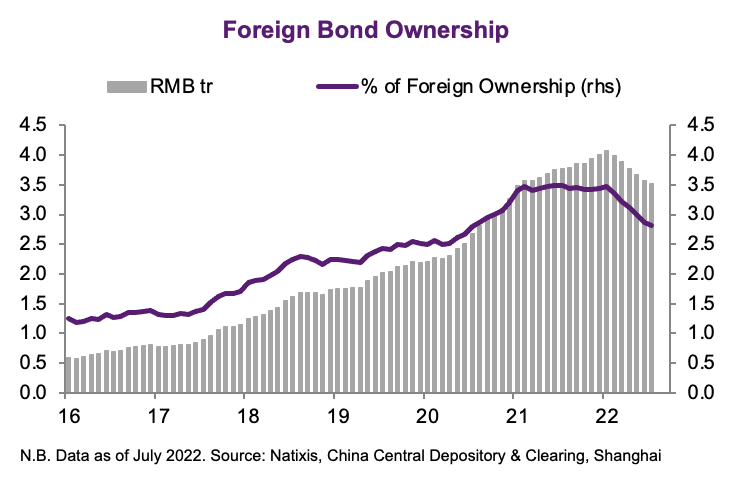
Despite important milestones, such as the Common Ground Taxonomy introduced in November 2021 under the leadership of China and the EU, frictions still exist. For example, international investors still face challenges accessing China’s green financial markets. Principally, China still has capital market restrictions through investment approval systems, no direct access to the bond market, but the requirement to go through the bond and stock exchange connects. This has also led to outflows of international funds from China in the early months of 2022, keeping the already low share of foreign holdings of Chinese bonds at a low 3.2 per cent in China’s bond market and 4.2 per cent in the stock market (see figure 1)2,3.
Figure 1. Foreign holdings of the Chinese Bond Market. (Source: Deutsche Bank)
Challenges also persist in cooperating in international financing due to strategically non-aligned interests between China’s Belt and Road Initiative (BRI) and the EU’s Global Gateway strategy. To overcome frictions between green financial systems and allow for more green finance flows, China and the European Union have particularly worked on harmonising their green finance taxonomies, with some success, and on cooperation with regard to carbon pricing through emissions trading systems4.
EU-China green financial markets integration through green taxonomies
Since its initial publication in 2015, China’s green bond catalogue has encouraged “green” investments in “clean coal” – undermining the EU green finance taxonomy goal to reduce greenhouse gas emissions. To coordinate their green financial systems, the PBoC published an updated green bond catalogue in April 2021 that removed the construction of new “clean coal”power plants, but kept upgrading different types of coal usage. The catalogue also adjusted the categorisation system to match the EU Taxonomy, and the adoption of the EU “Do No Significant Harm” principle to avoid investing in climate-friendly but biodiversity-destroying assets was discussed. Yet, gaps still exist.
The EU Taxonomy focuses on the environmental impacts of activities through the provision of specific thresholds for climate mitigation, compared to a project list in the Chinese green bond catalogue5. The EU Taxonomy’s agriculture-related criteria focus more on greenhouse gas reduction and less on broader sustainable farming aspects that may be relevant in other markets, including China’s. This includes reduced use of pesticides, the adoption of biodiversity-friendly techniques, and water conservation. The EU Taxonomy includes six environmental objectives, which are interlinked through the multidimensional ‘Do No Significant Harm’ requirement. In comparison, China’s green bond catalogue does not explicitly define any environmental objectives 6. The EU Taxonomy also recognises three different types of environmentally sustainable economic activities: sustainable, transition, and enabling activities 7. By contrast, the green bond catalogue does not include transition and enabling activities8.
The EU and China could strengthen cooperation in providing macro- and micro-prudential risk frameworks, such as for biodiversity loss stress testing, as well as common taxonomies and reporting standards.
To overcome the difference, China and the EU have led the development of the “common ground taxonomy” (CGT), which was introduced at COP 26 in November 20219. However, the CGT currently provides a comparison of the taxonomies and not a common ground taxonomy, despite the name. As such, the CGT does not address the concerns of European investors who will have to disclose their Chinese investments in accordance with the EU’s regulation on sustainability-related disclosures in the financial services sector (the Sustainable Finance Disclosure Regulation – SFDR). Nor does it present proposals to increase compatibility or expand interoperability. Rather, the CGT simply provides a comparison between the green part of the EU taxonomy and the Chinese green bond taxonomy. Furthermore, the two taxonomies compared in the CGT are only two of numerous current and forthcoming taxonomies. In the EU, the current taxonomy only covers green aspects, with social and broader sustainability aspects to be added over the coming years. In China, taxonomies differ by the regulator, economic sector, financial instrument, and sustainability focus. For example, China has launched a climate taxonomy and social taxonomy with overlaps and differences compared to the green bond taxonomy. This myriad of taxonomies means that the CGT is only a narrow comparison of the two most prominent taxonomies, with limited consideration of the broader context.
Emissions Trading
A focus of EU-China cooperation has been emissions trading mechanisms. From 2014 to 2017, the EU supported the design and implementation of emissions trading in China (based on the 2015 Joint Statement). The EU provided technical assistance for capacity building and supported the seven regional pilot systems, as well as the establishment of the national emissions trading system. The project has been extended into the “Platform for Policy Dialogue and Cooperation between EU and China on Emissions Trading” (2017-20), which supports the Ministry of Ecology and Environment (MEE) in its efforts to implement and further develop China’s national ETS and established a policy dialogue between the MEE and the European Commission. China and the EU signed an MoU to enhance cooperation on emissions trading at the 2018 EU-China Summit10.
In 2021, China’s national ETS was launched, coinciding with the EU’s announcement of its carbon border adjustment mechanism (CBAM) that would price the import of carbon emissions into the EU. While the launch of the China ETS was welcomed by the EU, the mechanisms of the Chinese and the EU ETS are not aligned. The Chinese ETS continues to be “intensity-based”, with fewer sectors, high allowances, and no communicated pathway to emission reduction, while the EU ETS is a cap-and-trade system with a clearly communicated emission reduction of emissions allowances. Also, the price of allowances varies widely by a factor of 10, making Chinese emissions much cheaper compared to EU emissions, even in the few sectors included in China’s ETS. This, potentially, has also led to China’s resistance to the carbon border adjustment mechanism (CBAM) work to price the import of carbon emissions into the EU.
Figure 2: Prices per allowance of the EU and Chinese Emission trading systems (ETS) (Source: ICAP)
The global importance of EU-China coordination
Besides the harmonisation of Chinese and European green finance standards, both countries are also cooperating in supporting green finance development globally. China and the EU, together with relevant authorities from Argentina, Canada, Chile, India, Kenya, and Morocco, had also launched the International Platform for Sustainable Finance (IPSF) in October 2019 11. The IPSF aims to scale up the mobilisation of private capital towards environmentally sustainable investments and to offer a multilateral forum of dialogue between policymakers who are in charge of developing sustainable finance regulatory measures to help investors identify and seize sustainable investment opportunities that truly contribute to climate and environmental objectives. The IPSF now includes 18 members11. Besides the IPSF, the PBoC and the EU Commission were founding members of the Network for Greening the Financial System (NGFS) 12. The NGFS’s goal is to contribute to the development of environment and climate risk management in the financial sector. With strong green finance track records, Chinese and EU institutions are also working together to share green finance experiences learnt across Asia. For example, in 2019, Tsinghua University supported the development of the Mongolia Green Taxonomy, while the European Bank for Reconstruction and Development supported Mongolia’s green capital market development in 202113.
A call to action – climate change will not wait
With China and the EU firmly committed to building a green economy, the cooperation on green finance should be further strengthened. Against the backdrop of continuing economic challenges after the COVID-19 pandemic, increased uncertainty of international trade and other political challenges, combating climate change and accelerating green finance is a strategic and shared interest of all countries. Stepping up Sino-EU cooperation and action will provide both sides with significant opportunities for modernising their economies, enhancing competitiveness, and ensuring socio-economic benefits of increased clean energy access.
With the goal to accelerate the international flow and use of green finance, the EU and China could, therefore, particularly work on green policy harmonisation to define the regulatory scope of climate action and send clear signals to investors about political ambitions. This should also include green finance standard harmonisation, particularly for common definitions of green products and services, common procedures for verification of green finance products, common standards for reporting (e.g., TCFD) and possibly a standard for “dirty finance”. As China’s capital markets are still “opening up”, harmonisation could improve the attractiveness of markets through easier access, particularly for European investors, to the Chinese market in addition to the Bond Connect programme and increase the liquidity of Chinese bond markets. To reduce non-green finance, the EU and China, as two of the largest global emitters, should further cooperate on utilising emissions trading systems and other carbon markets. This could also include collaboration on avoiding carbon leakage, possibly through a “just” EU carbon border adjustment mechanism that provides development finance for carbon reduction, and through participation in multinational carbon markets.
The EU and China should further strengthen collaboration on biodiversity finance as one area where global green finance standards are just starting to evolve. The EU and China could strengthen cooperation in providing macro- and micro-prudential risk frameworks, such as for biodiversity loss stress testing, as well as common taxonomies and reporting standards. While challenges in cooperation might continue, policymakers and financial institutions should welcome and support China-EU green finance harmonisation. Meanwhile, investors should not use a lack of harmonisation as an excuse for a lack of green finance action. Climate change will not wait.
This article was originally published on 16 August, 2022.
Christoph Nedopil is Professor at Fudan University Fanhai International School of Finance and Director of the Green Finance & Development Center. He is the lead author of the UNDP SDG Finance Taxonomy, the Green Development Guidance of the BRI Green Development Coalition under the Chinese Ministry of Ecology and Environment and regularly advises governments, financial institutions, enterprises and civil society on green and sustainable finance.
Mathias Lund Larsen is a dual PhD Fellow at Copenhagen Business School and the University of the Chinese Academy of Sciences (Sino-Danish Center for Education and Research). His research focuses on the political economy of green finance in China from theory to practice, intention to impact, and domestic to overseas. References
Nedopil, C., Dordi, T. & Weber, O. The Nature of Global Green Finance Standards—Evolution, Differences, and Three Models. Sustainability 13, 3723 (2021).
Asia Securities Industry and Financial Markets Association. Sustainable Finance in Asia Pacific Regulatory State of Play. (2020).
OECD. Developing Sustainable Finance Definitions and Taxonomies. (OECD, 2020). doi:10.1787/134a2dbe-en.
No matter what type of industry your business is operating in, it must prioritize streamlining its sales operations. The responsibility to do so, of course, falls on your sales team.
To ensure such seamless sales operations, sales teams need to put a lot of effort into developing a proper account management strategy. Unless they do this, it’s very easy to lose track of their objectives and miss out on a lot of sales opportunities.
That being said, let’s look at a few ways you or your sales team can develop an effective and seamless account management strategy.
Understand Your Customers Inside and Out
A foundational principle of seamless account management is to truly understand your customers. This involves going beyond surface-level knowledge and diving deep into their needs, preferences, pain points, and long-term goals.
When your sales team has a comprehensive understanding of your customers, it becomes easier to tailor your approach and anticipate customers’ future needs. To achieve this, consider conducting regular customer interviews or surveys to gather feedback and insights.
Engage in active listening when speaking with clients to uncover unmet needs or concerns. Use customer relationship management (CRM) software to centralize customer data and track their interactions with your organization. This information can help your sales team offer more personalized recommendations and stay ahead of the competition.
Foster Strong Communication Channels
There’s no doubt that effective communication is the backbone of any successful account management strategy. Hence, sales teams must establish strong and open channels of communication with their customers.
Indeed suggests that these teams must ensure that clients feel heard, valued, and well-informed. Regular check-ins, whether through phone calls, emails, or face-to-face meetings, are essential to maintain these lines of communication.
Moreover, you should understand that a seamless account management strategy includes cross-functional collaboration within your organization. For that, your sales teams should work closely with other departments, like customer support, marketing, and product development. That way, it will be easy to ensure consistent and cohesive interactions with clients.
Create Personalized Customer Journeys
Every customer is unique, and their journey with your organization should reflect that. According to Forbes, a one-size-fits-all approach to account management is no longer effective. Sales teams must develop personalized customer journeys that cater to the specific needs and preferences of each client. This involves segmenting your customer base and tailoring your interactions and offers accordingly.
Personalization can be achieved by utilizing data-driven insights and leveraging technology. For that, you need to properly study customer behavior, preferences, and purchase history. This will make it easier for you to recommend relevant products or services.
Automate personalized email marketing campaigns to keep customers engaged and informed. By offering a tailored experience, your sales team can build stronger, long-lasting relationships with clients and increase customer loyalty.
Implement an Account Planning Process
To maintain a seamless account management strategy, sales teams need a structured approach. Account planning is a crucial step in this process. Using the right account management software is also a must, especially if you’re trying to make the most of technology at work.
The planning also involves setting clear objectives for each account, identifying key stakeholders, and outlining strategies to achieve the desired outcomes. According to Prolifiq, an effective account planning process also involves setting realistic and measurable goals for each customer.
With well-defined account plans in place, your sales team can track progress, make data-driven decisions, and adapt strategies as needed. This proactive approach ensures that your account management remains on track and aligned with your customer’s evolving needs.
Leverage Technology and Data Analytics
Technology plays a pivotal role in account management. Sales teams can benefit greatly from leveraging the power of data analytics and modern software tools. CRM systems are a fundamental component of managing customer relationships effectively. They allow your sales team to store, organize, and analyze customer data, as well as track customer interactions.
Furthermore, as told by TechTarget, data analytics is a must if you want to uncover valuable insights about your customers. By analyzing patterns and trends in customer behavior, you can predict their future needs and tailor your offerings accordingly.
Machine learning and artificial intelligence can also be harnessed to automate routine tasks, personalize recommendations, and enhance the efficiency of your account management efforts.
Conclusion
It goes without saying that a seamless account management strategy is a must-have to streamline your sales operations. Thus, there’s no alternative to equipping your sales team with such a strategy.
As a newbie entrepreneur, you might be overwhelmed with the daunting tasks of developing the financial projections for your business startup along with licenses, permits, and cta regulations to ensure that you are doing everything right to kickstart your business venture.
Regarding the business framework, license, and permits, you will want to get in touch with a lawyer who can help with establishing the right legal foundation and ensuring that you are complying with the law. However, regarding the finances, you will want to assess the potential financial projections and include them in your business plan before presenting them to the funders.
However, you might feel uncertain about the financial projection, which is why you will want to go through the following list of advice to get the much-needed roadmap.
Assess Your Financial Goals
Naturally, as a startup owner, you will want to make as much money as possible, but how much money do you need to initiate your startup? You will want to write down the financial goals that you want to achieve with your business.
You will want to include all the financial goals and objectives in your financial projection.
Plan for Income Tax
Sometimes, business owners tend to forget the importance of income tax planning when creating financial projections. However, it is important to mention here that income tax planning isn’t an optional aspect of your finances.
You will want to get a professional onboard who will help you through the ongoing process that helps business startups review their gross income and manage their expenses on a monthly basis.
Manage Your Balance Sheet
You will want to manage your balance sheet religiously because the balance sheet declares where your business stands at any given moment in time. A financially learned reader can learn from the balance sheet loads of valuable things about a business and its viability.
This aspect perfectly explains why potential investors and lenders always ask potential entrepreneurs for a copy of their financial statements and their balance sheets. Potential lenders also ask for copies of the following:
Irrespective of the size and nature of your business, you will need to opt for business insurance. There are several aspects of your business that you want to consider when looking for new business insurance. Regarding risk management, you will use it as a tool to identify potential risks that could develop during the different stages of your business.
Risk management can help you make better and essentially informed decisions, which can further help with avoiding costly future mistakes.
Establish Cash Flow Statement
When it comes to financial projections of a business, the statement of cash flow refers to the financial statement that indicates a business’s incoming and outgoing finances during a period. These statements are arranged from the same accounting information, but each statement serves its separate function.
Cash flow statements function as a way to report the movements of cash into and out of your business in any given year.
By Danny Leipziger
China cannot continue to rely on exports to drive its growth, but what are the alternatives?
China ran a $1.2 trillion trade surplus last year, and despite admonitions from the IMF to rely...
The World Financial Review uses cookies to improve site functionality, provide you with a better browsing experience, and to enable our partners to advertise to you. Detailed information on the use of cookies on this Site, and how you can decline them, is provided in our Privacy Policy and Terms and Conditions. By clicking on the accept button and using this Site, you consent to our Privacy Policy and Terms and Conditions. ACCEPT
Privacy & Cookies Policy
Privacy Overview
This website uses cookies to improve your experience while you navigate through the website. Out of these cookies, the cookies that are categorized as necessary are stored on your browser as they are essential for the working of basic functionalities of the website. We also use third-party cookies that help us analyze and understand how you use this website. These cookies will be stored in your browser only with your consent. You also have the option to opt-out of these cookies. But opting out of some of these cookies may have an effect on your browsing experience.
Necessary cookies are absolutely essential for the website to function properly. This category only includes cookies that ensures basic functionalities and security features of the website. These cookies do not store any personal information.
Any cookies that may not be particularly necessary for the website to function and is used specifically to collect user personal data via analytics, ads, other embedded contents are termed as non-necessary cookies. It is mandatory to procure user consent prior to running these cookies on your website.