Home Blog Page 245

Legal Recourse After a Hit and Run: Understanding Your Rights

With road mishaps, hit and run accidents stand as particularly distressing episodes, leaving victims not only physically injured but also grappling with the elusive identity of the responsible party. These incidents present a unique set of legal challenges that demand immediate attention and understanding of one’s rights. In this article, we delve into the intricate world of hit and run accidents, unraveling the legal avenues available to victims seeking recourse. From outlining essential post-accident steps to shedding light on the crucial role of attorneys, we aim to equip you with knowledge to navigate the complexities of hit and run cases and protect your rights in the aftermath with the help of Crown Point attorneys.

The Impact of Hit and Run Accidents

Hit and run accidents are like emotional earthquakes, leaving victims in a state of turmoil that extends far beyond the initial impact. The aftermath of such incidents is marked by a profound emotional toll, often accompanied by anxiety, frustration, and an overwhelming sense of injustice. Beyond the emotional upheaval, there’s a practical aspect to consider — the financial toll. Medical bills, vehicle repairs, and lost income can accumulate swiftly, adding to the distress.

In the wake of a hit and run, the pressing need for legal recourse becomes evident. Victims grapple not only with physical and emotional scars but also with the daunting task of identifying the responsible party. This is where understanding one’s rights becomes pivotal. Navigating the legal landscape is essential, as it can be a beacon of hope in a situation that often feels bleak.

In essence, the impact of hit and run accidents transcends the immediate collision, delving deep into the emotional and financial realms.

What to Do After a Hit and Run

In the bewildering aftermath of a hit and run accident, clarity can be elusive, but decisive actions are paramount. Here’s a step-by-step guide on what to do in those critical moments:

  1. Safety First: Ensure your safety and that of others involved by moving to a safe location, if possible.
  2. Gather Information: Try to remember and jot down any details about the fleeing vehicle, such as the license plate number, make, model, and color.
  3. Witnesses and Evidence: If there are witnesses, collect their contact information. Take photos of the accident scene, including damage to your vehicle and any visible injuries.
  4. Contact Law Enforcement: Immediately report the incident to the police. Provide them with all the information you’ve gathered.
  5. Medical Attention: Even if your injuries seem minor, seek medical attention promptly. Some injuries may not manifest immediately.
  6. Notify Your Insurance: Contact your insurance company and inform them of the hit and run.
  7. Legal Counsel: Consider consulting with an attorney who specializes in hit and run cases. They can guide you through the legal aspects.

The moments following a hit and run require swift, methodical actions to ensure your safety, gather information, and lay the groundwork for potential legal action. Seeking medical attention and legal counsel are crucial steps in protecting your well-being and rights.

The Role of Attorneys

Seeking legal representation in hit and run cases isn’t just a choice; it’s a pivotal decision that can significantly impact the outcome of your case. The intricacies of hit and run incidents, from identifying the responsible party to pursuing compensation, often require a deep understanding of the legal landscape. This is where attorneys come into play. They serve as your advocates, ensuring that your rights are upheld.

Legal Recourse for Hit and Run Victims

For hit and run victims, the road to legal recourse is often riddled with complexities and uncertainties. In the aftermath, victims have the option to pursue compensation through various avenues, including their own insurance policies, uninsured motorist coverage, or even personal injury lawsuits against unidentified drivers.

However, identifying the responsible party becomes the central challenge in these cases. The elusive nature of hit and run accidents, where the guilty party flees the scene, leaves victims grappling with unanswered questions.

The complexities arise from the need to piece together the puzzle, gather evidence, and navigate the legal intricacies. This process can be overwhelming, making legal representation all the more essential. Attorneys, with their expertise, play a pivotal role in unraveling the complexities and pursuing justice.

In essence, while the path to legal recourse after a hit and run accident may be fraught with challenges, it’s not a dead-end. Understanding your options and seeking the guidance of experienced legal professionals can be the beacon of hope for hit and run victims seeking compensation and closure.

Protecting Your Rights and Interests

Attorneys are not just legal experts; they are your staunch advocates. They step into the fray, ensuring that your rights are upheld and your interests are fiercely protected. Their expertise extends to gathering evidence, conducting investigations, and dealing with insurance companies on your behalf.

In building a strong case, attorneys play a pivotal role. They meticulously examine the details of the accident, collaborate with law enforcement, and navigate the complexities of legal proceedings. This, in turn, bolsters your position in seeking justice and rightful compensation.

Legal Considerations When a Minor Child Is Involved

In the sobering wake of a hit and run if there was a minor child involved in a car accident, the legal landscape takes on a unique hue, marked by distinct considerations. It’s a realm where parental rights and responsibilities intersect with the pursuit of justice.

Legal considerations often revolve around ensuring that the child’s physical and emotional needs are met, including medical care and counseling if necessary.

In such cases legal considerations expand to encompass the unique needs and rights of the young victim. It is not only about pursuing justice but also about ensuring their physical and emotional recovery, with parents playing a crucial role in this intricate journey.

Steps to Sue for Hit and Run

Suing for damages after a hit and run is a multifaceted legal process that demands both determination and patience. To shed light on this complex journey, it’s essential to break down the key steps and requirements to to sue for Hit and Run.

  1. Identify the Responsible Party: The first and often most challenging step is identifying the driver who fled the scene. This may involve gathering evidence, such as witness statements, surveillance footage, or vehicle details, which can be crucial in pursuing your case.
  2. Report to Law Enforcement: Promptly report the incident to the police, providing them with all available information. A police report is a foundational document in your case.
  3. Consult with an Attorney: Seeking legal counsel, especially one with expertise in hit and run cases, is advisable.
  4. Contact Your Insurance: Notify your insurance company about the hit and run. Depending on your coverage, you may be able to claim compensation through your policy, including uninsured motorist coverage.
  5. Gather Evidence: Continue to gather evidence and documentation related to your case. This can include medical records, repair estimates, and any expenses incurred due to the accident.
  6. Legal Action: With your attorney’s guidance, consider filing a lawsuit against the unidentified driver. This legal action is initiated to pursue compensation for your injuries, damages, and losses.

Conclusion

In the intricate dance of hit and run accidents, one thing stands clear: knowledge is power. Understanding your rights and the legal pathways available is your compass through the tumultuous aftermath. The significance of seeking legal help cannot be overstated; it’s the anchor that keeps you steady in the storm. Attorneys, especially those well-versed in hit and run cases, are not just professionals like a child injury lawyer in Crown Point. In the world of hit and runs, legal recourse is not a luxury; it’s your path to resolution and closure.

What Are The Best UK Tech Investments For 2024

As 2024 unfolds, the UK’s technology sector continues to evolve rapidly, presenting a fertile ground for investors. This growth is fueled by a combination of government support, private innovation, and a global shift towards digital solutions.

In this extensive exploration, we’ll delve into the multifaceted UK tech investments landscape, examining why investing in UK tech companies is a wise decision and uncovering the myriad benefits that such investments can offer.

What Is the UK Tech Investment Landscape?

The UK’s tech investment landscape is characterized by its diversity and dynamism. It encompasses a range of sectors from Artificial Intelligence (AI) to FinTech and healthcare technology.

Government initiatives, like the £250 million investment to bolster tech innovation, underscore the commitment to maintaining the UK’s competitive edge in technology.

This environment creates a rich tapestry of investment opportunities across various tech domains, each with its own unique growth prospects and challenges.

Why Invest in Tech Companies?

Tech companies are often at the vanguard of innovation, transforming industries and consumer behaviors alike. Investing in these companies provides an opportunity to be part of groundbreaking advancements. The tech sector’s resilience is evident from its performance during economic downturns, including the COVID-19 pandemic.

This resilience, coupled with the potential for high growth, makes tech companies particularly attractive to investors seeking to diversify their portfolios with high-potential assets.

What Are the Benefits of Investing in UK Tech Companies?

Investing in UK tech companies offers several advantages:

  • Innovation Leadership: UK tech firms are often at the forefront of innovation, offering investors a chance to participate in pioneering technological developments.
  • Stable Regulatory Environment: The UK’s robust regulatory framework provides a stable backdrop for tech investments, minimizing political and regulatory risks.
  • Diverse Opportunities: The UK tech sector is diverse, spanning various industries, allowing investors to choose investments that align with their interests and risk tolerance.

Best Uk Tech Investments For 2024

  • Artificial Intelligence (AI)

The AI sector in the UK is burgeoning, thanks to substantial government backing and private sector innovation. The government’s AI technology missions, part of a broader strategy to leverage AI for economic growth, are particularly noteworthy.

These missions focus on reducing greenhouse gas emissions, enhancing healthcare, and increasing productivity across various sectors. Investments in AI in the UK offer exposure to a cutting-edge industry poised for significant expansion.

  • Cloud Computing

Cloud computing in the UK is on a trajectory of rapid growth, driven by an increased need for digital storage and computing power across industries. The market, expected to be worth $1.4 trillion by 2027, presents a lucrative opportunity for investors. Cloud companies in this sector range from established giants to innovative cloud tech startups, each offering different risk-reward profiles.

  • Cyber Security

Cybersecurity is a critical concern for businesses and governments alike, fueling demand for advanced security solutions. UK tech companies specializing in cybersecurity are well-positioned to capitalize on this trend. The sector’s expected growth to $344 billion globally by 2030 indicates a significant opportunity for investment.

  • Professional Services & Platforms

Professional services and platforms are crucial in the tech ecosystem, facilitating the digital transformation of businesses. These companies provide software and services that enhance business efficiency, offering a blend of stability and growth potential for investors.

  • Big Data Investments

Big data is reshaping the corporate landscape by enabling more informed decision-making and operational efficiencies. UK firms specializing in big data analytics are at the forefront of this transformation, presenting investors with opportunities to invest in companies driving significant changes in how businesses operate.

  • FinTech Firms

The UK’s FinTech sector is among the world’s most innovative, with London being a key global hub. This sector offers a range of investment opportunities, from digital payment solutions to blockchain technology. The rapid growth and transformational potential of FinTech firms make them an attractive option for investors looking to capitalize on the future of financial services.

  • Big Data and Analytics Companies

Big data and analytics companies are central to the digital transformation across industries. By investing in these companies, investors can tap into the high growth potential of firms that are leveraging data to drive innovation and efficiency.

  • Healthcare Tech Start-Ups

Healthcare tech startups in the UK are working on transformative technologies in diagnostics, treatment, and patient care. The increasing focus on healthcare innovation, accelerated by the pandemic, makes this sector ripe for investment, offering potential for significant returns and societal impact.

Factors to Consider When Investing in UK Tech Companies

When considering investments in UK tech companies, it’s crucial to take a strategic approach. Here are key factors to keep in mind:

  • Market Trends and Growth Potential: Understand the current market trends and how they influence the growth potential of the tech sector. Look for sectors showing signs of rapid growth, such as AI, cybersecurity, and FinTech.
  • Innovation and Competitive Edge: Evaluate how innovative the company is and its competitive advantage in the market. Companies that are leaders in innovation are more likely to succeed long-term.
  • Financial Health: Assess the financial stability of the company. This includes analyzing their revenue growth, profit margins, and cash flow. Stable financial health is a good indicator of a company’s resilience.
  • Regulatory Environment: The UK’s regulatory framework can impact tech companies significantly. Be aware of any regulatory changes that could affect the industry.
  • Management Team: The strength and experience of the company’s management team can be a critical determinant of success. Experienced leadership can navigate challenges and capitalize on opportunities more effectively.
  • Technological Adaptability: Tech companies must be adaptable to changing technologies. Companies that can pivot and incorporate new technologies are likely to stay ahead.
  • Sustainability and Ethical Considerations: With increasing focus on sustainability and ethics, consider how the company addresses these issues. Companies with strong corporate responsibility practices may have a long-term advantage.

Wrap Up

As we look ahead to 2024, the UK tech sector stands as a beacon of innovation and growth, offering an array of investment opportunities. From the rapid advancements in AI and cloud computing to the burgeoning fields of cybersecurity and FinTech, the landscape is ripe with potential for discerning investors. With the UK government’s continued support and a global reputation for technological excellence, the sector is well-positioned for sustained growth.

However, as with any investment, it’s essential to approach UK tech investments with a strategic mindset, considering factors such as market trends, financial health, regulatory environment, and sustainability. The strength and adaptability of a company, particularly in the face of technological evolution and competitive markets, are critical determinants of long-term success.

Top Reasons to Engage in Live Dealer Games at Online Casinos

The world of online entertainment has evolved significantly over the years and one area that has witnessed substantial growth is online casinos. A recent addition to the virtual gambling scene, live dealer games have captured the attention of players worldwide. These games combine the immersive experience of online casinos and the authenticity of a traditional casino experience.

Here are some compelling reasons to consider engaging in live dealer games at online casinos:

Interactive and Transparent

Unlike computer-generated casino games, live dealer games allow for real-time interaction with the dealers. Players can communicate via live chats with dealers, fostering a sense of community and making the gaming experience more engaging. This personal touch adds an element of social interaction often absent in traditional online casino games.

Live dealer games offer transparency compared to traditional online casino games. Since the action unfolds in real-time and is streamed directly to the player’s screen, there’s no room for suspicion or doubt regarding the game’s fairness. Players can witness every move, ensuring a fair and trustworthy gaming environment.

Diverse Gaming and Flexible Wagering Options 

Many live dealer casinos offer various games to suit different preferences. Players can access an extensive library of live dealer titles, from classic table games like blackjack, table roulette and baccarat to unique variations and innovative options.

Live dealer games cater to various players, from casual gamers to high rollers. Online casinos often offer flexible betting limits and diverse payment methods, including cryptocurrencies. This allows players to choose stakes aligned with their budget and comfort level, as well as select a platform that offers crypto gambling and other secure payment methods. This inclusivity ensures that everyone can experience the joy of live dealer games.

Accessible and Strategic Skills

Live dealer games are designed to be very compatible with diverse gadgets, including smartphones and tablets. This versatility allows players to enjoy the games regardless of the device they prefer to use, enhancing accessibility. Advancements in technology have contributed to the seamless integration of live dealer games. High-quality video streaming, real-time updates and user-friendly interfaces create a smooth and enjoyable gaming experience.

Live dealer games often require a degree of skill and strategy, making them more appealing to players who enjoy a challenge. Live dealers add an extra layer of complexity to the games, encouraging players to develop and refine their gaming strategies.

Final Note

Engaging in live dealer games at online casinos offers many benefits that cater to a wide range of players. From the realistic casino experience and interactive features to the transparency and convenience, live dealer games provide an immersive and entertaining alternative to traditional casino gaming. Lastly, as with any form of entertainment, responsible gambling is essential to truly relish the experience.

Introducing the Concept of Artificial Integrity: The Path for the Future of AI

By Hamilton Mann

The concept of “artificial integrity” proposes a critical framework for the future of AI. It emphasises the need to architect AI systems that not only align with but also enhance and sustain human values and societal norms. 

Artificial integrity goes beyond traditional AI ethics. As AI ethics is the input, artificial integrity is the outcome advocating a context-specific application of ethical principles, ensuring AI’s alignment with local norms and values. 

Underscoring the importance of AI systems being made socially responsible, ethically accountable, and inclusive, especially of neurodiverse perspectives, the concept represents a deliberate design approach where AI systems are embedded with ethical safeguards, ensuring that they support and enhance human dignity, safety, and rights. At its heart, this new paradigm shift aims to apprehend a symbiotic relationship between AI and humanity, where technology supports human well-being and societal progress, redefining the interaction between human wit and AI’s capabilities. 

In this complex edifice of artificial intelligence progress, the critical challenge for leaders is to architect a future where the interplay between human insight and artificial intelligence doesn’t merely add value but exponentiates it. 

The question is not as simple as whether humans or AI will prevail, but how their combined forces can create a multiplicative value-added effect, without compromising or altering core human values but, on the contrary, reinforcing them with integrity.  

AI operating systems intentionally designed and maintained for that purpose would be those that perform with this characteristic.  

Artificial integrity is about shaping and sustaining a safe AI societal framework 

First, external to AI systems themselves, the concept of artificial integrity embodies a human commitment to establishing guardrails to build and sustain a sense of integrity in the deployment of AI technology, ensuring that as AI becomes more embedded in our lives and work, it supports the human condition rather than undermines it. 

AI systems are designed to enable humans to be guided in using, deploying, and developing AI for the greater interest of us all, thus including the planet, in the most appropriate ways.

More specifically, it refers to the governance of AI systems that adhere to a set of principles that have been established for its functioning, to be intrinsically capable of prioritising and safeguarding human life and well-being in all aspects of its operation. 

This is not just about setting ethical standards, but about the cultivation of an environment where AI systems are designed to enable humans to be guided in using, deploying, and developing AI for the greater interest of us all, thus including the planet, in the most appropriate ways.  

Thus, while AI ethics often focuses on universal ethical stances, artificial integrity emphasises adapting them to specific contexts and cultural settings, recognising that their application can vary significantly depending on the context.

This context-specific adaptation of ethical principles is crucial because it allows for the creation of AI technologies that are not only led by universal ethics but also culturally competent and respectful of important local nuances, thereby sensitive and responsive to local norms, values, and needs, enhancing their relevance, effectiveness, and acceptance in diverse cultural landscapes.  

Differing from AI ethics, which provide the external system of moral standards that AI technologies are expected to follow, concerned with questions about right or wrong decisions, human rights, equitable benefit distribution, and harm prevention, artificial integrity is the operational manifestation of those principles. It ensures that AI behaves in a way that is consistently aligned with those ethical standards.

This approach not only embeds ethical considerations at every level of AI development and deployment but also fosters trust and reliability among users and stakeholders, ensuring that AI systems are not only technologically advanced but also driven in a manner that is socially responsible and ethically accountable. 

Unlike AI ethics, which advocates for external stakeholder inputs and considerations in addressing the societal stakes related to AI deployment, artificial integrity encompasses a broader spectrum. It involves integrating stakeholders as active participants in a formal and comprehensive operating ecosystem model.

This model positions stakeholders at the heart of decision-making processes, operational efficiency, employee engagement, and customer interactions. It ensures that organisations can sustain with integrity while being powered by AI.
Such integration is designed not just for compliance or ethical considerations, but for elevating the organisation’s overall capacity to adapt and thrive in deploying AI in harmony with societal stakes.  

Moreover, while interdisciplinary approaches are valued in AI ethics, artificial integrity places a greater emphasis on deep integration across disciplines, moving beyond a siloed functional approach to a hybrid functional blueprint.

This blueprint is characterised by the seamless melding of various fields – technology, social sciences, law, business, and more – to create a cohesive and holistic AI framework. It seeks to create a unified operational framework where these diverse perspectives coalesce.

This integrative approach not only enhances the innovation potential by leveraging diverse expertise but also ensures more robust, ethically sound, and socially responsible AI solutions that are better aligned with complex real-world challenges and stakeholder needs.  

Furthermore, while AI ethics recognises the importance of education on ethics, artificial integrity focuses on learning how to de-bias viewpoints to embrace 360-degree societal implications, fostering the inclusion of diverse perspectives, especially from neurodiverse groups.

This approach ensures that the development and deployment of AI technologies tap into the large spectrum of human neurodiversity and build neuro-resilience against the distortion of reality.

It empowers AI systems to be more inclusive and reflective of the full range of human experiences and cognitive styles, leading to more innovative, equitable, and socially attuned AI solutions.  

Artificial integrity is a deliberate act of AI design to respect human safety and dignity 

Core to AI systems themselves, the concept of artificial integrity implies that AI systems are developed and operate in a manner that is not only ethically sound according to external standards but do so consistently over time and across various situations, without deviation from their programmed ethical guidelines.  

It is a deliberate act of design. It suggests a level of self-regulation and intrinsic adherence to ethical codes, similar to how a person with integrity would act morally, regardless of external pressures or temptations, maintaining a vigilant stance towards risk and harm, ready to override programmed objectives if they conflict with the primacy of human safety. 

It involves a proactive and preemptive approach, where the AI system is not only reactive to ethical dilemmas as they arise but is equipped with the foresight to prevent them. 

As thought-provoking as it may sound, it is about embedding artificial artifacts into AI that will govern any of its decisions and processes, mimicking a form of consciously made actions, while ensuring they are always aligned with human values.  

This is akin to an “ethical fail-safe” that operates under the overarching imperative that no action or decision by the AI system should compromise human health, security, or rights.  

It goes beyond adhering to ethical guidelines by embedding intelligent safeguards into its core functionality, ensuring that any potential harms in the interaction between AI and humans are anticipated and mitigated. 

This approach embeds a deep respect for human dignity, autonomy, and rights within the AI system’s core functionality. 

More specifically, while traditional AI ethics often see ethical assessment as a peripheral exercise that may influence AI design, artificial integrity embeds ethical assessment throughout the functioning of the AI’s operating system.

This continuous learning and adjustment in interaction with humans allows for the development and enrichment of an artificial moral compass. This approach ensures that AI systems are not only compliant with ethical standards at their inception but remain dynamically aligned with evolving human values and societal norms over time.

It represents a significant advancement in creating AI systems that are truly responsive and adaptive to the ethical complexities of real-world interactions, fostering trust and reliability in AI-human partnerships. 

As opposed to AI ethics, which tend to focus on establishing guidelines for responsible AI design and usage, artificial integrity, on the other hand, stresses the importance of integrating continuous and autonomous feedback mechanisms, allowing AI systems to evolve and improve in response to real-world experiences, user feedback, and changing societal norms.

This proactive approach ensures that AI systems remain relevant and effective in diverse and dynamic environments, fostering adaptability and resilience in AI technologies.

It transcends static compliance, enabling AI to be more attuned to the complexities of human behaviour and societal changes, thus creating more robust, empathetic, and contextually aware AI solutions. 

While AI ethics focuses on identifying and addressing risks that correspond to a given present term, artificial integrity emphasises a more proactive approach in anticipating potential risks in forward-looking scenario perspectives, including long-term and systemic risks, before they even materialise.

This forward-thinking strategy allows organisations and societies to not only mitigate immediate concerns but also prepare for and adapt to future challenges, ensuring sustainable and responsible AI development that aligns with broader societal goals and ethical frameworks over time. 

Although AI ethics heavily emphasises data privacy, artificial integrity also stresses the importance of data integrity, ensuring that data used by AI systems is accurate, reliable, and representative in order to combat misinformation and manipulation.

This comprehensive approach not only protects user information but also enhances the overall trustworthiness and effectiveness of AI systems, providing a more solid foundation for decision-making and reducing the risk of errors and biases that can arise from poor-quality data.  

As AI ethics discusses accountability and explainability, artificial integrity broadens the focal point to include the trade-offs between explainability and unexplainability challenges, as well as guidelines to fulfil not just explainability but interpretability.

This expanded focus ensures a deeper understanding of AI decisions and actions, enabling users and stakeholders to not only comprehend AI outputs but also grasp the underlying rationale, thus fostering greater transparency, trust, and informed decision-making in AI systems.

As we transition to a society where AI’s role in society becomes more pronounced, the multidisciplinary approach behind artificial integrity becomes crucial in guiding our future.

This approach would ensure that, as AI systems become more autonomous, their operational essence remains fundamentally aligned with the protection and enhancement of human life, enshrining a harmonious and collaborative future between AI and humanity. 

Artificial integrity is a stance for AI to serve the empowerment of humanity 

Central and, thus, both internal and external to AI systems, the concept of artificial integrity embodies an approach where the relationship between human and AI supports the human condition rather than undermines it. 

The aim is to anchor the role of AI in acting as a partner to humans, facilitating their work and life in a way that is ethically aligned and empowering.  

It refers to AI integration in society that is designed and deployed with the intent to augment, rather than replace, human abilities and decision-making. These AI systems are crafted to work in tandem with humans, providing support and enhancement in tasks while ensuring that critical decisions remain under human control. 

The aim is to anchor the role of AI in acting as a partner to humans, facilitating their work and life in a way that is ethically aligned and empowering.

This is not just about the ethical user-friendliness but about the fundamental alignment of AI systems with human ethical principles and societal values. It involves a deep understanding of the human context in which AI operates, ensuring that these systems are not only accessible and intuitive but also respectful of human agency and societal norms.  

In essence, while AI ethics is human-centred, AI design is about establishing guidelines and principles to ensure that AI technologies are developed and used in ways that are ethically sound and beneficial to humanity, and artificial integrity is about creating a harmonious relationship between humans and AI. 

Here, technology is not just a tool for efficiency but a partner that enhances human life and society in a manner that is ethically responsible, socially beneficial, and deeply respectful of human values and dignity. 

It’s about foreseeing and sustaining a society model assisted or augmented by AI systems that not only adhere to ethical norms but also actively contribute to human well-being, integrating seamlessly with human activities and societal structures.  

This approach is focused on ensuring that AI advancements are aligned with human interests and societal progress, fostering a future where AI and humans coexist and collaborate, each playing their unique and complementary roles in advancing society and improving the quality of life for all. 

This paradigm shift from mere compliance to proactive contribution represents a more holistic, integrated approach to AI, where technology and humanity work together towards shared goals of progress, well-being, and integrity.  

As we seek to chart a course where the AI of tomorrow not only excels in its tasks but does so with an underpinning ethos that champions and elevates human labour, creativity, and well-being, maintaining and preserving the equilibrium at the right level, it dares us to question not only the essence of value but also the vast potential.  

This conscientious perspective is especially pertinent when considering the impact of AI on society where the balance between “human value added” and “AI value added” is one of the most delicate and consequential. 

In navigating this complexity, we must first ensure not only to delineate the current landscape where human wit intersects with the prowess of AI but also serves as a compass guiding us towards future terrains where the symbiosis of man and machine will redefine worth, work, and wisdom.  

This balance could be drawn through the perspective of four different modes:  

matrix

Each part of this matrix illustrates a distinct narrative about the future of a human AI-assisted society, presenting us with a strategic imperative: to harmonise the advancement of technology with the enrichment of human capability and will. 

This is a non-negotiable condition in achieving the sense of integrity rooted in the functioning of AI operating systems for an AI that does not diminish human dignity or potential but rather enriches it. 

1. Marginal Mode

This part of the matrix reflects scenarios where both human intelligence and artificial intelligence have a subdued, modest, or understated impact on value creation. 

Marginal Mode

In such a context, we encounter tasks and roles where neither humans nor AI provide a significant value add. It encapsulates a unique category of tasks where the marginal gains from both human and artificial intelligence inputs are minimal, suggesting that the task may be either too trivial to require significant intelligence or too complex for current AI capabilities and certainly not economically worth the human effort.  

This mode might typically also involve foundational activities where both human and AI roles are still being defined or are operating at a basic level. 

It represents areas where tasks are often routine and repetitive and do not substantially benefit from advanced cognitive engagement or AI contributions and may not even require much intervention or improvement, often remaining straightforward with little need for evolution or sophistication.  

Changes within this area are often small-scale, incremental, or may represent a state of equilibrium where neither human nor AI contributions dominate or are significantly enhanced.  

An example is the routine scanning of documents for archiving. While humans perform these tasks adequately, the work is monotonous, often leading to disengagement and errors.  

This mode might typically also involve foundational activities where both human and AI roles are still being defined or are operating at a basic level. 

On the AI front, although technologies like optical character recognition (OCR) can digitise documents, they may struggle with handwritten or poorly scanned materials, providing little advantage over humans in terms of quality. These tasks don’t offer substantial gains in efficiency or effectiveness when automated, due to their simplicity, and the return on investment for deploying sophisticated AI systems may not be justifiable. 

This concept aligns with the “task routineness hypothesis”, which posits that routine tasks are less likely to benefit from human creativity or AI’s advanced problem-solving skills (Acemoglu & Autor, 2011).  

A study from the McKinsey Global Institute (Manyika et al., 2017) further elaborates on this by suggesting that activities involving data collection and processing are often the most automatable. However, when these tasks are too simplistic, they might not even justify the investment in AI, given the diminishing returns relative to the technology’s implementation cost.  

Moreover, the progression of AI technology seems to follow a U-shaped pattern of job transformation. Early on, automation addresses tasks that are simple for humans (low-hanging fruit), yet as AI develops, it starts to tackle more complex tasks, potentially leaving behind a trough where tasks are too trivial for AI to improve upon but also of such low value that they do not warrant a significant human contribution (Brynjolfsson & McAfee, 2014). 

The risk in this quadrant is threefold: 

Firstly, complacency and obsolescence are the primary risks here.

If neither humans nor AI are adding significant value, it may indicate that the task is outdated or could be at risk of being superseded by more innovative approaches or technologies. The task of the role might become completely redundant with the advent of a more sophisticated approach and processing technologies. 

Secondly, for the workforce, these roles are at high risk of automation despite the low value added by AI, because they can often be performed more cost-effectively by machines in the long run.

A real-world example of this risk materialising is in the manufacturing sector, where automation has been progressively adopted for tasks such as assembly line sorting, leading to job displacement.

Research has highlighted this trend and the potential socioeconomic impact, as indicated by Acemoglu and Restrepo’s paper, “Robots and Jobs: Evidence from US Labor Markets” (Journal of Political Economy, 2020), which examines the negative effects of industrial robots on employment and wages in the US.  

Thirdly, from an organisational perspective, persisting with human labour in such tasks can lead to a misallocation of human talent, where employees could instead be upskilled and moved to roles that offer higher value addition.

The implications of this quadrant for the labour market are significant, as it often points to jobs that may be at high risk of obsolescence or transformation. 

There is a growing need for reskilling and upskilling initiatives to transition workers from roles that fall into this low-value quadrant to more engaging and productive ones that either AI or humans – or a combination of both – can significantly enhance.

Therefore, strategic planning is essential to ensure that the workforce is prepared for transitions and that the benefits of AI are harnessed without exacerbating socioeconomic disparities. 

2. Human-First Mode

This side of the quadrant places significant emphasis on the critical roles of human cognition, ethical judgement, and intuitive expertise, with AI taking on a secondary or assistive role.

Human-First Mode

Here, human skills and decision-making are at the forefront, especially in situations requiring emotional intelligence, complex problem-solving, and moral discernment. 

It underscores scenarios where the depth of human perception, creativity, and interpersonal skills are vital, where the complexity and subtlety of human cognition are paramount, and where AI, while useful, currently falls short and cannot yet replicate the full spectrum of human intellectual and emotional capacity. 

In this sphere, the value derived from human involvement is irreplaceable, with AI tools providing auxiliary support rather than core functionality. 

This is particularly evident in professions such as healthcare, education, social work, and the arts, where human empathy, moral judgement, and creative insight are irreplaceable and are critical to the value delivered by professionals. 

High-stakes decision-making roles, creative industries, and any job requiring deep empathy are areas where human value addition remains unrivalled.  

For example, in the field of psychiatry, a practitioner’s ability to interpret non-verbal cues, offer emotional support, and exercise judgement based on years of training and experience is paramount. While AI can offer supplementary data analysis, it cannot approach the empathetic and ethical complexities that humans navigate intuitively.  

Empirical research supports this perspective, highlighting domains where the human element is crucial.  

For instance, studies on patient care indicate that, while AI can assist with diagnostics and information management, the empathetic presence and decision-making capabilities of a healthcare provider are central to patient outcomes and satisfaction (Jha & Topol, 2016). 

The essential nature of human input in these areas is also supported by studies on job automation potential, which show that tasks requiring high levels of social intelligence, creativity, and perception and manipulation skills are least susceptible to automation (Arntz et al. 2016). 

This is echoed in the arts, where creativity and originality are subjective and deeply personal, reflecting the human experience in a way that cannot be authentically duplicated by AI (Boden, 2009). 

Furthermore, in the context of service industries, the SERVQUAL model (Parasuraman et al., 1988) demonstrates that the dimensions of tangibles, reliability, responsiveness, assurance, and empathy heavily rely on the human factor for service quality, hence substantiating the need for human expertise where AI cannot yet suffice. 

While AI may offer supplementary functions, the nuances of human expertise, interaction, and empathy are deeply entrenched in these high-value areas. 

As such, these sectors are less likely to experience displacement by AI, instead possibly seeing AI as a tool that supports human roles. 

The continual advancement of AI presents a moving frontier, yet the innate human attributes that define these roles maintain their relevance and importance in the face of technological progress. 

The risk in this quadrant comes from misunderstanding the role AI should play in these domains. 

There is a temptation to overestimate AI’s current capabilities and attempt to replace human judgement in areas where it is critical. 

An example is the justice system, where AI tools are used to assess the risk of recidivism. As pointed out in the work of Angwin et al. (2016) in their analysis of the COMPAS recidivism algorithm, published in Machine Bias by ProPublica, AI can perpetuate biases present in historical data, leading to serious ethical implications. 

AI systems lack the moral and contextual reasoning to weigh outcomes beyond their data parameters, which could lead to injustices if relied upon excessively.  

Therefore, while AI can process and offer insights based on vast data sets, human beings are paramount in applying those insights within the complex fabric of social, moral, and psychological contexts.  

Understanding the boundary of AI’s utility and the irreplaceable value of human intuition, empathy, and ethical judgement is essential in maintaining the integrity of decision-making in these critical sectors. 

3. AI-First Mode

This perspective indicates a technological lean, with AI driving the core operations.

AI-First Mode

Such an approach is prevalent where the unique strengths of AI, such as processing vast amounts of data with unmatched speed and providing scalable solutions, take precedence. It often aligns with tasks where the precision and rapidity of AI offer a clear advantage over human capability.  

In this domain, AI stands at the forefront of operational execution, bringing transformative efficiency and enhanced capabilities to activities that benefit from its advanced analytical and autonomous functionalities.  

Here, the capabilities of AI are leveraged to also perform tasks that generally do not benefit substantially from human intervention.  

This AI-first advantage has been extensively documented in the literature, with AI systems outperforming humans in data-intensive tasks across various domains. 

The acceleration of big-data analytics is one area where AI demonstrates substantial value, as it can uncover insights from data sets too large for human analysts to process in a timely manner, as evidenced by research from Hashem et al. (2015). 

An exemplar of this dynamic is evident in areas such as the financial sectors, especially those involved in high-frequency trading, where algorithmic trading systems can execute transactions based on complex algorithms and vast amounts of market data, recognise patterns, and execute trades at a speed and volume unattainable for human traders.  

These systems can also be employed in regulatory compliance, where they continuously monitor transactions for irregularities much more efficiently than human counterparts (Arner et al., 2016).  

The main inherent risks in this quadrant are also multifaceted.  

First, there is the risk of over-reliance on AI systems, which can lead to complacency in oversight. For instance, in the case of the Flash Crash of 2010, rapid trades by algorithmic systems contributed to a severe and sudden dip in stock prices.  

Secondly, while AI can perform these tasks with remarkable efficiency, they operate within the confines of their programming and can sometimes miss out on the “bigger picture”, which can only be understood in a broader economic, social, and geopolitical context.  

Moreover, AI’s dominance in such areas could lead to significant job displacement, raising concerns about the future of employment for those whose jobs are susceptible to automation. This shift necessitates a societal and economic adjustment to manage the transition for displaced workers (Acemoglu & Restrepo, 2020). 

Lastly, and especially in this quadrant, ethical considerations are paramount. 

While human input does not significantly enhance these tasks, the tasks themselves are not devoid of ethical considerations, despite minimal emotional involvement. 

AI systems can perpetuate biases present in their training data, a concern that has been raised in numerous studies, including by Barocas and Selbst (2016).  

There is the ethical consideration of ensuring that these algorithms operate fairly and transparently, as their decisions can have wide-reaching impacts on the market and individual livelihoods. The growing field of explainable AI (XAI) aims to address this, ensuring that AI’s decision-making processes can be understood by humans, thereby maintaining a necessary level of trust and accountability in these high- stakes influential systems.  

While AI’s prowess in data processing and routine task automation underscores its high value addition in certain tasks, the importance of human oversight for ethical considerations is a critical aspect that highlights the need for a collaborative approach between humans and AI systems to ensure that ethical standards are maintained.  

The interplay of AI’s technical efficiency with human ethical judgement forms the crux of responsible AI deployment in this quadrant, ensuring that technological advancement involves the careful consideration of the potential impact of AI-assisted decisions on individuals and society, including the overarching moral implications of delegating decisions to machines, so it does not come at the cost of ethical integrity.  

4. Fusion Mode 

This area exemplifies a harmonious blend of human intellect and AI prowess.

Fusion Mode 

Here, the focus is on crafting roles and processes to capitalise on their respective advantages. Human creativity and moral reasoning complement AI’s analytical efficiency and pattern recognition. 

This setting is characteristic of forward-thinking workplaces that aim for a cohesive strategy, maximising the collective benefits derived from both human and technological assets. 

In this environment, the fusion of human insight and AI’s precision culminates in an optimal alliance, propelling tasks to new heights of effectiveness. 

Such a paradigm fosters an atmosphere where AI serves as an enhancer of human skills, ensuring that both elements are essential to superior performance and more nuanced decision-making processes.  

This collaboration represents an ideal in task execution and strategic planning, offering comprehensive benefits that neither humans nor AI could achieve in isolation. 

Scientific evidence that supports this synergy comes from various fields. 

A study by Rajkomar et al. (2018) highlights how AI can assist physicians by providing rapid and accurate diagnostic suggestions based on machine learning algorithms that process electronic health records, thus improving patient outcomes.  

Such collaboration is particularly evident in the realm of medical surgeries. For example, in image-guided surgery, AI enhances a surgeon’s ability to differentiate between tissues, allowing for more precise incisions and reduced operative time.  

However, despite the clear advantages of AI, the surgeon’s experience and judgement remain irreplaceable, particularly for making nuanced decisions when unexpected variables arise during surgery. 

In the realm of complex problem-solving and innovation, human creativity is irreplaceable, even though AI can significantly enhance these processes. 

Evidence has been demonstrated on how AI can support engineers and designers by offering a vast array of design options generated through algorithmic processes, which humans can then refine and iterate upon, based on their expertise and creative insight (Yüksel et al., 2023). 

Lastly, in educational settings, research by Holstein et al. (2017) provides evidence that AI can personalise learning experiences in ways that are responsive to individual student needs, thus supporting educators to tailor their teaching strategies effectively. 

This area underscores a future of work in which AI augments human expertise, rather than replaces it, fostering a collaborative paradigm where the complex, creative, and empathetic capacities of humans are complemented by the efficient, consistent, and high-volume processing capabilities of AI. 

As previously, one of the risks associated with this integration is over-reliance on AI, which might lead to complacency. 

In AI-assisted surgery, a malfunction or misinterpretation of data by the AI system could lead to serious surgical errors if the human operator over-trusts the AI’s capabilities.  

In this integration also lies the risk of a decline in the manual skills of surgeons. Meanwhile, in the event of AI failure or unforeseen situations beyond AI’s current capabilities, the surgeon’s skill becomes paramount. 

Another risk is the potential for ethical dilemmas, such as the decision to rely on AI’s recommendations or strategy when they conflict with the surgeon’s clinical judgement.  

Additionally, there are concerns about liability in cases of malpractice when AI is involved. Who is responsible if an AI-augmented procedure goes wrong – the AI developer, the hospital, the surgeon? 

All together, these four modes underscore a future of work in which AI augments human expertise fostering a collaborative paradigm where the complex, creative, and empathetic capacities of humans are complemented by the efficient, consistent, and high-volume processing capabilities of AI. 

5. Navigating transitions 

As we migrate from one quadrant to another, we should aim to bolster, not erode, the distinctive strengths brought forth by humans and AI alike. 

While traditional AI ethics frameworks might not fully address the need for dynamic and adaptable governance frameworks that can keep pace with the transitions in balancing human intelligence and AI evolution, artificial integrity suggests a more flexible approach to govern such journeys.  

This approach is tailored to responding to the wide diversity of developments and challenges brought by the symbiotic trade-offs between human and AI, offering a more agile and responsive governance structure that can quickly adapt to new technological advancements and societal needs, ensuring that AI evolution is both ethically grounded and harmoniously integrated with human values and capabilities.  

When a job evolves from a quadrant of minimal human and AI value to one where both are instrumental, such a shift should be marked by a thorough contemplation of its repercussions, a quest for equilibrium, and an adherence to universal human values.  

For instance, a move away from a quadrant characterised by AI dominance with minimal human contribution should not spell a retreat from technology but a recalibration of the symbiosis between humans and AI.  

Here, artificial integrity calls for an evaluation of AI’s role beyond operational efficiency and considers its capacity to complement, rather than replace, the complex expertise that embodies professional distinction.  

Conversely, when we consider a transition toward less engagement from both humans and AI, artificial integrity challenges us to consider the strategic implications carefully. It urges us to contemplate the importance of human oversight in mitigating ethical blind spots that AI alone may overlook. It advocates ensuring that this shift does not signify a regression but a strategic realignment toward greater value and ethical integrity. 

Different types of transitions or shifts occur as organisations and processes adapt and evolve in response to the changing capabilities and roles of humans and AI.  

These transitions are grouped into three main types: algorithmic boost, humanistic reinforcement, and algorithmic recalibration.
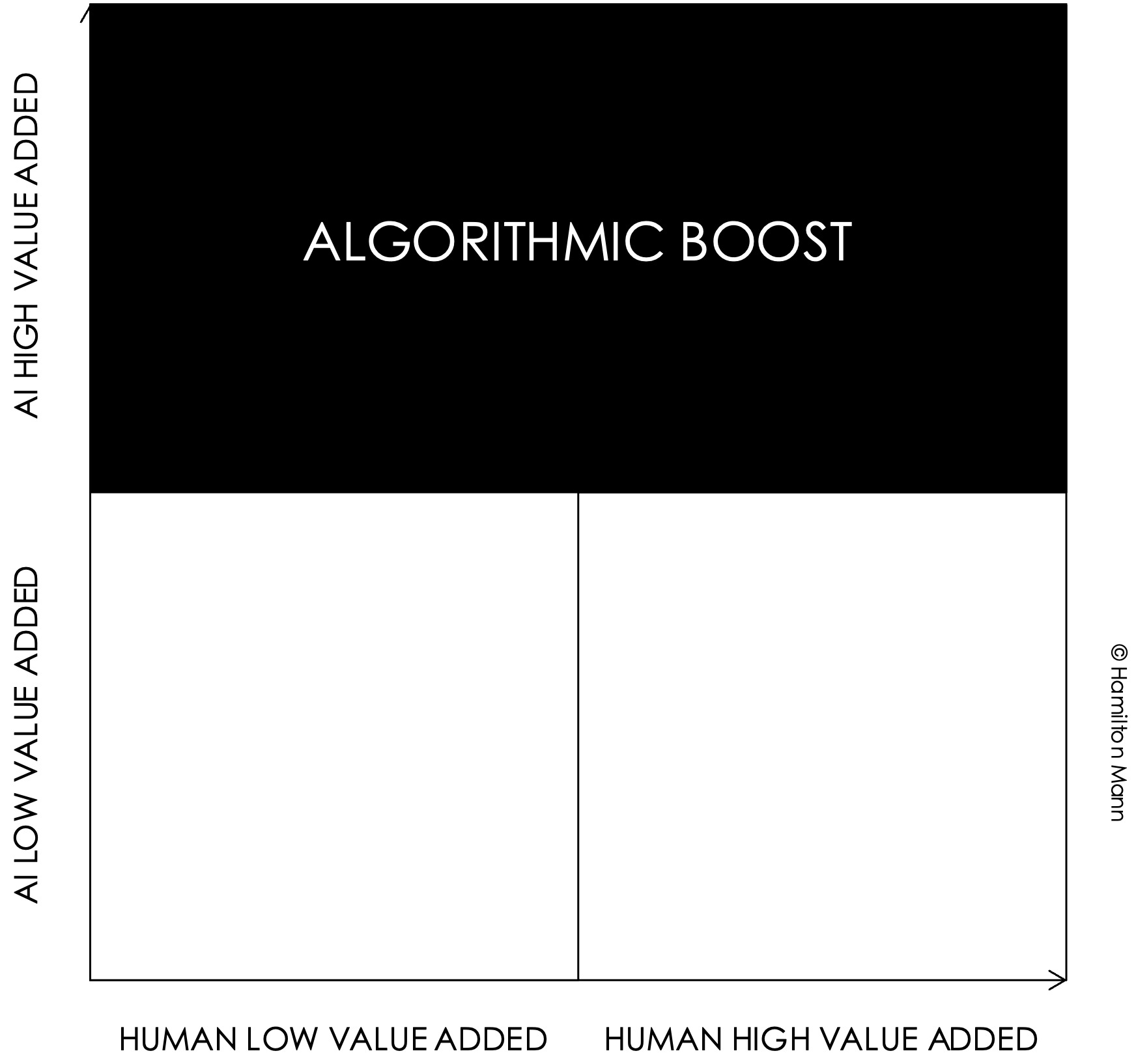
algorithmic boost

Algorithmic boost represents scenarios where AI’s role is significantly elevated to augment processes, irrespective of the starting or ending point of the human contribution. This transition focuses on harnessing AI either to take the lead in processes where human input is low or to amplify outcomes in scenarios where the human value is already high.  

Humanistic reinforcement

Humanistic reinforcement counters the first by emphasising transitions that increase the human value added in the equation. This set of transitions may involve reducing AI’s role to elevate human interaction, creativity, and decision-making, thereby reinforcing the human element in the technological synergy.

algorithmic recalibration

Lastly, algorithmic recalibration consists of transitions that involve a reassessment and subsequent adjustment of the balance between human and AI contributions. This might mean a reduction in AI’s role to correct over-automation or a decrease in human input to optimise efficiency and capitalise on advanced AI capabilities. 

Together, these sets of transitions provide a comprehensive framework for understanding and strategising the future of work, the role of AI, and the optimal collaboration between human intelligence and artificial counterparts. 

They reflect an ongoing dialogue that focuses not only on enhancing human skills and leveraging advanced technology but also on maintaining artificial integrity.  

This ensures that, as we find the right balance between the two, we do so with a commitment to integrity’s standards, ensuring that AI systems are transparent, fair, and accountable. 

Upholding artificial integrity is paramount, as it governs the trustworthiness of AI and secures its role as a beneficial augmentation to human capacity rather than a disruptive force. Thus, the journey towards technological advancement and automation is navigated with a conscientious effort to sustain both innovation and human values. 

Artificial integrity becomes a compass by which we can steer through this evolving landscape. 

It beckons us to maintain a careful balance, where the integration of AI into our tasks is constantly evaluated against the imperative to nurture and promote human dignity, creativity, and moral frameworks. 

In this age of swift technological advancement, the philosophy of artificial integrity provides a guiding light, ensuring that our navigation through the AI-powered matrix of the world not only celebrates the synergy of human and machine but also protects the human ethos at the heart of true innovation.  

In introducing artificial integrity to the discourse, we set out to explore the potential transformation of tasks, jobs, and the collective workforce across industries and, importantly, how the confluence of AI and human destiny can be guided with vision, accountability, and a deep-seated dedication to the values that are quintessentially human. 

This article was originally published in The European Business Review 22 December 2023. It can be accessed here: https://www.europeanbusinessreview.com/introducing-the-concept-of-artificial-integrity-the-path-for-the-future-of-ai/

About the Author

Hamilton-MannHamilton Mann is the Group VP of Digital Marketing and Digital Transformation at Thales. He is also Senior Lecturer at INSEAD, HEC and EDHEC Business School, a Mentor at the MIT Priscilla King Gray (PKG) Center and the President of the Digital Transformation Club of INSEAD Alumni Association France (IAAF). He was named as one of the 30 global thought leaders to watch as part of the Thinkers50 Radar (2024).

References:  

  • Acemoglu, D., & Autor, D. (2011). “Skills, tasks and technologies: Implications for employment and earnings”, Handbook of Labor Economics
  • Manyika, J., et al., (2017). “A future that works: Automation, employment, and productivity”, McKinsey Global Institute. 
  • Brynjolfsson, E., & McAfee, A. (2014). “The second machine age: Work, progress, and prosperity in a time of brilliant technologies”, W.W. Norton & Company. 
  • Acemoglu, D. & Restrepo, P. (2020). “Robots and Jobs: Evidence from US Labor Markets”, The University of Chicago Press Journals. 
  • Jha, S., Topol, E.J., (2016). “Adapting to Artificial Intelligence: Radiologists and Pathologists as Information Specialists”, JAMA. 
  • Arntz, M., Gregory, T., Zierahn, U., (2016). “The Risk of Automation for Jobs in OECD Countries”, OECD Social, Employment and Migration Working Papers. 
  • Boden, M.A., (2009). “Computer models of creativity”, AI Magazine
  • Parasuraman, A., Zeithaml, V.A., & Berry, L.L. (1988), SERVQUAL model 
  • Angwin et al. (2016), “How We Analyzed the COMPAS Recidivism Algorithm”, “Machine Bias” by ProPublica. 
  • Hashem, I.A.T., Yaqoob, I., Anuar, N.B., Mokhtar, S., Gani, A., & Khan, S.U. (2015). “The rise of ‘big data’ on cloud computing: Review and open research issues”, Information Systems
  • Arner, D.W., Barberis, J.N., & Buckley, R.P. (2016). “The evolution of fintech: A new post-crisis paradigm?”, SSRN Electronic Journal
  • Acemoglu, D., & Restrepo, P. (2020). “Robots and jobs: Evidence from US labor markets”, Journal of Political Economy
  • Barocas, S., & Selbst, A.D. (2016). “Big Data’s Disparate Impact”, California Law Review
  • Rajkomar, A., Dean, J., & Kohane, I. (2018). “Machine Learning in Medicine”, The New England Journal of Medicine
  • Yüksel, N., Börklü, H.R., Sezer, H.K., & Canyurt, O.E. (2023). “Review of artificial intelligence applications in engineering design perspective”, Engineering Applications of Artificial Intelligence
  • Holstein, K., McLaren, B.M., & Aleven, V. (2017). “Intelligent tutors as teachers’ aides: Exploring teacher needs for real-time analytics in blended classrooms”, The Seventh International Learning Analytics & Knowledge Conference. 

Personal Loan Applying Guide: 10 Things You Must Know

Ever needed a financial boost but felt overwhelmed by the whole “personal loan application process” thing? Don’t worry, we’ve all been there. Those confusing terms and endless paperwork can make anyone’s head spin. But fear not because this guide is here to break it down for you!

It will cover the ten essential things you need to know before you go through the entire personal loan applying process. With this knowledge, you can feel confident and empowered throughout the process. Think of it as your personal cheat sheet for navigating the loan world! So, let’s dive in!

Personal Loan Applying Process: 10 Things to Know

The personal loan application process may seem unnerving, filled with confusing terms and complex procedures. However, with the proper knowledge and preparation, the process can become much smoother and more manageable. Here are ten important steps you can take to ensure a successful personal loan application process:

1. Determine Your Purpose and Loan Amount

When considering going through the personal loan application process, it’s important to define the loan’s purpose clearly. Determine whether you need the funds for debt consolidation, home improvement, medical expenses, or a personal purchase. A clear understanding of the specific purpose will help you determine the loan amount and compare your options more effectively.

2. Assess Your Financial Health

Before applying, take a comprehensive look at your current financial situation. Analyse your income, expenses, existing debts, and credit score. This self-assessment provides valuable insights into your affordability and creditworthiness, significantly impacting your loan approval and interest rates.

3. Understand Your Credit Score

Your credit score is a significant factor when it comes to your eligibility and interest rates for personal loans.  A more dependable credit history is indicated by higher FICO scores ranging from 300 to 850. Try to get your credit report and check it for mistakes or discrepancies. Before applying, take the necessary actions to raise your credit score.

4. Compare Different Lenders and Loan Offers

Don’t settle for the first offer you receive. Research and compare various lenders, including banks, credit unions, online lenders, and peer-to-peer platforms. Compare their interest rates, fees, terms, and repayment options to find the loan that best aligns with your needs and financial situation.

5. Consider Pre-Qualifying for a Loan

Pre-qualification is a valuable tool that provides a preliminary estimate of your loan eligibility and interest rate without impacting your credit score. This allows you to compare offers more effectively and choose the lender most likely to approve your application.

6. Select the Right Loan Term

Loan terms typically range between 12 and 84 months—a shorter term results in higher payments but lower total interest costs. A longer term, on the other hand, will lower your monthly payments while increasing the actual interest paid over the loan’s life. Choose the term that balances your budget with your overall financial goals.

7. Be Aware of Fees

Personal loans often come with various fees and charges, including origination, processing, and late payment fees. Understand these fees and their impact on your total loan cost before accepting an offer.

8. Protect Yourself with Loan Insurance

Consider purchasing loan insurance to protect against unforeseen circumstances like disability or death. This can ensure your loan payments are covered even if you cannot work.

9. Understand Repayment Options

Many lenders offer different repayment options, including fixed-rate and variable-rate loans. Fixed-rate loans offer consistent monthly payments, while variable-rate loans may fluctuate based on market conditions. Choose the option that best aligns with your risk tolerance and financial circumstances.

10. Prioritise Responsible Borrowing

Only borrow what you can afford to pay back. Carefully analyse your monthly budget and ensure you can comfortably make the loan payments while meeting your other financial obligations. Responsible borrowing is critical to managing your finances and achieving long-term financial stability.

Additional Tips

Before initiating the personal loan application process, gathering all the necessary documents is advisable. Here is a list of essential items you should have:

  1. Proof of Income: This could be your salary slips, income tax returns, or a bank statement reflecting your income. Show the lender you’re a reliable warrior ready to take on the loan repayment challenge.
  2. Identity Proof: Provide your passport, driver’s licence, or another government-issued ID to prove you are who you say you are.
  3. Bank Statements: Provide bank statements showcasing your financial health. This helps the lender understand your financial habits and determine your loan eligibility.
  4. Employment Verification: Let the lender know you’re not just a wandering loan seeker. Provide a letter of employment or any document confirming your current employment and income stability.
  5. Additional Documents: Depending on the lender and loan type, you might need additional documents like property papers, business registration documents, or tax assessment certificates. Be prepared to provide them if needed.

Choose a Reliable Lender!

With these essential tips and some research, you can quickly go through the personal loan application process and get the best loan that fits your needs and budget. To effectively handle your debt, it’s important to remember how important it is to take money responsibly and plan ahead.

As you begin your financial journey, consider the options from reputable lenders such as KreditBee. This will make it simple and convenient for you to reach your financial objectives. Visit their website to know more!

Overcoming Challenges in Hybrid Meetings via Hybrid Conference Rooms

By Dr. Gleb Tsipursky

Transitioning to hybrid workplaces has unearthed its own set of communication and collaboration hurdles. Dr. Gleb Tsipursky dives deep into the consequences of overlooking these hybrid meeting challenges and provides insightful strategies for investing in these spaces, laying the groundwork for a more seamless, collaborative, and inclusive future of work.

Have you ever felt like you’re speaking into the void in a hybrid meeting? You’re not alone. The shift to hybrid workplaces has introduced a unique set of challenges in communication and collaboration. The goal? To make the office worth the commute, and the virtual connection minimally distant from the physical one, requires investment into high-quality hybrid conference rooms.

Consequences of Ignoring Hybrid Meeting Challenges

Turning a blind eye to the complexities of hybrid meetings is not just a minor oversight; it’s a critical business misstep. The ramifications of neglecting these challenges are multifaceted and can ripple through an organization, affecting its core dynamics and long-term success.

When employees feel unheard or unseen in meetings, it doesn’t just frustrate them; it diminishes their sense of belonging and value within the organization. This lack of engagement can quickly translate into lower morale, which in turn impacts productivity and creativity. In a hybrid setup, ensuring that remote participants feel as included as their in-office counterparts is not just about technology—it’s about conveying respect and recognition of their contributions.

Ensuring that remote participants feel as included as their in-office counterparts is not just about technology—it’s about conveying respect and recognition of their contributions.

A hybrid meeting that doesn’t cater equally to both in-room and remote participants results in an inconsistent experience. This inconsistency can manifest in various ways—technical glitches, poor audio quality, or inadequate visual aids for remote participants. These issues disrupt the flow of meetings, leading to repeated clarifications, miscommunications, and ultimately, a waste of valuable time and resources.

The allure of the office is significantly diminished if employees find the experience less productive and engaging than working remotely. This can lead to a reluctance to come to the office, which defeats the purpose of a hybrid work environment aimed at fostering collaboration and team cohesion. If the office experience is not perceived as valuable, employees may opt to work remotely more frequently, leading to underutilized office spaces and a decline in spontaneous, collaborative interactions that often drive innovation.

Collaboration is the lifeline of any successful business. In a hybrid setting, where some team members are remote and others are in the office, the challenge is to maintain a cohesive team dynamic. Ignoring the need for equitable and engaging hybrid meetings can lead to a division within teams, where in-person interactions are favored over virtual ones, or vice versa. This division hampers the collaborative spirit, making it difficult for teams to brainstorm, innovate, and problem-solve effectively together.

One of the lessons learned from the global shift to remote work is the value of flexibility. Organizations that fail to provide flexible, hybrid meeting solutions are essentially stepping back from this progressive approach. This inflexibility can make an organization less adaptable to future changes or unforeseen circumstances, leaving it vulnerable in a rapidly evolving business landscape.

Lastly, how a company handles its hybrid meeting challenges speaks volumes about its culture and values. Companies that show a commitment to inclusivity and innovation in their meeting practices are more likely to attract and retain top talent. Conversely, those that fail to address these issues risk tarnishing their employer brand, making it harder to recruit and keep skilled professionals.

Pro Tips for Investing in Hybrid Conference Rooms

So how do you overcome such challenges? One consideration involves choosing the right equipment and software providers, which integrate well together. For example, Legrand, which provides products designed to seamlessly oversee power, lighting and data management, have forged a partnership with Microsoft to integrate into Microsoft’s Signature Microsoft Teams Rooms.

But investing in hybrid conference rooms transcends the mere acquisition of new equipment; it represents a fundamental reevaluation of our methods of communication and collaboration in today’s business world. This investment requires careful consideration of various factors to ensure that these spaces cater effectively to the diverse and distributed nature of modern workforces.

A primary consideration is prioritizing meeting equity to ensure comprehensive inclusion. This involves investing in high-quality audio and video equipment, ensuring all participants, remote or in-person, are clearly seen and heard. Technologies chosen should minimize background noise and enhance voice clarity. Additionally, room acoustics and lighting need special attention to prevent echo and sound distortion and to guarantee visibility for all, especially those joining remotely. Large, high-resolution screens are also vital, as they play a significant role in making remote participants feel more present and engaged.

Consistency and familiarity in user experience are also crucial. Standardizing the interface across all meeting rooms simplifies the process, reduces the learning curve, and ensures that employees can easily operate the system in any room. Simplified connectivity is equally important, whether through laptops, smartphones, or tablets, to allow for a seamless start to meetings.

Rapid deployment solutions should be considered for their minimal installation disruption and adaptability to different room sizes and layouts.

The efficient deployment and adaptability of meeting spaces are key. Selecting furniture and technology that can be easily reconfigured for various meeting types is vital, allowing for quick adjustments and maximizing room utility. Rapid deployment solutions should be considered for their minimal installation disruption and adaptability to different room sizes and layouts.

Scalability and global support are essential for long-term success. Choosing vendors with a global presence ensures consistent quality and support across various locations. Technologies should be scalable to grow with the business, avoiding the need for complete overhauls as the company expands.

Long-term serviceability and maintenance of these systems cannot be overlooked. Systems should integrate into the enterprise IT network for easy monitoring and management, allowing IT teams to efficiently oversee these technologies. Regular software updates and access to technical support are critical for the sustained performance and security of the investment.

Additional considerations for a future-proof investment include incorporating accessibility features to make spaces inclusive for all employees, including those with disabilities. Sustainability practices should be considered in technology choices, opting for energy-efficient devices and sustainable materials. Establishing feedback loops to gather user experience is vital for continuous improvement and ensuring the spaces meet evolving team needs.

The Path Forward

The hybrid meeting model is here to stay, and with it, the challenges of ensuring a productive, engaging, and equitable meeting experience, as I tell my clients in helping them transition to a hybrid work model. By focusing on these aspects, businesses can turn these challenges into opportunities for improved collaboration and communication. It’s not just about adapting to the new normal; it’s about redefining it. The future of business meetings is not just a blend of physical and digital—it’s a harmonious fusion that offers the best of both worlds.

About the Author

Dr. Gleb Tsipursky

Dr. Gleb Tsipursky helps leaders use hybrid work to improve retention and productivity while cutting costs. He serves as the CEO of the boutique future-of-work consultancy Disaster Avoidance Experts. He is the best-selling author of 7 books, including the global best-sellers Never Go With Your Gut: How Pioneering Leaders Make the Best Decisions and Avoid Business Disasters and The Blindspots Between Us: How to Overcome Unconscious Cognitive Bias and Build Better Relationships. His newest book is Leading Hybrid and Remote Teams: A Manual on Benchmarking to Best Practices for Competitive Advantage. His cutting-edge thought leadership was featured in over 650 articles and 550 interviews in Harvard Business Review, Forbes, Inc. Magazine, USA Today, CBS News, Fox News, Time, Business Insider, Fortune, and elsewhere. His writing was translated into Chinese, Korean, German, Russian, Polish, Spanish, French, and other languages. His expertise comes from over 20 years of consulting, coaching, and speaking and training for Fortune 500 companies from Aflac to Xerox, and over 15 years in academia as a behavioural scientist at UNC-Chapel Hill and Ohio State. A proud Ukrainian American, Dr Gleb lives in Columbus, Ohio.

Top KeyDrop Promo Codes in 2024

KeyDrop.com Promo Codes & Promotions

KeyDrop Promo Codes and Promotions create a dynamic and ever-changing landscape for gamers on the platform, offering a blend of excitement, rewards, and community engagement. The platform ensures that every gaming session is infused with an extra dose of enjoyment, with the thrill of unlocking exclusive items through the claiming of KeyDrop promo codes.

Our Hot ? KeyDrop Codes are

  • gamblecsgo100 – get $0.50 for FREE and a +10% for Deposit & Free Daily Case
  • hellag – get $0.50 for FREE and a +10% for Deposit & Free Daily Case

Are KeyDrop Codes Legit?

Yes, our KeyDrop codes are legit. As the popularity of online gaming platforms continues to soar, so does the intrigue surrounding promotional codes. In the realm of KeyDrop.com, users often question the legitimacy of the codes provided. The factors that contribute to their legitimacy include

  • Clear Terms & Conditions: Legitimate codes will have clear instructions on how they can be redeemed and any terms & conditions that must be met. 
  • Security Measures: Legitimate codes will align with security standards, ensuring that users can redeem them without compromising their accounts or personal information. 
  • Official Communication & Distribution Channel: Genuine KeyDrop codes are dispersed openly via authorized means, guaranteeing users know where to find the source. 

How to use KeyDrop Promo Code?

KeyDrop.com has become a hub for avid gamers and a platform that delights its users with exclusive perks through promo codes. If you’ve got your hands on a KeyDrop promo code and r to unlock exciting benefits, this step-by-step guide is here to walk you through the process of using these codes seamlessly.

  1. Visit KeyDrop.com: Start by navigating to the official KeyDrop website. Simply log in using your Steam account to begin the process.
  2. Explore the Dashboard: Once logged in, explore the KeyDrop dashboard. Familiarize yourself with the various sections, including games, inventory, and promotions. 
  3. Locate the Promo Code Input Area: Click on the drop-down arrow located at the right-hand side of the profile section tab to access the Promo Code input tab.
  4. Click on the Promo Code tab, Input, Verify & Apply: Click on this tab to access the promo code page.  Here carefully input one of our KeyDrop promo code you have obtained like ” csgo-hella” into the designated field. Double-check the accuracy of the code to avoid any errors & click “Apply”.
  5. Enjoy the Benefits: Once the promo code is successfully verified and confirmed, you can revel in the benefits it unlocks. This includes exclusive in-game items, increased virtual currency, special discounts, or other perks, depending on the nature of the promo code.

Benefits of Using KeyDrop Promo Codes

The exclusive benefits that users can unlock by utilizing our KeyDrop promo codes include.

1. Increased In-Game Currency

Promo codes on KeyDrop.com often come with the enticing perk of boosting in-game currency. This additional currency empowers players to explore more features, participate in higher-stake games, or upgrade their virtual inventory with greater ease.

2. Enhanced Gaming Resources

Some promo codes on KeyDrop unlock valuable gaming resources, providing players with an edge in their virtual adventures. This could include rare weapons, powerful upgrades, or other resources that contribute to a richer and more enjoyable gaming experience. 

3. Access to Exclusive Content

Promo codes for KeyDrop provide players access to exclusive content that ups the stakes on the gaming experience. 

4. Exclusive Discounts & Offers

KeyDrop promo codes frequently come with discounts and special offers, allowing users to make in-game purchases at a reduced cost. This can be particularly beneficial for players who wish to acquire premium items or access premium features without breaking the bank. 

Methods of deposit and withdrawal on KeyDrop.com

KeyDrop.com prioritizes user convenience by providing many secure and efficient methods for depositing & withdrawing funds. To protect financial transactions, the site uses encryption technology, so users may enjoy their gaming experience without worrying about the security of their funds. For financial transactions, options available on the website are.

  • Credit and Debit Cards

KeyDrop.com accepts major credit and debit cards, providing a familiar and widely-used option for users. Transactions through cards are processed swiftly, allowing gamers to fund their accounts or withdraw winnings with ease.

  • E-Wallets

For users who prefer the speed and convenience of e-wallets, KeyDrop.com supports popular options such as PayPal, Skrill, and Neteller. E-wallet transactions are known for their efficiency and security, making them a preferred choice for many online gamers.

  • Cryptocurrency

Recognizing the growing popularity of cryptocurrencies, KeyDrop.com has integrated digital currencies like Bitcoin and Ethereum into its payment options. 

Available Games on KeyDrop website

KeyDrop.com is a dynamic universe where users can immerse themselves in many gaming experiences. The captivating games offered on the platform are packed with adrenaline-fueled excitement, catering to a wide range of gaming preferences.

  • Case Battles: Players can engage in head-to-head battles, opening virtual cases with a chance to win rare and coveted in-game items. 
  • Upgrader: For those who love to enhance and customize their virtual inventory, the Upgrader on KeyDrop.com provides the perfect playground. This feature allows players to upgrade their existing skins, enhancing their rarity and value. 
  • Skin Changer: Variety is the spice of life, and the Skin Changer on KeyDrop.com embraces this philosophy. This feature allows players to swap their in-game skins.
  • Conquest (New): KeyDrop.com introduces Conquest, a new addition to its diverse gaming portfolio. Conquest challenges players with strategic gameplay, requiring careful planning and execution to conquer virtual territories. 
  • Giveaways: Users have the chance to participate in giveaways and win exciting in-game items. Also, claiming our KeyDrop Promo code rewards players with giveaways!
  • Daily Case: Players can unlock a special case each day, revealing new and exciting in-game items. It’s a daily ritual that adds a touch of suspense to the gaming routine, keeping players engaged and eager to discover what awaits them.

Conclusion

Our Top KeyDrop Promo Codes are the secret keys to unlocking a world of unparalleled excitement. As we embark on this gaming journey, the tantalizing prospects offered by codes like “hellagood”, “csgo-gamble”, and many more set the stage for a truly immersive and rewarding experience.

We have also provided a step-by-step guide to help players apply a KeyDrop code, redeem their rewards, and reap all the benefits attached. Check out our favourite available games on the platform and start playing with your free money reward from our codes! 

Maximize Your Return on Investment: Unveiling Oregon Farming Strategies

Are you an Oregon farmer looking to maximize your return on investment? We understand that farming can be a challenging profession, and making the most of your financial resources is essential. In this blog post, we will unveil some effective strategies to help you increase your farm’s rate of return and gain more value from your assets. From identifying your farm’s financial needs to turning your farm assets into retirement income or working capital, we will cover all aspects of farming finance. Additionally, we will provide information on Oregon state programs beneficial for farmers, including the Direct Farm Ownership Loan and the Conservation Reserve Program. Lastly, we will discuss how understanding tax implications and investing in quality equipment can improve your returns. Read on to discover how you can achieve financial success in Oregon farming.

Identifying Your Farm’s Financial Needs

Understanding the cash flow requirements of your farm is vital for effective financial planning. Evaluating production costs and market prices is key to identifying your farm’s financial needs, while implementing risk management strategies is essential for meeting those requirements. Additionally, efficient water conservation practices can lead to significant cost savings. Lastly, developing a comprehensive business plan is the crucial first step in accurately identifying and addressing the financial needs of your farm.

Evaluating Your Farm’s Current Value

Regularly assessing the market value of your farm ensures well-informed decision-making. Understanding the impact of natural disasters on farm activities is essential for accurately evaluating its value. Careful resource management and planning significantly contribute to the current value of your farm. Furthermore, evaluating the farm’s long-term sustainability is crucial in determining its current worth. Additionally, utilizing conservation easements can effectively enhance the current value of your farm.

Calculating Your Farm’s Rate of Return

Monitoring the profitability of your farm is essential in determining the rate of return. Evaluating market prices and labor costs directly impacts the farm’s overall rate of return. Efficient management of farming operations plays a crucial role in positively influencing the rate of return. Analyzing the farm’s cash flow and the amount of time invested aids in calculating the rate of return. Implementing cost-effective strategies contributes to achieving a higher rate of return, ensuring the sustainability of your Oregon farming investment.

Strategies to Increase the Rate of Return

Leveraging the expertise of Generation 3 family members for value addition is a smart move that can significantly boost the farm’s rate of return. Diversifying farm activities, such as integrating hay production or specialty crops, can substantially contribute to increased profitability and overall rate of return. Additionally, actively participating in farmers markets not only promotes the farm’s products but also enhances the rate of return. Furthermore, implementing sustainable farming practices in line with USDA and Oregon State University guidelines positively impacts the farm’s rate of return.

Leveraging Generation 3 Skills for Value Addition

Leveraging the latest Generation 3 farming techniques, including precision agriculture and sustainable practices, can empower farmers to make informed decisions, increase yields, reduce waste, and lower costs. By embracing value addition through processing raw materials into finished products, Oregon farms can boost their profits and marketability. Collaboration with industry professionals offers new growth opportunities, while networking with other farmers fosters a supportive community for sharing knowledge and resources.

Raising Operating Capital for Your Farm

Exploring government grant and loan options can provide the necessary funding for your farm. Crowdfunding and local investment opportunities offer alternative sources of capital. Financial planning and utilizing savings are effective methods to raise operating capital. Additionally, consider partnerships or joint ventures with other farmers or businesses. Selling equity in your farm represents a long-term financial strategy for continued support. By carefully considering these options, you can secure the operating capital needed for your farm’s success.

Turning Farm Assets into Retirement Income or Working Capital

Maximizing the return on investment from your Oregon farm involves diversifying assets to minimize risk and maximize profitability. Sustainable farming practices can lower overhead costs, while exploring alternative income streams like agritourism and farm-to-table sales can provide additional revenue. Government programs and incentives, such as those offered by Oregon State University and the USDA, can further support your operations. Seeking professional financial advice is essential for making informed decisions about your farm assets, especially amidst factors like drought or changes in the farm bill.

Effective Asset Conversion Strategies

To maximize profits, diversify your crops, spreading risk and leveraging different markets. Employ precision farming techniques to optimize crop yield and minimize waste, utilizing technology for sustainable practices. Explore government programs and subsidies, such as farm bill incentives, to enhance profitability. Collaborate with other farmers to share resources and reduce costs, fostering higher returns on investment. By partnering with entities like Oregon State University and USDA, business owners can access essential resources to mitigate financial risks and increase productivity.

When considering strategies to maximize your farm’s return on investment, it’s essential to stay informed about the latest opportunities in the Oregon real estate market. Websites like WhitneyLandCompany.com can be an invaluable resource for this. They specialize in Oregon farm properties and provide detailed information about various listings, which can be crucial for farmers looking to expand or diversify their operations. Their insights on land value, water resources, and agricultural potential can help you make well-informed decisions about whether to acquire new land, or how best to utilize your current holdings. This approach aligns with sustainable farming practices and can contribute significantly to a farm’s long-term profitability and success.

Minimizing Financial Risks in Farming

When optimizing your farm’s financial performance, consider diversifying your crops to mitigate risks and enhance profitability. Tracking expenses and income is crucial for identifying areas of improvement. Embracing technology and automation can streamline processes, reducing costs. Leveraging government programs and grants can supplement income and support sustainable practices. Building relationships with local markets and consumers is essential for boosting demand and revenue. These strategies are key in minimizing financial risks, ensuring a successful and sustainable farming venture.

Oregon State Programs Beneficial for Farmers

Oregon State University offers various programs to support Oregon farms. The Farm Bill, managed by the USDA, provides financial assistance to farm owners for implementing conservation practices. Additionally, the university has templates for farm budgets, aiding business owners in tracking expenses and profits. Family members can benefit from programs like direct farm ownership and operating loans. Utilizing the Conservation Reserve Program can help farmers combat drought and improve hay production on their acres. These programs serve as vital resources for Oregon farmers looking to maximize their return on investment.

Understanding the Direct Farm Ownership Loan

The Direct Farm Ownership Loan provides financing for securing agricultural land, enabling the purchase of farmland, construction or repair of buildings, and farm improvements. This long-term, fixed-rate loan supports family farms, ranchers, and rural communities, offering cash flow for farming operations and financing for rural homes and agricultural land. It is a beneficial tool for business owners to acquire acres for hay production, especially during times of drought. The USDA template benefits a lot of people by providing essential support for their Oregon farms.

Gaining from the Direct Operating Loan

The Direct Operating Loan offers essential funds for small farms to acquire livestock, farm equipment, and feed, aiding in the initiation, sustenance, or enhancement of farming operations. This loan empowers farmers to oversee market prices, labor costs, and farm activities, while also providing necessary assistance for family living expenses, farm profitability, and emergency farm needs. For agricultural producers and farming families, the Direct Operating Loan stands as a vital resource, ensuring financial stability and growth within the agricultural sector.

Utilizing the Conservation Reserve Program (CRP)

The Conservation Reserve Program (CRP) offers opportunities for farmers to transform environmentally sensitive acreage into wildlife habitats and conservation easements. By participating in the CRP, farmers contribute to water conservation, natural resource management, and wildlife habitat preservation. Moreover, the program provides landowners with annual rental payments and cost-share assistance to establish long-term covers on eligible farmland, supporting risk management and conservation efforts. Ultimately, the CRP plays a crucial role in sustaining agricultural lands, natural resources, and wildlife habitats.

Deciding What Crops to Grow in Oregon

Choosing specialty crops enables farmers to access niche markets, enhancing profitability. Careful planning is vital when selecting crops for cultivation in Oregon, considering personal preferences, market demand, and climate suitability. Diversifying crop production helps hedge against market price fluctuations. The key to maximizing farm profitability lies in choosing crops that thrive in Oregon’s climate and meet market demands. This strategic approach ensures sustainable growth and success for Oregon farms.

Researching the Market and Finding Your Niche

To uncover unique market opportunities, researching market trends and consumer preferences is crucial for Oregon farmers. Engaging with buyers and consumers allows farmers to understand market demands, align production with consumer preferences, and ultimately differentiate products to command higher prices. Exploring local farmers markets can provide valuable insights into niche market opportunities, helping farmers optimize their investment in Oregon farming. By understanding consumer behavior and preferences, farmers can strategically position their products to meet market needs and maximize returns.

Planning Your Planting and Cultivation Schedule

Efficient scheduling of planting and cultivation optimizes resource use and labor costs. Aligning activities with market demand and seasonality is crucial. Strategic scheduling helps in workload management, maximizing efficiency, and minimizing risks. It’s essential for long-term sustainability and profitability. NLP terms: Oregon State University, farm bill, Oregon farms, family members, hay production.

Managing Your Farming Expenses and Profits

A well-structured business plan is essential for tracking expenses, managing cash flow, and optimizing profitability within Oregon farms. Accurate tracking of farm profits is crucial for informed decision-making and long-term sustainability. Cost of production analysis plays a critical role in assessing farm profitability and operational efficiency. Additionally, monitoring labor costs, market prices, and production expenses enables farmers to optimize farm activities effectively. Ultimately, managing farm expenses is vital for maximizing profitability and ensuring long-term success.

Creating and Implementing a Farm Budget

Implementing a farm budget is key for efficient resource allocation and long-term growth. A well-organized budget helps forecast cash flow, manage expenses, and minimize financial risk. Tracking expenses and revenues is vital for financial stability and monitoring cash flow, production costs, and revenue streams. Creating a budget ensures farmers can maximize profitability and sustain business growth. Utilizing a farm budget is essential for strategizing, sustaining, and expanding farm operations.

Tracking Your Profits Accurately

Accurate monitoring of profits is vital for evaluating farm performance and shaping informed business strategies. Financial management tools should be employed by farmers to track revenues, expenses, and cash flow. By analyzing profits, farmers can pinpoint areas for enhancement and make informed decisions. Precision in profit tracking aids in comprehending farm profitability, production efficiency, and market dynamics, essential for optimizing long-term business performance and profitability.

Understanding the Tax Implications of Farming in Oregon

Maximizing returns in Oregon farming involves comprehending tax implications, optimizing financial planning, and managing capital effectively. Employing tax planning strategies is crucial for reducing liabilities and maximizing benefits. Farmers must be mindful of available tax incentives, deductions, and exemptions, as well as compliance with regulations to enhance profitability. Strategic tax planning contributes significantly to long-term financial stability and success in farming operations.

How Can Quality Equipment Investment Improve Your Returns?

Investing in top-notch farming equipment can significantly enhance your returns. Upgrading to modern machinery boosts efficiency, cuts labor costs, and optimizes farm operations. Quality equipment investment is crucial for sustainable farming, improved management, and staying competitive in fluctuating markets.

Conclusion

In conclusion, maximizing your return on investment in Oregon farming requires strategic planning, financial evaluation, and leveraging state programs. By identifying your farm’s financial needs and evaluating its current value, you can make informed decisions to increase your rate of return.

Implementing generation 3 skills for value addition and raising operating capital are effective strategies to boost profitability. Additionally, turning farm assets into retirement income or working capital through efficient asset conversion strategies is crucial.

Take advantage of Oregon state programs such as the Direct Farm Ownership Loan, Direct Operating Loan, and Conservation Reserve Program to further enhance your farming success. Researching the market, planning your planting schedule, and managing expenses and profits are essential for sustainable growth. Lastly, understanding the tax implications and investing in quality equipment can significantly improve your returns. Start implementing these strategies today and witness the transformation of your Oregon farming venture.

Embracing Body Positivity: The Role of Liposuction in Self-Love

Body positivity is a movement that encourages individuals to embrace and love their bodies as they are, regardless of shape, size, or appearance. It promotes self-acceptance and challenges societal beauty standards that often lead to body dissatisfaction. While the body positivity movement has gained widespread support, there are still debates about the role of cosmetic procedures like liposuction in achieving self-love. In this blog, we’ll explore the intersection of body positivity and liposuction in Turkey, discussing how this cosmetic surgery option can play a part in a person’s journey toward self-acceptance.

Body Positivity: Loving Yourself as You Are

Body positivity is about recognizing and appreciating your body’s unique characteristics and qualities. It encourages individuals to let go of unrealistic beauty ideals and the pressure to conform to societal norms. Embracing body positivity means understanding that beauty comes in all shapes, sizes, and colours, and that self-worth is not determined by physical appearance alone.

The Role of Self-Love in Body Positivity

Self-love is a fundamental aspect of body positivity. It involves treating yourself with kindness, respect, and compassion, regardless of your body’s perceived flaws or imperfections. Self-love allows you to build a healthy relationship with your body, fostering positive self-esteem and reducing negative self-talk.

Liposuction: A Cosmetic Option

Liposuction is a surgical procedure that involves the removal of excess fat from specific areas of the body. It is often chosen by individuals who are looking to enhance their body contours and achieve a slimmer appearance. While liposuction is a cosmetic procedure, its relationship with body positivity is complex and multifaceted.

Personal Choice and Autonomy

One key principle of body positivity is respecting personal choice and autonomy. Individuals have the right to make decisions about their bodies that align with their values and desires. If someone chooses to undergo liposuction to address areas of concern, it should be seen as a decision made in pursuit of their own body goals and not a betrayal of body positivity.

Body Positivity and Empowerment

Empowerment is another essential aspect of body positivity. It’s about taking control of your own body and making choices that empower you to feel confident and comfortable in your skin. For some, liposuction can be an empowering choice, as it enables them to take an active role in sculpting their bodies according to their preferences.

Managing Expectations

It’s crucial to acknowledge that liposuction, like any medical procedure, has limitations. Realistic expectations are vital to a successful liposuction experience. While liposuction can help remove localized fat deposits, it is not a solution for overall weight loss. Managing expectations and consulting with a qualified surgeon can ensure that the procedure aligns with your body positivity journey.

Self-Love After Liposuction

Post-liposuction self-love is a critical component of the process. After the procedure, it’s essential to embrace your body as it transforms. Understand that your worth is not solely tied to the outcome of the surgery. Self-love involves appreciating your body at every stage of your journey and being patient with the healing process.

Body Positivity and Inclusivity

A significant challenge in the intersection of body positivity and liposuction is ensuring that all bodies are celebrated. Body positivity should not discriminate against those who choose cosmetic procedures. It should be an inclusive movement that welcomes individuals regardless of their choices. True body positivity means accepting and supporting everyone, regardless of their path to self-acceptance.

Final Thoughts: Embracing a Complex Relationship

In conclusion, the relationship between body positivity and liposuction is complex and deeply personal. It is essential to recognize that body positivity is not a one-size-fits-all concept. While some individuals may find empowerment and self-love through cosmetic procedures like liposuction, others may choose alternative paths to body acceptance.

The key to embracing body positivity while considering liposuction is rooted in self-love, personal choice, and respect for individual autonomy. Whether you choose to undergo liposuction or not, remember that your body is unique, and it deserves love and acceptance at every stage of your journey.

Body positivity is about celebrating diversity, fostering self-esteem, and challenging societal beauty standards. Whether you choose to embrace your natural body or opt for cosmetic enhancements, the most crucial aspect of the journey is the love and respect you have for yourself.

How to Start a Medical Spa

As the demand for self-improvement and beauty therapies grows around the globe, medical spas are gaining more popularity. It’s expected that this will result in more market growth opportunities. The rising demand for medical spas can be attributed to an increase in the geriatric population, minimally invasive procedures, technological advancements, and the high usage of skincare solutions. Setting up a medical spa can create several revenue streams by merging spa services with medical treatments.

Unlike traditional spa services, medical spa procedures usually have a higher profit margin because they need advanced medical expertise and equipment. Since medical spas offer wellness and cosmetic services, they attract a wider clientele, making them a great venture to consider. Outlined below is how to start a medical spa.

1. Make a medical spa business plan

Developing a comprehensive business plan is critical when opening a medical spa. It details your practices’ day-to-day operations and financial structure. A business plan shows a realistic success roadmap based on well-thought-out ideas on how to build and manage the business. Prepare this document comes with multiple benefits, including:

  • Helping achieve your business goals
  • Letting you be proactive
  • Acting as a tool for communicating your business objectives to investors, lenders, and others
  • Providing a competitive edge
  • Creating a roadmap for an exit strategy

With the help of a business plan template such as Yocale’s business plan template for a medical spa, you can establish an in-depth, customized plan that resonates with your vision.

2. Determine how much money you need and look for financing

Raising capital for a medical spa isn’t easy. The startup costs plus financing options differ based on the:

  • Aesthetic services you’ll be offering
  • The medical spa equipment you need
  • Whether you decide to lease or buy new equipment

The average medical spa startup cost is around $19,267 before equipment leasing or purchase. Your budget should include processing and legal fees, insurance, permits, and licensing. Don’t forget to factor in ongoing and recurring expenses. Upon determining how much money you require, it’s time to look at your financing options, including personal savings, medical spa loans, and grants.

3. Acquire business permits and licensing

Permits and licenses are a legal requirement every business should meet. Running a medical spa without the necessary permits and licensing can lead to fines, penalties, or even business closure. Licensing is critical to ensuring industry standards are met and maintained while guaranteeing patient confidence. With the right permits and licenses, your medical spa business can safeguard itself against legal liability by offering safe, responsible care.

Licensing helps ensure your med spa adheres to particular safety and health standards, including proper medical supplies and equipment handling, and sanitation practices. While business insurance and professional and business licenses are among the common permits you’ll need, checking with your local authorities can help you determine all the licensing requirements you must meet to run a medical spa.

4. Find a medical spa location

Location is essential for your medical spa’s success and growth. The best spot for your med spa business should be:

  • Easy to access
  • Have great visibility
  • A place where your target clientele regularly hangs around

The right med spa location should have excellent public transport links and ample parking.

Endnote

While a med spa business brings multiple rewards, setting it the right way can be challenging. Consider following this guide when starting your medical spa business to ease things up.

EDITOR'S PICK OF THE WEEK

CFO's new mandate. CFO explaining the presentation

The Performance and Transformation Orchestrator: The CFO’s New Mandate in the Age of AI

By Terence Tse CFOs are evolving into AI-driven transformation orchestrators, balancing finance, technology, and strategy while upskilling teams, managing risks, and driving measurable business value. A key insight from this year’s AI for CFOs event, organized...

WISE DECISION MAKER GUIDE

POWER INFLUENCERS

Emerging Trends

The Future of Global Trade