Home Blog Page 241

UEFA Conference League, the Competition of Contrasts

There is a team worth 628 million euros and one from a tiny village of not even 5,000 inhabitants. There is a club from a country not yet globally recognized and a team that has won two UEFA Cups (or rather: one UEFA Cup and one Europa League). The magic of the UEFA Conference League is all about this. In its differences, contrasts, and opposites.

First and foremost, economic opposites. Consider that the most valuable team of Uefa Europa Conference League, Aston Villa, has a squad that would cost over 600 million euros on the market (Ollie Watkins alone is worth 60 million according to Transfermarkt, as are Moussa Diaby and Douglas Luiz, while Pau Torres costs 45 million), while the poorest teams, all together, don’t even reach 13 million. We’re talking about FC Ballkani, Breidablik Kopavogur, and Ki Klaksvik, a club from the remote Faroe Islands. Not even 5,000 inhabitants, players who have other jobs, some work in banks, supermarkets, or offices. Players who now, perhaps, will face Edin Dzeko, who boasts Wolfsburg, Manchester City, Roma, and Inter in his resume, top scorer in Serie A and Bundesliga. Or with Emiliano Martinez, World Champion with Argentina.

A competition of contrasts that obviously sees the richest as the favorite: Aston Villa, whose final victory is played at 3.75. Good chances also for Eintracht Frankfurt, a team that boasts a UEFA Cup in 1980 and a Europa League in 2022, listed at 9.00, or Lille, quoted at 11.00. The second favorite is Fiorentina, which, not by chance, is also the second richest team in the Conference League with a total value of 246 million euros (40 more than Fenerbahce). And precisely the Italian team is among the 7 teams that boast at least one European title, in this case the Cup Winners’ Cup, as well as Slovan Bratislava, Aston Villa, and Aberdeen, while Dinamo Zagreb and Ferencvaros have a UEFA Cup in the 60s.

European champions and shooting stars, big clubs and extras, titled, famous, award-winning players, and people who don’t even play professionally. The Conference League amazes precisely for this, for representing the union between impossible worlds. And for guaranteeing everyone access to a dream. Something that only football can do.

Today Market Analysis on Behalf of Hani Abuagla Senior Market Analyst at XTB MENA

Taiwan elections Who will win geopolitical games?

One of the key geopolitical events at the beginning of 2024 is the presidential and parliamentary elections in Taiwan, scheduled for January 13. Although polls indicate that the current “tense” status quo would likely be maintained, recent verbal threats from China leave some uncertainty. Why is Taiwan crucial for the global and Chinese economies? What could the victories of individual candidates mean? Will China opt for more radical actions?

Global technological superpower

Taiwan belongs to the so-called group of Asian Tigers. It is the world’s largest producer of semiconductors, so any military actions in Taiwan would lead to a technological crisis, likely causing a global economic collapse. TSMC (Taiwan Semiconductor Manufacturing Company) is the largest semiconductor manufacturer, holding almost 58% market share according to TrendForce, continuing its growth from previous quarters. Samsung is in second place with a share of only 12.4%. It’s worth noting that TSMC produces semiconductors on behalf of other companies and does not manufacture chips for its own use under its own brand. Interestingly, TSMC doesn’t just produce for companies like Apple but also for other key players in the chip sector such as AMD and Nvidia. These companies can be seen more as partners than competitors. Although TSMC is a crucial chip supplier to China, armed conflict on the island could lead to a total technological crisis worldwide.

Taiwan is not just about TSMC; it’s also home to Acer, Asus, and Foxconn, other well-known electronics manufacturers. Interestingly, the founder of Foxconn, Terry Guo, is running in the presidential elections in Taiwan, but currently ranks fourth in polls, with little chance of winning.

Genesis of China-Taiwan conflict

The conflict between China and Taiwan dates back to the 17th century when the island came under Chinese jurisdiction. Shortly before the year 1900, Taiwan fell under Japanese rule during the ongoing war. After World War II in 1945, Taiwan once again came under Chinese administration. However, dissatisfaction with the rule of the Kuomintang party led to significant unrest in Taiwan, ultimately resulting in riots. The Chinese Civil War and Mao Zedong’s victory led to the escape of the Chinese authorities to Taiwan.

Taiwan, also known as the Republic of China, does not recognize the authorities on the mainland. Simultaneously, it has not officially declared independence, making it challenging to maintain diplomatic relations with both China and Taiwan. China follows a policy of unity and has announced plans for reunification by 2049. Chinese authorities emphasize that any declaration of independence by Taiwan would be met with military intervention. This is why China is not in favor of the current ruling party, the Democratic Progressive Party (DPP), winning, as it could not only prolong the current deadlock but also escalate tensions.

Polls hint at DPP staying in power

Current Vice President Lai Ching-te from the DPP (Democratic Progressive Party) is running in the presidential elections. The incumbent president, Tsai Ing-wen, has held her office twice since 2016, a period marked by a significant escalation in tensions between China and Taiwan. The choice of Lai Ching-te may indicate the maintenance or even worsening of the current status. The DPP emphasizes that under its governance, the country has strengthened its autonomy and security through closer ties with countries such as the United States and other similar democracies.

Another candidate with considerable support is Ko Wen-je, a member of the TPP (Taiwan People’s Party). He is a former mayor of Taipei.

The third candidate is the mayor of Taipei and the head of the main opposition party, the Kuomintang (KMT), Hou Yu-ih. This candidate, a former police chief, is running his campaign, highlighting the possibility of war. The Kuomintang is also a party originating from mainland China, claiming rights to power over the entire state.

It’s worth mentioning that each candidate supports maintaining the current status quo and refrains from declaring independence, which could trigger a reaction from China. However, China simultaneously employs disinformation to influence voters towards parties less anti-China, such as KMT and TPP.

The latest ETtoday poll gives 38.9% support to the DPP candidate, Lai Ching-te, who has been leading since the beginning of the campaign. The second candidate differs depending on poll source, but the same ETtoday poll gives KMT candidate Hou Yu-ih support at 35.8%. Ko Wen-je enjoys support at 22.4%.

It’s essential to emphasize that the candidate who receives the highest number of votes in the single first round wins, meaning they don’t necessarily need to have 50% of the votes. However, for several years, there hasn’t been such a large number of candidates with such evenly distributed support. Additionally, vice-presidents are elected (similar to the United States) during these elections.

China wants changes in Taiwan

China frames the election as a choice between war and peace in its disinformation campaign. However, it doesn’t seem that the country is inclined towards a greater escalation of the conflict beyond what has been seen so far, unless Taiwan declares independence, which also appears unlikely. Nevertheless, in the event of the continuation of DPP’s governance, China may opt for more frequent military exercises in the vicinity of the Taiwan Strait, possibly even violating Taiwan’s airspace. Xi Jinping has hinted at the approaching moment of reunification without specifying concrete actions. It’s crucial to note that an attack on Taiwan would not only disrupt the supply of semiconductors crucial for the world but also jeopardize up to 50% of global container shipping. At present, without its semiconductor production, China would face significant problems in the event of an attack on Taiwan.

China is also attempting to influence businesses by emphasizing that unity would lead to even greater expansion of technological companies worldwide. On the other hand, TSMC has factories in other parts of the world, currently investing in the construction of two large factories in Japan and the United States.

Situation remains tense

Regardless of who wins the elections, a significant improvement in relations with China is unlikely. Maintaining power by the DPP signals a lack of further cooperation on the international stage from China. Even a KMT victory wouldn’t lead to a consistent improvement, as the party opposes reunification, and China would likely persist in its aspirations. However, a DPP victory would likely strengthen ties with the US, while a KMT victory might result in a loosening of those relations. Stronger bonds between the United States and Taiwan are, of course, a red flag for China, which not only competes with the United States economically but also for political influence in Southeast Asia. A scenario where the election results lead to an escalation of the trade war between the United States and China cannot be ruled out, potentially causing a rebound in inflation and a slowdown in global economic recovery.

From a market perspective, it is crucial to closely monitor the performance of TSMC’s stock and the Chinese yuan. While the elections themselves shouldn’t alter the current market situation, an escalation of the conflict could significantly harm Taiwanese company stocks and lead to further issues for the yuan, despite not being a freely floating currency. Simultaneously, if there is any attempt at dialogue by Taiwan towards China post-election, it could lead to an improvement in supply chain situations, potentially lowering prices of technological products. This, in turn, might impact TSMC’s stock, with the possibility of a resurgence in its value, considering its sideways trend over the past year.

One can only hope that the ongoing conflict remains confined to paper and, just as China did not experience the predicted recession in 2023, there won’t be a drastic escalation of the conflict, as some commentators anticipate.

TSMC stock (TSM.US) is inversely correlated with USDCNH. When company’s stock traded at record highs at the beginning of 2022, yuan was the strongest compared to US dollar since 2017. Source: xStation5

Everything You Need to Know About Roulette

The Game

Roulette, often known as the “Queen of Casino Games,” is a thrilling and iconic game of chance. Unlike poker, roulette relies solely on luck, making it accessible to players of all skill levels. The game involves a spinning wheel with numbered and coloured pockets, a small ball, and players placing bets on where the ball will land.

The Rules

Roulette has straightforward rules, making it easy for beginners to grasp. The key components include:

Betting Options

Players can bet on various outcomes, such as a specific number, a range of numbers, whether the number will be odd or even, or if it will be red or black.

The Wheel and Ball

The croupier spins the wheel in one direction and the ball in the other. The ball eventually loses momentum and falls into one of the numbered pockets.

Winning Bets

Payouts are determined by the type of bet placed. For example, betting on a single number (straight bet) offers higher odds but lower chances of winning, while betting on red or black provides even money but higher probability.

Strategy

While roulette is primarily a game of chance, players often employ strategies to manage their bets and maximise enjoyment. Popular strategies include the Martingale system, where players double their bet after each loss, and the Fibonacci sequence, a progressive betting system based on a mathematical sequence.

The History of Roulette

The history of roulette is both rich and fascinating, with its origins dating back to 17th-century France. The word “roulette” itself means “little wheel” in French, pointing to the game’s defining feature. The invention of the game is often credited to the French mathematician and physicist Blaise Pascal, who sought to create a perpetual motion machine. However, the first true roulette wheel was devised by French inventor François Blanc in the mid-19th century. The game gained popularity in European casinos, particularly in Monte Carlo, becoming associated with glamour and sophistication. 

In the 19th century, roulette made its way to the United States, where a slight modification was introduced, adding a double zero to the wheel. This change gave rise to the American and European variations of the game. 

Over the years, roulette has remained a symbol of chance and elegance, gracing the floors of casinos worldwide and becoming a staple in the realm of classic casino games. The evolution of the internet has only helped roulette in its popularity, with people being able to play roulette games on online casino anytime they like.

Roulette In Comparison to Other Chance Games

In the realm of casino games, chance plays a central role, and roulette stands out as a quintessential game of luck. Comparing roulette to other chance-based games reveals the unique characteristics that contribute to its timeless appeal.

Roulette vs. Slot Machines

Both roulette and slot machines rely on chance, yet they differ significantly in their gameplay and mechanics. While slot machines are entirely automated and require no decision-making on the player’s part, roulette involves a more interactive experience. Players actively place bets on the roulette table, choosing numbers, colours, or combinations, adding an element of engagement that extends beyond the mere pull of a lever.

Roulette vs. Craps

Craps, another chance-based game, involves dice instead of a spinning wheel. While craps offers a communal atmosphere where players cheer for the shooter, roulette maintains a more individualised experience. In roulette, players make independent bets, and each spin of the wheel is a solitary event, fostering a distinct sense of anticipation and excitement.

Roulette vs. Baccarat

Baccarat, often associated with high-stakes gambling, is a card game that involves minimal decision-making from the player. In contrast, roulette’s simplicity lies in the straightforward act of betting on where the ball will land. While baccarat relies on drawing cards to determine outcomes, roulette offers a visually dynamic and immediate experience, where the spinning wheel captivates players with its unpredictable trajectory.

Roulette vs. Bingo

Bingo, a popular game of chance often played in social settings, contrasts sharply with the glamour and intensity of roulette. Bingo involves matching numbers on a card as they are randomly drawn, creating a more relaxed and social atmosphere. Roulette, on the other hand, captivates players with its visual spectacle, as the ball dances around the wheel, creating an electrifying ambiance that is distinct from the communal nature of bingo.

Roulette vs. Keno

Keno shares a resemblance to the lottery, requiring players to select numbers in the hope of matching them with randomly drawn ones. In contrast, roulette provides a faster-paced and visually captivating experience. The immediate outcome of each spin intensifies the thrill, offering a stark departure from the anticipation and delayed gratification associated with waiting for keno numbers to be drawn.

While roulette shares the commonality of chance with other casino games, its unique blend of visual excitement, individualised betting, and immediate outcomes sets it apart. The spinning wheel, the clatter of the ball, and the strategic choices of where to place bets collectively contribute to roulette’s enduring popularity in the diverse landscape of chance-based casino games.

Nutrition of the World Population

By Nadine Karnetzke, Lena Wege, and Michael Palocz-Andresen

The UN estimates in the World Population Prospects report that the global population will rise to nearly 10 billion people by 20501. Simultaneously the challenges facing climate change will increase. The way food is produced today is on the other hand a major contributor to some of the environmental problems. This article explores the connection between sustainable development and food production in addressing the challenges of the future. Several techniques for more sustainable food production are discussed together with the UN Sustainable Development Goals (SDGs) in this article.

In 2015, the United Nations member states agreed upon The 2030 Agenda for Sustainable Development. It consists of 17 Sustainable Development Goals (SDGs), which aim to be achieved by 2030, as well as 169 more-detailed sub-targets2. SDG 2, “zero hunger”, aims to reduce hunger and, among other objectives, seeks to increase agricultural productivity and the incomes of small-scale food producers3.

To address the challenges of the future, it is crucial to move away from large-scale monoculture production, which currently serves as a major contributor to reducing hunger globally. However, controversy surrounding monoculture production is growing steadily. Some of the primary drawbacks are increased risk of disease and pest invasions due to the lack of plant and animal diversity, which would limit the spread of diseases and control pests through predation. In response to this, pesticides are increasingly being used, which in turn pollute the surrounding environment. Additionally, growing the same crops year after year leads to reduced availability of nutrients and degrades the soil. Another downside is intensive mechanisation leading to increased fossil fuel use and therefore increased greenhouse gas emissions4.

To underscore the significance of sustainable food production, two case examples are particularly suitable: groundnut production in Senegal and sugar cane production in the Amazon.

Senegal relies on groundnut production and exports. However, since 1970, falling groundnut prices, adverse weather conditions, and economic shocks have significantly reduced Senegal’s earnings from groundnut exports. This decline is additionally coupled with environmental degradation caused by groundnut production, which has adversely affected the cultivation of major food crops like millet, sorghum, rice, and maize. In the regions, where agriculture is crucial for livelihoods, these circumstances make it increasingly difficult for people to sustain their living5.

Similarly dire is the situation in the Amazon rainforest in Brazil. Brazil leads the global production of sugar cane, with significant growth in the past decade. However, the expansion of sugar cane monoculture, particularly in the Amazon, threatens the environment and traditional indigenous territories6.

This intensive monoculture thus poses a threat to ecological and social aspects of sustainability. Both examples show that there is a need for new and sustainable ways of agricultural production.

figure 1In order to feed the growing global population sustainably, it is imperative that we explore smarter approaches. This entails harnessing high-tech assistance, embracing organic and regenerative agriculture practices, advancing indoor food production methods, and incorporating new types of food into the daily cuisine7, as depicted in figure 1. In the following sections, we will introduce and discuss each of these methods.

More Biodiversity with Less Space Required

As food production around the world will need to increase by 70 per cent by 2050 to feed the world’s population, various approaches to maximising crop yields will be crucial in the future3.

Permaculture

The Permaculture Design Principles8 are a set of universal design principles, derived from various scientific disciplines, that can be applied to any location, climate, and culture. Sustainable food production systems that are designed based on permaculture principles will adopt arrangements that occur in natural ecosystems and use whole-system thinking. Permaculture supports more “natural” approaches to agriculture that allow for efficient and harmonious food production9.

Agroecology

Agroecology is an academic field that studies ecological processes in combination with agricultural practices. The goal is to improve food yields for balanced nutrition while at the same time enhancing healthy ecosystems. The guiding principles are biological and cultural diversity which feature small-farmer-centred policies that protect their livelihoods. Consumers are increasingly demanding healthier food and a closer connection to its producers10.

Intercropping
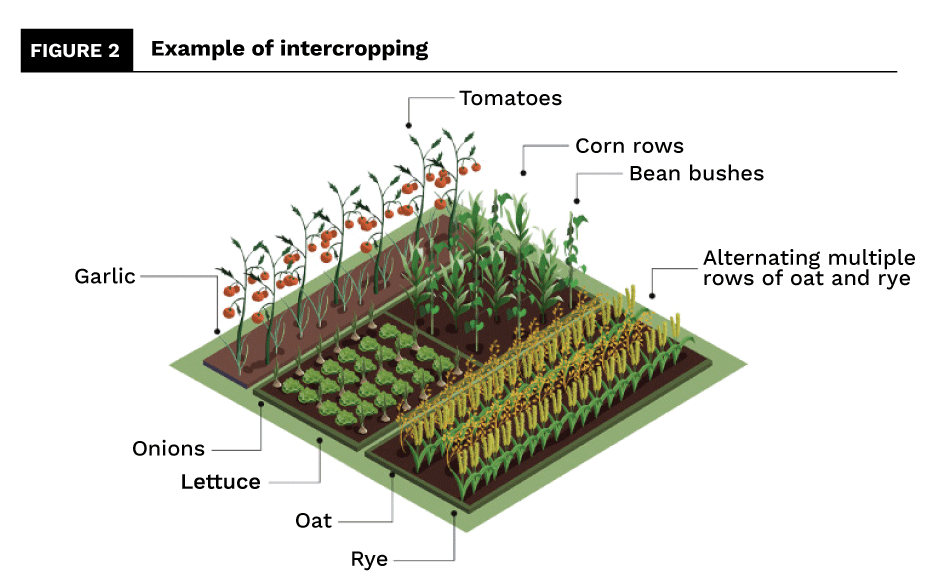
figure 2

Intercropping is an agricultural practice that involves cultivating two or more crops during the same season in the same field. Several species of annuals and perennials are grown in between each other as an alternative to monoculture farming (see figure 2). Examples include garlic and tomatoes, or coffee and bananas, which entails tending to the species’ different needs. Reasons for intercropping include saving space and resources, ensuring better yields, repelling pests, reducing weeds, and providing nutrients for neighbouring plants11.

Agroforestry
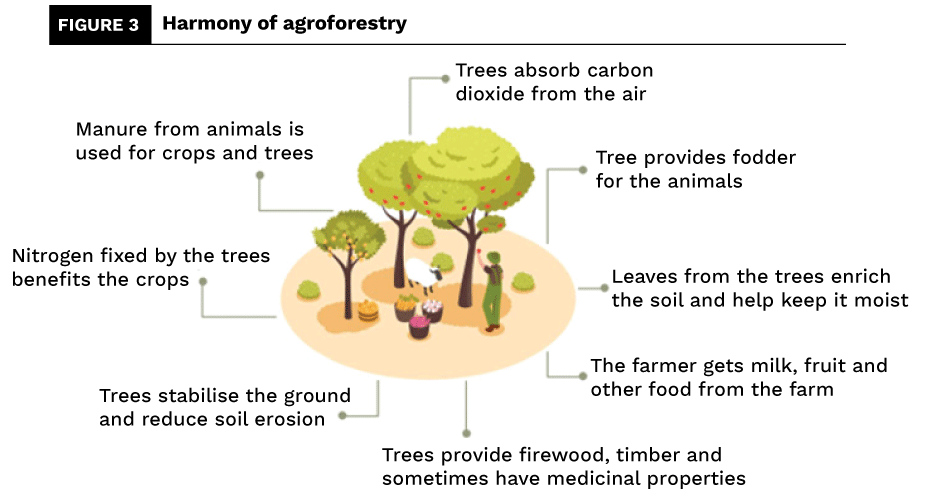
figure 3

Agroforestry is another example of a land management approach that combines several species and approaches in the same space. It means intentionally integrating agricultural practices like pasture and crops with forestry. This has multiple benefits. Planting trees, shrubs, and hedges on farms can help to maintain healthier soil, while housing wildlife and natural predators of common crop pests, thus reducing the need for pesticides. Tree roots reach deep into the ground, cycling nutrients and binding the soil, preventing it from being eroded. In the silvo-pastoral approach, animals can be allowed to graze under the trees, fertilising the soil, while trees provide shelter and fodder for the animals. Following the silvo-arable approach, crops are grown beneath trees, often in rows which are large enough for a tractor to tend to the crops without damaging the trees. Beyond their positive impact on wildlife and soils, diverse systems are more productive than monocultures. Agroforestry has already been rated as one of the most promising systems for the “sustainable intensification” of farming, meaning that farmers can produce more food while also reducing negative impacts on the environment12 (see figure 3).

Indoor and Vertical Farming Techniques

Indoor and Vertical Farming Techniques

Indoor and vertical farming techniques grow produce stacked one above another in a closed and controlled environment. By using growing shelves mounted vertically, produce is able to thrive in limited space, which makes it especially suitable for city and urban farming.

The benefits are manifold. Labour costs are reduced, and technological advances allow the controlling of every aspect of growing crops. Light, which is in most cases provided artificially, humidity, and water can all be precisely allotted to the plants’ needs. Studies show that vertical farms use up to 70 per cent less water than traditional farms, which is key in drought-prone zones. The use of technology can help vertical farmers to optimise energy use and light, temperature, and humidity levels. Since crop growth is then no longer dependent on weather, temperatures, or daylight, produce can be grown reliably all year round. As indoor vertical farms are completely sealed off from the outside environment, there are virtually no pests, making pesticides or herbicides redundant13. A lot more attention should be given to improvements in indoor vertical farming, as it can produce a tremendous yield per available growing space. Vertical farms can improve even more in terms of energy consumption due to lighting and temperature control.

Hydroponics

figure 4

Some set-ups are unique in that they do not require soil. Approaches can be hydroponic, where vegetables are grown in a nutrient-dense bowl of water, or aeroponic, where the plant roots are systematically sprayed with water and nutrients. This is possible because plants grow through photosynthesis. The chemical equation for photosynthesis does not contain soil, which means that plants can grow without it. What they do need is water and nutrients, both obtainable from nutrient-rich solutions. Nutrients are much more easily obtainable from these solutions than from soil, which is why they need much smaller root systems and can divert more energy into leaf and stem growth. With smaller roots, you can grow more plants in the same area and get more yield from the same amount of ground. Many pests are carried in soil, so having no soil generally makes the growing system more hygienic, with fewer problems of disease. Since hydroponics is ideal for indoor growing, you can use it to grow plants all year round. Drawbacks of hydroponics are high costs associated with the necessary equipment, and significant time needed to check on the plants if there are no automated systems for the purpose. In theory, you can grow any plant hydroponically, but some plants do better than others. Fruit crops such as tomatoes and strawberries, and lettuces and herbs, are among plants that do particularly well14 (see figure 4).}

Mushrooms

figure 5

Fungi are an ideal example of how a healthy soil ecosystem helps plants and the planet thrive. The interdependence of plants and fungi is a partnership that has evolved over millions of years. A major component of soils in terms of biological carbon is from fungi, mycelium both living and dead. Some scientists have stated that fungal mycelium is the largest repository of biological carbon in healthy soils. Mycelium is the fine web of whitish material that can be seen if one pulls a mushroom up. This is an intricate root system that not only feeds the fungi growing from it, but also cleanses the soil of toxins, sequesters carbon, and supplies fresh nutrients to surrounding plant life. Mycelium weaves itself into the roots of plants, which act as a host for the growing fungal network. While the plants keep mycelium alive, it in turn breaks down organic matter and helps the soil retain moisture, providing plants with a direct channel to both water and nutrient-rich soil. Not only do mushrooms help keep forests alive, but they also play a larger role in climate change by sequestering carbon.

In theory, you can grow any plant hydroponically, but some plants do better than others.

It was previously thought that carbon was stored in forest floor waste, like dead leaves and pine needles, but research has found that much carbon is stored below the surface of the soil in these complex fungal root networks. Recent research has also uncovered a potential link between mushrooms and bee health. With bee colonies already in decline across the globe, it has been found that mycelium extract could provide an added immunity benefit to bees threatened by infectious viruses. Feeding bees mycelium extracts of some polypore mushrooms reduced pathogenic viruses hundreds to thousands of times in less than two weeks.

These viruses threaten worldwide food biosecurity. The tracts from polypore mushrooms have also been shown in the laboratory to reduce viruses pathogenic to other animals, including humans. The potential of fungi stretches far beyond food into fields like pharma, textiles, electronics, and construction15 (see figure 5). Mycelium can also play a role in sustainable food production. The use of organic or bio-fertilisers made from plant-based materials like mycelium for agriculture has gained significant attention over chemical fertilisers16. Mushroom farms are highly scalable. They consume little to no energy to produce tremendous yields of a protein-substituting superfood.

Food Security and Gender Equality

When it comes to improving sustainable food production, the social dimension must be taken into account. In the countries most affected by climate change, especially in the Global South, women make up half of all agricultural workers. Yet, they face great obstacles in accessing land, technology, markets, infrastructure, and services. Land ownership patterns are skewed in favour of men in the majority of countries17. SDG 5, gender equality, aims to achieve gender equality and empower women18. Can it help to improve food security as well? Indeed, SDG 5 includes two elements which have a critical influence on food security: women’s access to land and to natural resources.

Access to land for women who earn their living in agriculture is crucial for the socioeconomic conditions of many households, their food security and nutrition. In this respect, however, SDG 5 is most effective when combined with the objectives of SDG 2, which include advancement for women in agriculture19. Thus, pursuing the synergies of these goals in parallel not only promotes sustainable food production systems, but also recognises the important role that women play in them.

To achieve these goals, considering the current unequal circumstances, there is a great need to promote sustainable food production systems and resilient agricultural practices.

The techniques presented in this article, especially those that enable resilient and high-yielding cultivation in limited spaces (for example, agroforestry), can be an important step in supporting women and simultaneously ensuring food security for many households worldwide.

Discussion and Outlook

The concepts presented hold great potential for a shift to sustainable agriculture. To achieve food security for a growing population without damaging the environment, these ideas need to be implemented on a large scale. However, the monoculture approach is still dominating, despite the knowledge of the devastating consequences. What does it take to create change and strengthen alternatives?

To make progress in the transition, it is important to examine why monoculture is this persistent. There are several reasons for this. First, the food production supply chain involves many actors who specialise in monoculture production, for example with machinery, storage facilities, and transport networks. Shifting to diversified cropping systems would therefore require significant investment and changes to a whole system of existing infrastructure.

Secondly, monoculture agriculture offers high yields and lower production costs in the short term compared to diversified new cropping systems. The short-term economic advantage provides an incentive for farmers to continue monocropping in order to survive in a fiercely competitive environment. In addition, years of knowledge have been built up on this type of farming and little on alternative forms20.
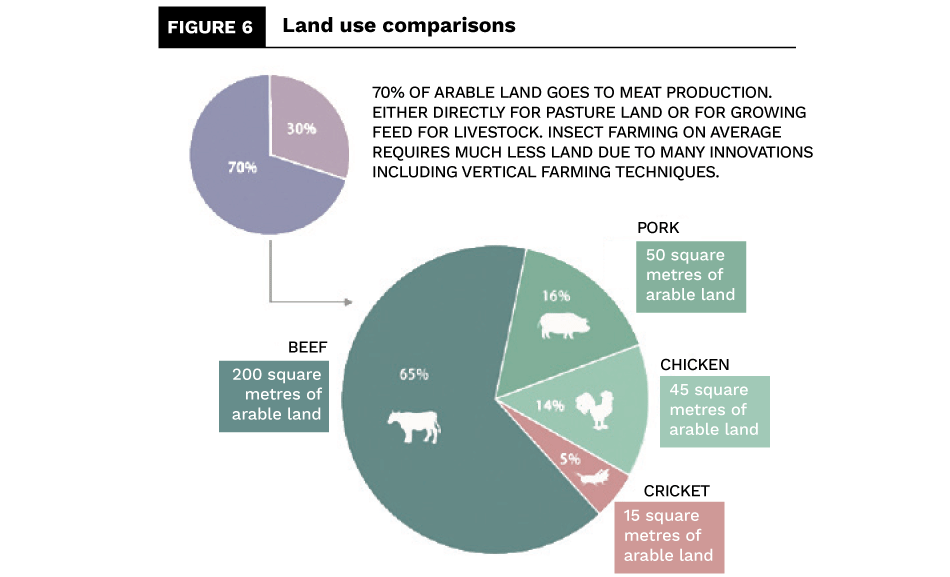
figure 6
Thirdly, most land is currently used for livestock feed, for example by growing maize or soya. Thus, high meat consumption is another factor that reinforces monoculture. Figure 6 shows the comparison of land use. It can be seen that most land is used for meat production and only a very small part for innovative alternative techniques. Part of the future solution would be to drastically reduce livestock farming to free up more land for food that could be grown and sold directly to people, instead of being passed through animals. The impact would be to shift to a more plant-based diet that is free from meat and dairy products.

Finally, food policies, in some cases, favour monoculture systems by providing incentives and subsidies. Changing these policies to promote diversified farming systems can be a slow and complex process21.

Part of the debate on a future-oriented mode of agriculture is innovation in technology and infrastructure, which is reflected in SDG 9, “industry, innovation and infrastructure”.

Nonetheless, a transition in the way food is produced and consumed is necessary. However, the hindering factors show that it is a highly complex issue. Therefore it calls for the integration of several SDGs. In addition to gender equality, the topic also touches on “sustainable production and consumption” (SDG 12). This goal includes the promotion of sustainable practices in food production. SDG 13, “climate action”, is also called for, as agriculture is not only an important factor influencing climate change, but on the contrary should, as already described, be part of the solution. Similarly, SDG 15, “life on land”, is relevant, as it aims to protect biodiversity, promote the restoration of degraded ecosystems, and ensure sustainable land use.
However, the aforementioned impeding factors also show that a political component is required and that we are dealing with a problem of global proportions. Therefore, fostering SDG 17, “partnerships for the goals”, is highly relevant22.

Part of the debate on a future-oriented mode of agriculture is innovation in technology and infrastructure, which is reflected in SDG 9, “industry, innovation and infrastructure”. The precision-agriculture approach is one technique that can contribute to the transition in a technical manner.

The aim of precision agriculture is to use new technologies to increase crop yields and profitability in an attempt to lower the levels of traditional inputs needed to grow crops (land, water, fertiliser, herbicides, and insecticides) – that is, use less to grow more.
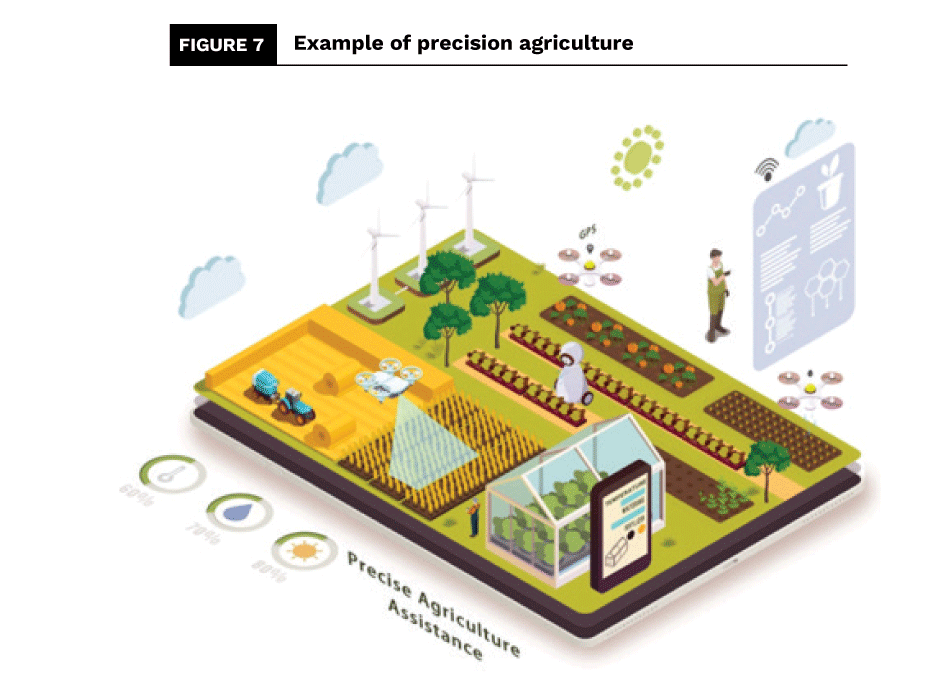
figure 7Technologies such as GPS devices on tractors enable efficient planting and navigation, saving time and fuel. Laser levelling of fields improves the efficiency of water application, minimising waste. Data monitoring and analysis help make informed farming decisions based on weather, soil, and pest conditions. Drones can be used for field monitoring and precise application of fungicides and pesticides. Japan, for example, has already embraced drone technology for rice field spraying. Robotics, like row bots and lettuce bots, are being developed to perform tasks more efficiently, such as precise fertiliser application and weed control. These advancements enhance sustainability, food availability, and profits in agriculture23 (see figure 7).

Nevertheless, the past has taught us that greater efficiency and monitoring through technology often only increases the scale of the problem. The technical component is valuable, but must go hand in hand with the other alternative approaches to agriculture that can be subordinated to the various SDGs, thus promoting innovation, a healthy environment, food security, gender equality, and global partnerships.

Summary

Summary

Producing enough food for a rising global population is a future challenge whose solutions have to be designed and implemented now. The issue of world nutrition that uses resources sustainably and that suits the needs of an increasing population might seem distant, but becomes even more urgent the further climate change progresses and the more evident its impacts become. Not only are livelihoods threatened, but also the functioning of healthy ecosystems and biodiversity that are so vital to food production. Agricultural practices make all the difference and have a huge potential for sustainable change, since they manage vast areas in every country in the world.
Monoculture, the most common agricultural practice so far, has often been chosen as the most economic and profitable strategy, albeit at the cost of decreasing ecosystem health and biodiversity. Countermeasures were covered in this article, including solutions that help to support biodiversity with less space required, for example intercropping and vertical indoor farming.

Moreover, gender equality as envisioned by SDG 5 is crucial in implementing sustainable agricultural practices. It is essential to strive for equal rights and opportunities for all genders when implementing sustainable agricultural practices in all countries around the world.

Acknowledgement
The authors would like to thank Prof. Dr Lou Ziyang, Shanghai Jiao Tong University in the School of Environmental Science and Engineering and in the Low Carbon College, vice dean of the Research Centre of the Solid Waste Disposal and Resource, and leader of the Chair in the China Institute for Urban Governance, for years of support in this scientific area.

About the Authors

Nadine KarnetzkeNadine Karnetzke holds two bachelor’s degrees in cultural studies and psychology from Leuphana University Lüneburg. In her work, she promotes interdisciplinary exchange. As a psychological consultant, she supports individuals and teams. She is now studying in the interdisciplinary Master’s programme in Sustainability Science at Leuphana University Lüneburg.

Lena WegeLena Wege finished a bachelor’s degree in Global Environmental and Sustainability Studies as a major and Psychology and Society as a minor at Leuphana University Lüneburg. In her studies, she focused on the improvement of climate change communication to the public and solutions to climate-related societal and global issues.

Michael Palocz-AndresenMichael Palocz-Andresen is a guest professor at BUAP Benemérita Universidad Autónoma de Puebla. From 2018-21 he worked as a Herder professor supported by the DAAD at the TEC de Monterrey in Mexico. He became a full professor at the University West Hungary 2005-17. Currently, he is a guest professor at the TU Budapest, the Leuphana University Lüneburg, and at the Shanghai Jiao Tong University. He is a Humboldt scientist and instructor of the SAE International in the USA.

References

  1. United Nations Department of Economic and Social Affairs. (June 2019). World Population Prospects 2019: Highlights. https://population.un.org/wpp/Publications/Files/WPP2019_10KeyFindings.pdf (8 June 2023)
  2. United Nations (2015). Transforming Our World: The 2030 Agenda for Sustainable Development. https://sdgs.un.org/sites/default/files/publications/21252030%20Agenda%20for%20Sustainable%20Development%20web.pdf (8 June 2023)
  3. United Nations. (7 November 2022). Goal 2: Zero Hunger – United Nations Sustainable Development. United Nations Sustainable Development. https://www.un.org/sustainabledevelopment/hunger/
  4. Burns, H.A. (2017). “Southern Corn Leaf Blight: A Story Worth Retelling”. Agronomy, 109(4). https://doi.org/10.2134/agronj2017.01.0006
  5. Gro Intelligence. (20 February 2015). Polishing Peanuts: The Senegalese Groundnut Story. Sustainable Agriculture Research and Education. https://gro-intelligence.com/insights/polishing-peanuts-the-senegalese-groundnut-story
  6. Ferrante, L. & Fearnside, P. (2018). Amazon Sugarcane: A Threat to the Forest. Science. 359. 10(1126). http://dx.doi.org/10.1126/science.aat4208
  7.  Liu, C.L.C., Kuchma, O. & Krutovsky, K.V. (2018). “Mixed-species versus monocultures in plantation forestry: Development, benefits, ecosystem services and perspectives for the future”. Global Ecology and Conservation, 15, e00419.
  8. Holmgren, D. (2002). Permaculture: Principles and Pathways Beyond Sustainability.
  9. Bohler, D. (5 September 2017). Permaculture Design in 5 Steps. The Permaculture Research Institute. https://www.permaculturenews.org/2017/09/05/permaculture-design-5-steps/#:~:text=Permaculture%20design%20is%20 essentially%20a,of%20designing%20human%2Dcentred%20 landscapes (8 June 2023)
  10. Chalmer, L. (26 April 2019). Agroecology: A Systems Approach. Medium/Resilience. https://www.resilience.org/stories/2019-04-26/agroecology-a-systems-approach/ (8 June 2023)
  11. Mohler, C.L, Stoner, K.A & Johnson, S.E. (2009). Crop Rotation on Organic Farms. Guidelines for Intercropping. https://www.sare.org/publications/crop-rotation-on-organic-farms/guidelines-for-intercropping/ (8 June 2023)
  12. World Agroforestry. What is Agroforestry?. https://www.worldagroforestry.org/about/agroforestry (Last retrieved ~ February 2023, no longer accessible)
  13. Avgoustaki, D.D. & Hydis, G. (25 September 2020). “How energy innovation in indoor vertical farming can improve food security, sustainability, and food safety”. Advances in Food Security and Sustainability. 5. 1-51. https://doi.org/10.1016/bs.af2s.2020.08.002
  14. Trees.com staff (10 February 2022). “Hydroponic Systems: Different Types and How They Work”. Trees.com. https://www.trees.com/gardening-and-landscaping/hydroponic-systems
  15. Wakotola, G. & Temesgen, T. (27 September 2018). “Application of Mushroom as Food and Medicine”. Advances in Biotechnology and Microbiology, 11(4). 555817. http://dx.doi.org/10.19080/AIBM.2018.11.555817
  16. Bosman, A. (March 2022). Insect Farming Could have Huge Benefits for Crop Production. Earth.com. https://www.earth.com/news/insect-farming-could-have-huge-benefits-for-soil-fertility-and-crop-production/ (8 June 2023)
  17. Food and Agriculture Organisation of the United Nations. Sustainable Development Goals – Achieve gender equality and empower all women and girls. https://www.google.com/url?q=https://www.fao.org/sustainable-development-goals/goals/goal-5/en/&sa=D&source=docs&ust=1684421728462657&usg=AOvVaw0mKzgGhD5fya1lk9y9qIMk (8 June 2023)
  18. United Nations. Department of Economic and Social Affairs. Goal 5 – Achieve Gender Equality and Empower all Women and Girls. https://sdgs.un.org/goals/goal5 (8 June 22023)
  19. United Nations. Department of Economic and Social Affairs. Goal 2 – End hunger, achieve food security and improved nutrition and promote sustainable agriculture. https://sdgs.un.org/goals/goal2 (8 June 2023)
  20. Crews, T.E., Carton, W. & Olsson, L. (2018). “Is the future of agriculture perennial? Imperatives and opportunities to reinvent agriculture by shifting from annual monocultures to perennial polycultures”. Global Sustainability, 1, 1-18. http://dx.doi.org/10.1017/sus.2018.11
  21. Leach, M., Nisbett, N., Cabral, L., Harris, J., Hossain, N. & Thompson, J.F. (17 June 2020). “Food Politics and Development”. World Development, 134, 105024. https://doi.org/10.1016/j.worlddev.2020.105024
  22. United Nations. Department of Economic and Social Affairs. “The 17 Goals”. https://sdgs.un.org/goals (8 June 2023)
  23. International Society of Precision Agriculture. An International Journal on Advances in Precision Agriculture, 11119.

A Comprehensive Guide to Successful Car Financing

Purchasing a vehicle is an exciting venture but needs thorough planning, especially when considering a car loan. You need to go through the dynamics of car financing to arrive at the best lenders. Get enough details on the basics, from collateral requirements and total finance to interest rates and repayment periods. You want to have an easy time with loan servicing at the end of the day. This blog post shares tips for less strenuous car financing.

Compare Financing Options

Since there isn’t a single financial option that works for everyone, it’s essential to go through the financial alternatives and pick the one that perfectly suits your needs. If you are in San Antonio, you may consider traditional lenders, such as credit unions and banks, or turn to the in-house financing offered by dealerships.

The important thing is going through the loan terms and conditions. Use online loan calculators to determine the monthly payments and total loan cost. The best vehicle loans in San Antonio will come with flexibility. Depending on your needs, top lenders will engage you in lengthy discussions about your targets and financial strength. This allows perfect tailoring of the solutions, edging you closer to your goals.

Know Your Credit Score

Before setting foot in a dealership, looking at your qualifications for the car loan is vital. This is where you concentrate on your credit score and how it influences your financing options. Most lenders use it to determine interest rates and indicate your creditworthiness. With a higher credit score, you can be sure of friendlier rates and loan terms.

The credit reporting agencies can help determine your current score. They offer free services, allowing you to understand your financial standing and how you can improve it over time. If you realize the scores are less than stellar, postpone the car purchase until you boost the scorecard. This could be through timely repayment of your debts and eliminating mistakes on the credit report.

Consider Pre-Approval

Getting pre-approval gives you a perfect image of the loan implications, which helps with financial planning. You get to streamline the car acquisition process and give room for negotiations. Use this opportunity to look at how efficient customer support is and their communication channels.

To secure pre-approval, present the proper financial papers, from credit history to proof of income. Be cooperative with the many questions you might be asked during the process. Make them see your dedication to your obligations once you get the car loan.

Beware of Add-Ons and Extras

Before signing the dotted line, look at the extra services and benefits in their offers. Focus on their protection packages, for instance, mechanical repair coverage and guaranteed protection insurance. They should also be excellent at giving you correct details on how much your car is worth. When assessing these add-ons, concentrate on your driving habits and long-term use. It ensures that you get extras that will be meaningful to your needs and match your budget.

Establish a Realistic Budget

A common mistake is overlooking the actual cost of ownership. It’s significant to think beyond the sticker price and consider extra expenses such as insurance and taxes. Depending on your vehicle, look at the maintenance and registration requirements in the federal and state laws.

An exhaustive budget dramatically reduces the chances of overstretching your finances, giving you better control over your monthly payments. When developing a budget, factoring in a down payment is prudent. You get to reduce the total loan amount while sending a message of financial responsibility to the lenders.

Endnote

Perfect car financing starts with understanding the best terms and conditions. You need to find transparent lenders with their loan procedures and calculations. Discuss their requirements and terms with the team once you get the vehicle. It’s essential to compare different lenders before choosing a financing option.

How HR Technology Is Revolutionizing the Business Landscape in Australia

Technology has recently been at the forefront of everything, and the human resource (HR) sector is no different. This technological revolution has caused a noteworthy surge in the use of advanced tools and software. 

Australia’s reputation for its robust economy and innovative spirit, according to Global Australia, is experiencing a significant shift driven by the adoption of HR technology. Pioneering this progression is the Australian HR Software Industry. Businesses now are more keen on adopting such software and tools to streamline and automate tedious tasks.

Software like this can help Australian businesses increase productivity, enhance employee engagement, and stimulate a smooth operational framework. Apart from the ease and benefits of HR technology, let’s explore how exactly it is revolutionizing the business landscape of Australia:

1. Automating Administrative Processes

One of the most immediate benefits of HR technology in the Australian market is the automation of administrative tasks and processes. Traditional HR tasks, such as payroll processing, leave management, and attendance tracking, are time-consuming and prone to errors. 

HR software automates these routine tasks, including paperwork specific to Australian employment laws and follow-ups on employees’ daily tasks. This automation reduces manual intervention and ensures accuracy and consistency with local regulations. 

By computerizing these processes, HR professionals in Australia allocate more time to devising strategic initiatives and enhancing activities that support business growth, all complying with the country’s unique regulatory framework.

2. Strategic Data-Driven Decision Making

HR technology provides a broader and deeper look into productivity metrics, assessing performance feedback, tracking recruitment efficiency, and monitoring employee KPIs (Key Performance Indicators). 

Australian businesses can now analyze and keep a record of all this data pertaining to workforce trends. These comprehensive insights into organizational performance shed light on challenges hindering business growth and spotlight opportunities crucial for business success.

HR technology also equips Australian enterprises with tools and software to identify pain points and aid in uncovering underlying root problems. HR leaders can leverage this data to identify areas for improvement and align HR initiatives with business objectives to drive innovation, agility, and sustainable growth.

3. Talent Acquisition and Management

One of the primary roles of HR is to attract, recruit, and retain top-tier talent, which is crucial for business success. The abundance of candidates and voluminous data can make the process time-consuming and exhausting for HR professionals. 

To avoid this challenge, HR technology, including job board APIs, offers advanced tools tailored for the Australian market in candidate sourcing, applicant tracking, and talent management. These tools and software then provide a further understanding of employee engagement patterns and help examine workforce demographics specific to Australia. Such data empowers organizations to make data-driven decisions, easing recruitment strategies and ensuring a cohesive alignment with the evolving dynamics of the Australian talent landscape.

Endnote

The HR industry’s rapid innovation and technological revolution in Australia is of no surprise. Instead, it offers more clarity on how other countries can also utilize such practices to gain success in the ever-growing competitive business landscape. Not only is HR technology enhancing operational efficiency and easing out time-consuming tasks, but it is also making processes less prone to errors.

As HR technology continues to evolve, it paves the way for a more dynamic and adaptable organizational culture. There is no doubt that HR technology will play a pivotal role in shaping the future of work, enabling organizations to flourish and succeed in a fiercely competitive and complex business environment.

The Secrets of Success and Long-Term Survival of Japanese Companies

By Mostafa Sayyadi and Michael J. Provitera

The leadership and structure of Japanese organizations make them standout. Japanese executives have secret ideas that may be the key to their success and long-term survival. When advancing a business endeavor, learning the secrets create the kind of success that is easy to follow and worth emulating. This article attempts to reveal them.

Japanese leadership style has encompassed worldwide success and criticism. For example, Toyota is an example of a leading and successful Japanese company in industry. With its new and creative ideas, this company was able to rebuild the marginalized image of Japanese cars in the international business scene and take a large share of the car market in the world. Our investigations as senior consultants in Japanese organizations have shown that the innovative and agile organization of these organizations minimizes inefficiencies in the two prominent areas of human resource and leadership development. However, a note from a Japanese Intercultural Consulting, Rochelle Kopp, posits that “non-Japanese employees of Japanese firms frequently mention the penchant that many Japanese managers have for public criticism.  Whereas Americans would prefer to receive negative feedback in private, Japanese seem to prefer to give it in public.  And in some cases, the negative feedback goes one step beyond into the realm of “chewing out,” or just plain yelling.” Now we will look at the five secrets of the success of these organizations so that managers can use them.

Secret One: Bridging the Gap between Strategic Writing and Strategic Implementing

In Japanese organizations, the gap between what senior managers’ plan and what operational departments implement is small due to a large amount of communication and cross-referencing ideas. Senior managers do not speak in generalities, they use a measurable language in expressing their strategic plans. Japanese organizations rely on two well-known basic components: knowledge management and systems approach.

The successful implementation of an integrated knowledge management system in Japanese organizations has caused the formation of effective communication channels between the senior and operational levels of these organizations. The existence of a systems approach in these organizations has also caused a synergy. The flow of information in these organizations, along with the existence of a systems approach, has caused all departments to consider themselves. Middle managers play a role as facilitators of information flow between senior levels as decision makers of the organization and operational levels as implementers of strategy. These middle managers also play an important role in expanding the systems approach by holding discussion and consensus meetings between the top and operational levels.

Secret Two: organizing based on social capital

Japanese organizations portray a new form of discipline that maximizes their agility. As organizations get larger, innovation is sacrificed for efficiency and the structure becomes more and more bureaucratic. This bureaucratic structure minimizes the organization’s ability to respond quickly and innovatively to environmental changes and takes the organization away from the original idea of its creation. Japanese organizations have also solved this problem by relying on a component called social capital.

Through the exchange of ideas, social capital can play an important role in increasing the ability of organizations to increase agility and reduce the gap between realizing environmental changes and responding effectively to them. 1, 2, 3, 4 Trust and interaction are two main components in the structure of Japanese organizations based on social capital. The structure based on social capital also plays an important role in creating learning organizations by expanding the flow of knowledge between employees. 5, 6 All the processes and events of these organizations are designed in a way that provide human interaction to share more ideas and expand the systems approach. They convert as much human capital into social capital as possible. Japanese organizations provide a platform for the development of human capital by using successful methods by designing and structuring based on social capital. This secret helps them become more innovative and spread ideas quickly and effectively. 

Secret Three: Discovering New Competencies

Organizations such as Nokia show why some organizations no longer exist. Perhaps the main cause of their demise is that new competencies are underdeveloped or avoided altogether. Organizations should give up on short-term profits to achieve a guarantee of long-term survival. Japanese organizations have solved this problem. 

Japanese organizations, such as Toyota, are ready to discover new competencies. This is the preparation of coordination between all the components of the company, including R&D teams, top managers as decision-makers, operational levels as implementers of strategic decisions, middle levels as communication channels between the top and operational levels, and foreign investors. This wide flow of information has caused an awareness of the necessity of discovering new competencies and new investments. In fact, although investing in these new areas will reduce short-term profits, in the end, long-term survival and even more profitability is achieved. 

Secret Four: Adopting Three-Stage Leadership Development Program

The Japanese leadership development program is based on the principle that future leaders can experience and act along with their current leaders. This three-step leadership development program is the secret to the amazing innovations that occur in Japanese organizations. Practice makes perfect, commitment to the mission and vision, and change that is constant coupled with the development of innovation. This leads to the growth of organizational commitment and a systems approach. Japanese feel that it is the system that manages itself perfectly, not just the wheels of a car that spin but the whole car itself. Therefore, their cars outlast the competition and people are just waiting for the time to trade it instead of it breaking down. This leadership development program has flourished the organizational culture and solved many of the anomalies in the individual lives of the employees of these organizations. Life of the Japanese executive is very important to the organization. Their lives, homes, travel, and vacation are all intertwined to build a great executive. Drucker, in his Harvard Business Review article titled “What Can We Learn for Japanese Management,” stated that: “They could have a far-reaching impact on the quality of our executive decision making, corporate planning, worker productivity, and management training.” 7

In the first step, future leaders are encouraged to attend current leadership meetings. In these meetings, the future leaders under the supervision of a board member as a mentor realize the dynamics needed in personal relationships and the personal qualities needed for effective leadership. In the second step, future leaders are asked to analyze their personal characteristics compared to the characteristics required for leadership and to state which characteristics need to be changed and improved to be more in harmony with leadership requirements and how these future leaders can effectively bring about this change in their individual characteristics. This stage requires more discussions and expression of leadership experiences between the mentor who is a member of the board of directors and the management trainees. And in the third stage, as the mentor’s relationship with future leaders gradually decreases, the human resource development department enters the development process and establishes a relationship with trainees to create favorable conditions for continuous improvement and commitment to change. Human resource development specialists are in contact with these leaders and continuously monitor the changes and challenges faced by these applicants.

Secret Five: A Systems Approach – A Dynamic Interaction between Processes, Strategies, and Capabilities

Organizations turn our ideals and dreams into results that benefit the whole society and all the people around the world. 8, 9, 10, 11 Just look at the question that the former CEO of Benz asked himself and see how this question (why do cars crash?) led to results such as the design of smart sensors that use alarms to alert sleepy drivers and if there is no response from the drivers, it automatically leads the car driver to a safe place, assuming a heart attack or unconsciousness. This question prevented the death of millions of people in the world. Japanese organizations are at the forefront of transforming individual ideals and aspirations into exciting results that benefit the entire society and people around the world. These organizations do this by building a dynamic interaction between their processes, their strategies, and their organizational capabilities.

Individual ideals and wishes of each of their employees, if realized, can improve the position of these organizations in industry. Like Cristiano Ronaldo, who improves the position of the Portuguese national team in the ranking of FIFA national teams by scoring each goal. Awareness of the importance of this issue has caused a dynamic interaction between the processes, strategies, and capabilities of these organizations by their leaders. And these three basic factors lead to synergy in a dynamic interaction. Synergy ultimately leads to innovation and greater adaptation to environmental changes. 

In Conclusion 

The secret weapons of success and long-term survival of Japanese organizations are no longer secret. Japanese organizations are among the best and most valuable organizations in the world. Their change and movement towards success and survival require the commitment of leaders as senior managers. Should other executives learn from the Japanese, according to Peter Drucker, the answer is yes. The challenge now facing business leaders around the world is to adopt and implement these success codes to achieve long-term success and survival. Optimize the change according to what you are lacking, what needs a change, and how you can better plan for the future of leadership development.

About the Authors

Mostafa-SayyadiMostafa Sayyadi works with senior business leaders to effectively develop innovation in companies and helps companies—from start-ups to the Fortune 100—succeed by improving the effectiveness of their leaders.

Michael-J-Provitera Michael J. Provitera is a senior faculty professor of Management and Leadership, in the Andreas School of Business at Barry University, Miami, Florida, USA . He is an author of Level Up Leadership: Engaging Leaders for Success, published by Business Expert Press. 

What Are Authentic Leadership and Authentic Management? Do You Have Authentic Leadership?

By Mostafa Sayyadi and Michael J. Provitera 

Executives across the globe have found that authentic leadership is critical to business success. However, authentic management is not enough to satisfy the vast array of organizational changes in today’s corporate world. Authentic leadership development is a necessary precursor to more effectively leading corporations. This article is to help executives have a better understanding of authentic leadership development.

Introduction

Executive leadership training begins with your mission and vision. 1, 2, 3 Self-leadership is built upon the premise that you lay a solid foundation—one that is filled with the necessary tools to help you build the foundation for personal excellence. This article helps you build a better leadership presence and authentic leadership. To do this, apply the leadership competency of Authenticity. 

When being an authentic leader or manager, it would help to consider the difference and how you would lead more effectively. Having a healthy, positive relationship with your followers is key to your success, and knowing if you are being authentic when dealing and communicating with them will improve your effectiveness when influencing behavior.4

The origins and foundations of authenticity are rooted in ancient Greek history where philosophers are known for moral injunctions such as ‘know thyself’ and ‘to thine own self be true’. 5,6 The term ‘authenticity’ has been defined as “owning one’s personal experiences, be they thoughts, emotions, needs, wants, preferences, or beliefs, processes captured by the injunction to know oneself and further implies that one acts in accord with the true self, expressing oneself in ways that are consistent with inner thoughts and feelings”.7 Julian Treasure, renowned voice and tone specialist calls being authentic as “Standing in Your Own Truth.”8

Harvard Business School professor Bill George says that if you want to be a real authentic leader, “you have to follow your true north. You have to be the real person that you’re called to be”.9 He also sheds light on authentic leaders as those chief executive officers who:

Recognize their shortcomings, and work hard to overcome them. They lead with purpose, meaning and values. They build enduring relationships with people. Others follow them because they know where they stand. They are consistent and self-disciplined. When their principles are tested, they refuse to compromise.10

Wharton School Professor Michael Useem says “if you don’t feel that you’re being the authentic you, and if you don’t really have a North Star yet, how can you develop that authenticity?”9 Similarly, other prominent scholars who are well-known in the Academy of Management, one of the largest leadership and management organizations in the world, by the names of Fred Walumbwa, Bruce Avolio, William Gardner, Tara Wernsing, and Suzanne Peterson see authentic leadership as:

a pattern of leader behavior that draws upon and promotes both positive psychological capacities and a positive ethical climate, to foster greater self-awareness, an internalized moral perspective, balanced processing of information, and relational transparency on the part of leaders working with followers, fostering positive self-development.11

Authentic Managers and Authentic Leaders 

Authentic leadership and management are not a dichotomy.12, 13 At times, some leaders will be closer to five as opposed to being on an extreme one or ten. Let us review and score each dimension:

Authentic Leadership vs. Authentic Management
1 Doing things For Stakeholders SCALE

1……5……10

Doing things for the least among us
2 Coaching people From the lower Levels of the firm 1……5……10 Evaluating People for their best
3 Taking a proactive Approach to Mentorship 1……5……10 Taking a reactive approach to problems in society
4 Having a long-term perspective with resilience 1……5……10 Having a short-term perspective to control problems
5 Enhancing trust remotely 1……5……10 Controlling subordinates by giving them a voice
6 Innovating to Save time 1……5……10 Performing functions once correctly
7 Focusing on minoritized individuals and helping them

succeed

1……5……10 Focusing on adiversified structure of optimization
8 Challenging norms to reduce  stereotyping 1……5……10 Maintaining the status to secure jobs


Scoring a five on doing things for stakeholders or doing things for the least among us would be a high score. Focusing on stakeholders covers the least among us but given the fact that we must reach out to the least among us in both charitable and promotable ways is very important. 

Scoring five on the second dimension, coaching people from the lower levels of the firm and evaluating people for their best potential would be a high score. Leaders need to be both a coach to followers and continuously evaluate them to help them reach their best potential. 

Dimension three is an important viewpoint of authentic leadership. Leaders need to be proactive in mentoring followers and also take a proactive approach to problems in society. Thus, scoring closer to one on this dimension is the most appropriate score. 

Dimension four is another important viewpoint for leaders to consider. A solid 4 to 6 would be a good score because having a long-term perspective with resilience is very important but also planning for the short term to control problems is also important. This is a strategic dimension with planning for both the short- and long-term. 

Dimension five is an interesting perspective as leaders are more engaged in electronic leadership. A solid score of 4 would suffice because leaders want to be able to enhance trust remotely to keep subordinates satisfied while giving them a voice. The controlling part is less appealing but there is some control in developing the electronic leadership presence 

Dimension six is a split decision of a solid score of 5 because innovating to save time along with performing functions “once” correctly is very important for authentic leaders and managers. This is Total Quality Management perspective. 

Dimension seven is so important today as leaders need to initiate and manage diversity well. A solid score of 5 is best as leaders help minoritized individuals succeed coupled with a diversified structure or optimization. 

Dimension eight is a trickier one. Challenging norms to reduce stereotyping is very important and securing jobs is also in demand right now and will continue to be. The trickier question is maintaining the status quo. While this may appear appropriate, it falls short of authentic leadership. Therefore, a score of 3 or 4 is the most appropriate for this final dimension.

In Conclusion 

The new business shifts have raised the fact that followers are facing an unprecedented time with disruptions. Thus, being a great authentic leader is most appropriate. Given the fact that so many more things can be considered as a dimension, this article opens up a rich discussion that is necessary for recovery and fortitude moving forward.

About the Authors

Mostafa-SayyadiMostafa Sayyadi works with senior business leaders to effectively develop innovation in companies and helps companies—from start-ups to the Fortune 100—succeed by improving the effectiveness of their leaders.

Michael-J-Provitera Michael J. Provitera is a senior faculty professor of Management and Leadership, in the Andreas School of Business at Barry University, Miami, Florida, USA . He is an author of Level Up Leadership: Engaging Leaders for Success, published by Business Expert Press. 

References 

  1. Cardona, P., Rey, C. (2022). Missions-Driven Leadership. In: Management by Missions. Palgrave Macmillan, Cham. https://doi.org/10.1007/978-3-030-83780-8_9
  2. Keeler, G.R. (2020). Establishing your Vision, Mission, and Strategy. In: Seropian, M., Keeler, G., Naik, V. (eds) Comprehensive Healthcare Simulation: Program & Center Development . Comprehensive Healthcare Simulation. Springer, Cham. https://doi.org/10.1007/978-3-030-46812-5_3
  3. Temkin, T. (2018). Mission, Vision, and Organizational Values. In: Farazmand, A. (eds) Global Encyclopedia of Public Administration, Public Policy, and Governance. Springer, Cham. https://doi.org/10.1007/978-3-319-20928-9_2603 
  4. Sayyadi, M., & Provitera, M. (2021). Post-Pandemic Recovery, Fort Lauderdale, Florida: Motivational Leadership Training.
  5. Snyder, C.R., & Lopez S.J. (2002). Oxford handbook of positive psychology, Oxford: Oxford University Press.
  6. Avolio, B., & Gardner, W. (2005). Authentic leadership development: getting to the root of positive forms of leadership. The Leadership Quarterly, 16(3), 315-338.
  7. Harter, S. (2002). Authenticity. In C. S. Snyder, & S. J. Lopez (eds.), Handbook of Positive Psychology. Oxford: Oxford University Press.
  8. Treasure, J. (2014, Jun 27). How to Speak so that People Want to Listen [Video file], Retrieved from https://www.ted.com/talks/julian_treasure_how_to_speak_so_that_people_ want_to_listen/transcript?language=en

Pitch Book Essentials: The Ultimate Guide for Raising Money for Your Business

By Christopher H. Volk

The benefits of taking responsibility for creating and delivering your company’s pitch book go beyond maximising potential investors’ interest in your offer. You also stand a good chance of coming out of it a more effective leader, as Christopher Volk explains.

One of the most important things business leaders ever do is to reduce their companies and ideas to just a few slides and thoughts designed to attract investor and lender capital. Well-crafted presentations convey professionalism that reflects the abilities of the leadership team. And a tight, easy-to-understand message is essential in order to deliver an impactful, compelling, and memorable investment proposition.

I started preparing pitch books for our businesses nearly 40 years ago, cutting my teeth on early versions of Aldus Persuasion and CorelDraw, later moving to PowerPoint. Presentations I have prepared were instrumental in raising equity from hundreds of investors for private funds, private companies, and three New York Stock Exchange initial public offerings. Eventually, our IPO presentations morphed into quarterly investor decks for our public shareholders that detailed our results and investment attributes. Not to be omitted, I designed pitch decks for an assortment of private and public debt issuances, together with accompanying rating agency presentations.

Slide preparation helped me be a better leader and strategist. Reducing the investment attributes of our businesses to a handful of images presented the opportunity to focus on what matters most to investors and lenders. Often, pitch book slide inspirations would come from our intended audience. Every audience response helped me sharpen our message. Ultimately, the thought process required to craft a quality presentation helped me and fellow leaders both define and hone our corporate core competencies as we simultaneously honed our messaging.

The Presentation Order

Presentation Order

Over the course of working on hundreds of presentations, I came to follow some loose guidelines. The most important of these is the general presentation flow and keeping the main body of the deck short. The first rule? The number of core presentation slides should be no more than 20.

The slide order would typically be this:

Opening Slide:

Start with a summary slide describing the business and the investment opportunity together with expected returns and compelling attributes.

Middle Slides:

The slides in the body of your presentation build the case for your investment proposition. The information might include the market opportunity, leadership team, prior performance, competitive advantages, business model fundamentals, and other important things the audience needs to know, ordered to lead to a conclusion. Each slide should hold to a similar format, using a selected colour and font palette. Likewise, your text should be consistent. Full sentences are fine and so are truncated phrases, but not both. I also like to include “takeaways” on most or all slides in the body of my presentations. “Takeaways” are footers at the bottom of slides that contain a concise interpretation or summation of the slide material. If there is one thing you want your audience to take away from the slide, this is what needs to be said. But keep it short. Like bullet points, the text should be on a single line.

Slide preparation helped me be a better leader and strategist. Reducing the investment attributes of our businesses to a handful of images presented the opportunity to focus on what matters most to investors and lenders.

Expected Return Slide:

In raising investor equity, I typically had two concluding slides. The first contained a range of likely returns, often presented as a data table showing estimates given changes in two key financial model variables. Investor returns come from three sources: distributed cash flows, reinvested cash flows, and changes in investment value. The first two sources pose the least risk to final performance estimates, whereas investment appreciation is subject to a higher level of risk. Often, I would add colour with a verbal commentary, noting what I believed the worst returns might be. For the most recent company I formed, my expectation of the worst-possible annual return approximated 9 per cent, with an expected return of around 20 per cent. We ultimately delivered a 26 per cent annual return.

Concluding Slide:

The final slide provides a chance to bookend the presentation. You began with an opening slide that essentially told your audience what they were about to see. Then you showed it to them and now you can conclude with an ending slide noting the highlights of what they saw and why they might agree to invest with you or lend you money.

Appendix:

The core slide presentation may consist of a maximum of 20 slides, but having an appendix with added slides is a good idea. Appendix slides are more detail-oriented and supportive. Often, we would prepare appendix slides to use for anticipated audience questions. Appendix slides are the secret weapon, because they are not in the core presentation, but using them in response to anticipated questions will elevate presentation credibility and provide evidence of your preparation.

The Presentation Format

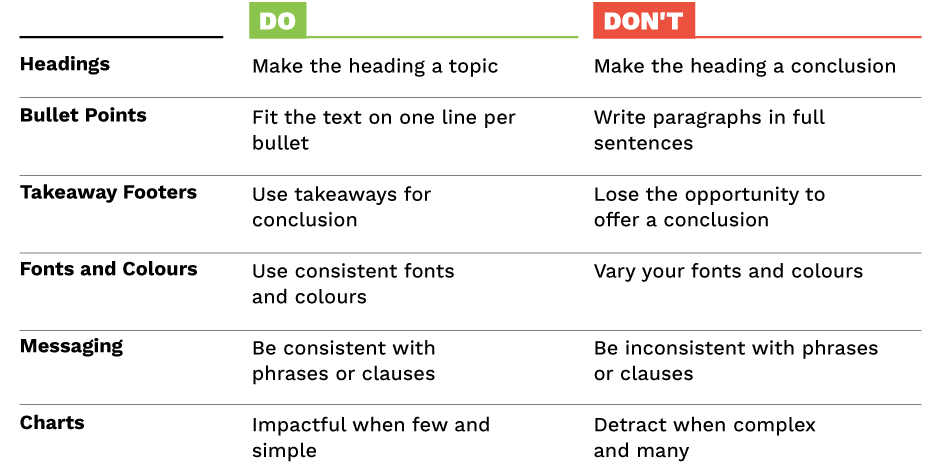
When it comes to pitch book formats, I have found that there are absolute rules that should be followed. The number one rule? The font size must be large enough to be readable. This is especially critical with slides projected onto a screen. Here are a few more dos and don’ts:

dos and dontsA pitch book should be designed to sell to people, not educate them.

An early mentor once noted to me that a core presentation need not answer every question. Yet, this is often what presentation authors wish to do. No, it’s all right for a presentation to make a simple statement, knowing that it may elicit a question from the audience.

The most recent company I co-founded was engaged in the ownership and rental of real estate to middle-market companies. Few of our tenants had a credit rating from a rating agency. Yet, in our inaugural presentation, we stated that the majority of our rental streams were of investment-grade quality. There was maths and analysis behind this determination and we were totally prepared to support the statement. But what we did not wish to do was to write that explanation down in our core slide presentation.

It’s completely all right to make unsupported statements in the core of a pitch book. This is where appendix slides can be really useful. Appendix slides can help answer questions your core slides tee up.

The Event

Projected Presentations

Projected Presentations

Now that you and your team have put effort into preparing a pitch book, it’s time to make the presentation. If your images are to be projected on a screen, keep the clock in mind. The core of the presentation should take no longer than 20 minutes, or a minute per slide. In reality, we would fly through some of the graphic slides, spending a bit more on slides having more text. I recommend sharing presentation duties with up to two people to provide your audience with a feel for the leadership team and your management depth.

The goal of a projected pitch is to finish the presentation as soon as possible, while not making the audience feel as if you’ve rushed through the slides. You want to get to the questions. Here’s where you and your team can shine, closing the deal in the free-flowing question-and-answer session. Here’s where the Appendix slides come in handy.

An important piece of information I once received is worth remembering. The audience is not likely to remember with any precision your presentation or the answers you give to questions. But they will clearly recall the passion and enthusiasm shared by you and your team. And they will remember how knowledgeable you came across. The poet Maya Angelou was right.

Flip Book Presentations

Most of the presentations I have ever made have been flip book presentations, where I and other company leaders would sit at a table opposite or next to our audience. I have made many such presentations alone, but I highly recommend having at least one other leadership team member there to share in the presentation responsibilities. Having other team members present shows leadership depth. Presenting with other team members also improves performance by giving each of you time to think as questions are posed. Tag-teaming reduces the likelihood that you will forget to make important points, while also improving conversation interactivity.

The number one rule of a flip book presentation? Never hand out flip books at the start of a meeting. Your audience members will simply open them up and begin to thumb through them. They can’t help it. And, as they are rifling through the pages of your presentation, they will not be listening to you.

Instead, pull the flip books out and allow them to sit on the table in front of your audience. Your audience will be looking at them with anticipation. Meanwhile, you will be doing something far more important: asking questions. You want to size up your audience, discovering its interests and concerns. The fact that you are making a presentation to just a few people will allow you to tailor the presentation in a way you might not with a projection presentation given to a larger audience.

After making mutual introductions and asking audience questions, the presentation is ready to be distributed. Only now can you instruct the audience where to turn, giving it less of a chance to get a sneak peek at each slide. Occasionally, you might get permission from the audience to go through the presentation in order. But much of the time, your newly gained knowledge of the audience may allow you to direct their attention to select slides. With knowledgeable audiences, I have often turned to select appendix slides, overlooking the core presentation altogether.

When it comes to flip book presentations, asking questions and following the audience’s lead leaves a far better impression than robotically and reflexively diving into your core presentation. The effort you put into the presentation becomes self-evident when you and your team can spontaneously respond to cues and questions.

My pitch book illustrations have presumed in-person presentations. When it comes to seeking investment or borrowing proceeds to fund your business ideas, an in-person presentation is always best. Remote presentations are fine, though, and best used when your audience already knows or has invested with you. Still, the same rules apply. Avoid emailing the pitch book in advance. Conduct the meeting as you would an in-person meeting and then share the slides you wish to present with your audience. One of the advantages of a teleconference is the opportunity to include more team members, further demonstrating solid leadership depth. Still, it is wise to limit the main presenters to yourself and two others, cuing your added staff to assist with questions. As your presentation winds down, offer a copy of the slide deck in PDF form.

The Goal

The Goal

The end goal of any pitch book presentation is to achieve an agreement on next steps, turning your pitch and ideas into something actionable. This is especially true for flip book presentations with a small audience. For projected presentations with a larger audience, you or your bankers and representatives will need to follow up with the attendees.

Presenting with other team members also improves performance by giving each of you time to think as questions are posed.

Pitch wins go well beyond actionable next steps and the ultimate capital raise. As president and later CEO of three publicly traded companies, I personally directed and authored pitch books for more than three decades. That may surprise some readers, thinking that I could instead have delegated the task to marketing or investor relations professionals. But, to my mind, this had to be in my wheelhouse. I had to have a feel for why investors would want to own our shares and why lenders would like to support our company. Knowing this made me a far better leader.

If you are looking to raise money to start a business or are raising money to grow a business, having a handle on pitch book fundamentals is important. So is knowing why, in an ocean of opportunities, investors and lenders would pick your company. The good news is that there are more than 10,000 professional asset managers out there looking for actionable ideas and solid management teams. And behind them, there are many thousands of additional institutional, family office, and individual investors. To my way of thinking, there have been few better times in history to start or seek funding for a business. So, get started.

About the Author

Christopher VolkChristopher Volk, author of The Value Equation: A Business Guide To Creating Wealth For Entrepreneurs, Investors And Leaders, has been instrumental in leading and publicly listing three successful companies, two of which he co-founded. The most recent is STORE Capital (NYSE: “STOR”), where he served as founding chief executive officer and then as executive chairman. Volk, who has written about corporate finance since early in his career and has created an award-winning video series about the topic, is a regional winner of EY’s Entrepreneur of the Year award. He is on the board of Banner Health and is the Chairman of the Board of Tenet Equity. He resides in Paradise Valley, Arizona, and Huntsville, Alabama.
You can learn more at http://www.thevalueequation.com/

What Abilities Should An Intellectual Property Lawyer Possess?

Attorneys might focus on different areas of the law. A growing number of lawyers choose to practice intellectual property (IP) law, defending the creations and rights of novel innovations. Searching more about the duties, typical compensation, and employment requirements of intellectual property lawyers may help you determine if this is an appropriate specialization for your legal career. To help you decide if being an intellectual property lawyer is the correct career route, we define IP attorneys and address a few skills.

Skills for Solving Problems

Strong problem-solving skills are necessary for intellectual property attorneys to handle the particular difficulties that arise in intellectual property conflicts. They must decipher challenging circumstances, spot possible problems, and have original solutions.

Research and Analytical Proficiencies

Attorneys must possess research and analytical skills to manage complex intellectual property issues. To create successful tactics, they need to be able to comprehend the law, evaluate prior cases, and apply their conclusions.

Obtain a legal degree

Attending a three-year law school course approved by the American Bar Association (ABA) is the third stage. You will study many legal topics at law school, including evidence, contracts, torts, criminal law, civil process, and ethics. To expose you to real-world legal circumstances, you will also have the chance to have clinics, externships, internships, and moot court contests.

Putting up and submitting preliminary patent and design applications

Since provisional patent applications and design applications are typically not authored by seasoned patent attorneys, junior patent attorneys usually have the opportunity to write them. Therefore, creating provisional patent and design applications is one of the most crucial abilities for aspiring intellectual property lawyers. If you can show at an interview or during an internship that you already possess these skills, it will help you get a job.

Lobbying

The capacity to eloquently and convincingly support or refute a position is known as advocacy. To effectively represent your client’s interests as an intellectual property lawyer, you must be able to defend them from infringement allegations or push for tighter safeguards for their intellectual property rights. To succeed in this industry, one must possess this ability.

Putting together a technology transfer contract

Technology transfer agreements are highly technical documents with hundreds of pages of material. They are exceedingly specialized. A lawyer who drafts these agreements has to be familiar with procedures and technology. However, the market fee for these contracts could vary, based on the agreement’s size and complexity.

Pick an area of IP law concentration. 

Choose an IP law specialty during your second or third year of law school. Enrolling in elective courses that address various aspects of intellectual property law, such as trade secrets, copyright, patent, trademark, licensing, and unfair competition law, is one way to achieve this goal. If you participate in IP law magazines or moot court teams, you might be able to enhance your research and writing skills.

Display Your Technical Proficiency

To execute their work well, intellectual property attorneys must be adept in many databases and software. For example, they must know how to use case management programs like Clio and legal research databases like Westlaw and LexisNexis. Additionally, as they frequently need to draft and amend legal documents, intellectual property attorneys should be fluent in Microsoft Office Suite.

Approaching copyright societies

IP attorneys play a crucial role in handling copyright society litigation, which can occur often, by responding to notices from copyright organizations and forming suitable agreements with them. In India, copyright groups frequently deal with unclear legal language and contradicting claims. Attorneys are crucial in negotiating the best possible royalties for performances and minimizing royalty payments through strategic legal maneuvering.

Thinking laterally

Patent attorneys must be just as imaginative as the entrepreneurs they work with. Are there any alternative approaches to securing this technology? How are rivals going to get around our patent? Is there a different method to read this document? How can this legal issue be resolved? Should I take a different tack while examining this situation?

Lawsuit involving patents

In patent cases, the plaintiffs generally file claims for either direct (the defendant is accused of manufacturing, using, selling, and importing the plaintiff’s patented invention, method, or service without authorization) or indirect (the defendant gets accused of enabling or inducing a third party to infringe) infringement. In civil court, patent litigation typically lasts three to five years. The $4 million mark is the median case cost. Usually, juries hear case trials. 

Summary 

As this essay draws to a close, it is necessary to note that being an intellectual property lawyer is all about picking up new skills, thinking outside the box, and responding to dangers or problems faced by creators. Consequently, to perform to the best of one’s abilities and produce high-caliber work, an IP lawyer should review these talents and attributes every time they get licensed.

EDITOR'S PICK OF THE WEEK

CFO's new mandate. CFO explaining the presentation

The Performance and Transformation Orchestrator: The CFO’s New Mandate in the Age of AI

By Terence Tse CFOs are evolving into AI-driven transformation orchestrators, balancing finance, technology, and strategy while upskilling teams, managing risks, and driving measurable business value. A key insight from this year’s AI for CFOs event, organized...

WISE DECISION MAKER GUIDE

POWER INFLUENCERS

Emerging Trends

The Future of Global Trade