The concept of workplace flexibility has evolved from a mere trend to a fundamental component of organizational strategy. This shift has been significantly influenced by leaders who understand the intricate balance between granting autonomy and maintaining cohesion within their teams. Shane Koller, Chief People Officer at Ancestry, offers profound insights into how trust underpins the successful implementation of flexible work policies in his interview with me.
Embracing Flexibility with a Human Touch
Ancestry’s journey towards embracing workplace flexibility is a testament to its innovative spirit and commitment to its employees’ well-being. This organization, renowned for its contributions to family history and consumer genomics, has seamlessly integrated its human-centric mission with its operational strategies. The onset of the pandemic presented a unique challenge, propelling Ancestry, along with countless other companies, into uncharted waters regarding work environment norms. However, Ancestry’s response was not a mere reaction to these global changes. Instead, it was a well-considered strategy aimed at enhancing its work culture in alignment with its core values.
The decision to prioritize choice and flexibility was driven by a deep understanding of the evolving needs of the workforce. Recognizing that employees come with diverse backgrounds, responsibilities, and preferences, Ancestry sought to create a work environment that respects and accommodates this diversity. This approach goes beyond the conventional flex-time policies, embedding flexibility into the very fabric of the company’s culture. By doing so, Ancestry ensures that despite the physical distances that may separate team members in a hybrid setting, the sense of connection and the collaborative spirit that are crucial for innovation and productivity are not only preserved but strengthened.
The Power of Team Autonomy
Recognizing that employees come with diverse backgrounds, responsibilities, and preferences, Ancestry sought to create a work environment that respects and accommodates this diversity.
The adoption of a team-autonomy model is perhaps one of Ancestry’s most strategic moves in navigating the complexities of hybrid work. This model is predicated on the understanding that those who collaborate closely on projects and initiatives are in the best position to make informed decisions about their work modalities. Such an approach demystifies the one-size-fits-all policy, offering a more nuanced and effective framework for collaboration.
Empowering teams to determine their schedules and work locations fosters a culture of trust and mutual respect. It signals to employees that the organization values their judgment and is confident in their commitment to the collective goals. This empowerment is not without its expectations; it comes with an implicit understanding that with autonomy comes responsibility. Team members are thus more inclined to take ownership of their tasks, driving engagement and motivation.
Moreover, this level of autonomy facilitates a dynamic work environment where teams can adapt their strategies and work modes to best suit their project needs and deadlines. It encourages innovation, as teams are free to experiment with different collaboration tools and techniques without being constrained by rigid corporate policies. This flexibility can lead to more creative solutions and a more resilient workforce capable of navigating the uncertainties of the modern business landscape.
Overcoming Management Challenges in a Hybrid World
The transition to a more flexible work environment is not without its challenges, particularly for managers accustomed to traditional office settings. Ancestry’s proactive stance on training and supporting managers in this new landscape is commendable. The focus on outcomes-based management, coupled with a robust support system that extends throughout the organizational hierarchy, ensures that leaders at all levels are equipped to navigate the nuances of hybrid management. This comprehensive approach not only addresses the immediate needs of adapting to a flexible work environment but also builds a foundation for sustained growth and adaptation.
Ancestry’s proactive approach to nurturing an environment of open dialogue and continuous learning stands as a beacon for organizations striving to adapt to the evolving landscape of work. The initiative to establish forums where managers can openly share their experiences, challenges, and best practices serves as a powerful platform for collective growth. These forums are not just meetings; they are incubators for discussion, where the conventional wisdom about remote work is challenged and redefined. This culture of openness encourages managers to voice their concerns, share their successes, and learn from each other’s experiences, fostering a sense of community and shared purpose.
The significance of these forums extends beyond mere knowledge sharing; they are pivotal in debunking the pervasive myths surrounding remote work. Common misconceptions about productivity, engagement, and team cohesion in remote settings are systematically dismantled through evidence-based discussions and the sharing of tangible success stories. This process is crucial in building a more inclusive culture that embraces diversity in work styles and recognizes the unique strengths and challenges of remote work. By confronting these myths head-on, Ancestry empowers its leaders and teams to approach remote and hybrid work with confidence and creativity, turning potential skepticism into advocacy for flexible work models.
Addressing Proximity Bias and Ensuring Equity
This initiative is about more than just fairness; it’s about cultivating a workplace where every employee feels seen, heard, and appreciated for their contributions, not their location.
The challenge of proximity bias, wherein remote workers might be inadvertently undervalued compared to their in-office counterparts, is met with a thoughtful and comprehensive strategy at Ancestry. The company’s commitment to diversity, equity, and inclusion (DEI) is evident in its efforts to educate and equip its managers with the tools necessary to recognize and counteract such biases. This initiative is about more than just fairness; it’s about cultivating a workplace where every employee feels seen, heard, and appreciated for their contributions, not their location.
Ancestry’s approach to mitigating proximity bias involves a multifaceted strategy that includes training programs, mentorship, and regular check-ins that emphasize outcomes over visibility. Managers are encouraged to focus on the results their team members achieve, rather than the hours they are seen at their desks. This shift from presence-based to outcome-based evaluation is a critical step in ensuring that remote employees are judged by the quality of their work, not their physical proximity to decision-makers.
Ancestry leverages broader DEI principles to enrich its strategies for combating proximity bias. This includes fostering an inclusive environment where all voices are heard equally, whether they come from the head of the table or a screen. Such an environment encourages remote employees to participate actively and confidently in discussions, knowing that their contributions are valued just as highly as those of their in-office peers.
The Future of Flexibility at Ancestry
Looking ahead, Ancestry envisions a future where flexibility and connection coexist harmoniously. The ever evolving experiment in balancing autonomy with moments of meaningful collaboration points to a deeper understanding of what makes a workplace not just functional but thriving. Just last Fall, Ancestry began exploring collaboration days – coordinated, but voluntary, in-office days to support collaboration and strengthen their sense of community. The intention is to continue to embrace their hybrid approach, while also providing meaningful moments to connect in-person. The emphasis on choice, coupled with a commitment to fostering relationships, suggests a future where flexibility is not just a policy but a core aspect of organizational culture.
The insights shared by Shane Koller underscore the critical role of trust in making flexibility work, a point I always focus on with my clients when helping their companies determine their flexible work models. Ancestry’s journey offers valuable lessons for any organization looking to navigate the complexities of the modern workplace. By prioritizing autonomy, supporting leaders, fostering open dialogue, addressing biases, and envisioning a future built on flexibility and connection, companies can unlock the full potential of their workforce. In this ever-evolving landscape, trust remains the steadfast cornerstone upon which successful and adaptable organizations are built.
Asia accounts for over 40% of global gross domestic product and is expected to drive more than 60% of global economic growth in 2024. Yet when it comes to private finance, Asia represents just around 6% of the global total GDP.
This mismatch could be creating one of the most intriguing opportunities in global finance. The Asia-Pacific region is composed of some of the world’s fastest-growing economies, and APAC entrepreneurs are eager to expand, but they face a significant hurdle: limited access to capital.
As of September 2023, private credit assets under management in APAC were valued at $124 billion. While this may seem substantial, and has indeed quadrupled over the last decade, it’s minimal compared to the roughly $1.7 trillion global total. One argument for this disparity is the historical reliance on bank lending in Asian businesses. Banks provide 79% of all credit in the region, a stark contrast to the United States, where banks account for only 33% of credit.
However, as economies grow and develop, the proportion of private credit typically increases, as has been the case in the U.S. and Europe. Thus, the combination of growth and a gap in bank and private finance could signify the early stages of a financial transformation in Asia.
Various players are emerging to fill the gap left by traditional banking institutions. These include global private equity firms, local credit funds, and specialized finance companies.
One such specialized finance provider is EquitiesFirst, which provides liquidity to entrepreneurs and professional investors financed against their existing equity holdings. This approach allows investors and entrepreneurs to access capital while maintaining long-term exposure to equity stakes, a model that may be particularly appealing in a region with a high concentration of family offices looking to invest on the ground floor of fast-growing sectors in the area.
The $2.4 Trillion Opportunity
The estimated annual funding gap for small and medium-sized enterprises in developing economies across Asia is $2.4 trillion, and the private finance industry in APAC is emerging as a means of bridging this funding gap.
Providers like EquitiesFirst operate under distinct capital models and regulatory frameworks from those of traditional banks, enabling them to finance a broader range of assets, credit profiles, and corporate situations.
According to a Bloomberg survey, industries such as education, health care, and consumer-facing industries are ripe for private financing in Asia-Pacific. The demand for capital in these is fueled by notable demographic trends such as increasing affluence in India and Southeast Asia, along with aging populations in China and other developed economies.
There’s also an increasing number of family offices in the region. In Southeast Asia alone, they account for over 60% of listed companies. These firms often have significant wealth tied up in their businesses or invested in global equities, but that wealth is often illiquid.
EquitiesFirst’s model allows these investors to unlock the value of their equity holdings, providing liquid capital that can be invested into fast-growing sectors in the area.
This approach is particularly appealing in a region where traditional bank lending is becoming increasingly constrained. In several of Asia’s most dynamic economies, including Malaysia, Indonesia, and Thailand, bank lending to nonfinancial private companies as a percentage of GDP has actually declined over the past three years.
Beyond Traditional Financing
Firms like EquitiesFirst are helping to fill a gap left by retreating banks and are becoming part of a broader trend toward more diverse and specialized forms of financing in Asia.
Take the clean energy transition, for example. The World Economic Forum estimates a $4 trillion annual funding gap worldwide to reach net-zero emissions by 2050. That’s not the kind of gap that traditional bank lending alone can bridge.
Private finance providers like EquitiesFirst can step in to augment public and traditional bank funding by providing the flexible financing solutions needed to fund large-scale renewable energy projects and develop clean technologies.
So, what does the future hold for equities-based financing and the broader private financing market in Asia? If the experts are to be believed, we’re looking at a period of significant growth.
Several respondents to the Bloomberg survey expect the market to grow by more than 10% in 2024 alone, and because this growth is from a lower base in many cases, there’s significant room for expansion in the long term.
While large fund platforms will likely continue to dominate the biggest private credit categories, there’s growing demand for specialized financing secured by a wide range of assets.
In a region that’s driving global growth and innovation on an international scale, access to capital is more crucial than ever. And as traditional sources of financing struggle to keep pace with the region’s dynamism, firms like EquitiesFirst are stepping up to bridge the gap.
Disclaimer
Past performance does not guarantee future returns, and individual returns are not guaranteed or warranted.
This Document is intended solely for accredited investors, sophisticated investors, professional investors, or otherwise qualified investors, as may be required by law or otherwise, and it is not intended for, and should not be used by, persons who do not meet the relevant requirements. The content provided herein is for informational purposes only and is general in nature and not targeted to any specific objective or financial need. The views and opinions expressed in this Document have been prepared by third parties and do not necessarily reflect the views and opinions of EquitiesFirst. EquitiesFirst has not independently examined or verified the information provided herein, and no representation is made that it is accurate or complete. Opinions and information herein are subject to change without notice. The content provided does not constitute an offer to sell (or solicitation of an offer to purchase) any securities, investments, or any financial products (“Offer”). Any such Offer shall only be made through a relevant offering or other documentation which sets forth its material terms and conditions. Nothing contained in this Document shall constitute a recommendation, solicitation, invitation, inducement, promotion, or offer for the purchase or sale of any investment product by First Holdings, LLC or its subsidiaries (collectively, “EquitiesFirst”), nor shall this Document be construed in any way as investment, legal, or tax advice, or as a recommendation, reference, or endorsement by EquitiesFirst. You should seek independent financial advice prior to making an investment decision about a financial product.
This Document contains the intellectual property of EquitiesFirst in the United States and other countries, including, without limitation, their respective logos and other registered and unregistered trademarks and service marks. EquitiesFirst reserves all rights in and to their intellectual property contained in this Document. The Document should not be distributed, published, reproduced or otherwise made available in whole or in part by recipients to any other person and, in particular, should not be distributed to persons in any country where such distribution may lead to a breach of any legal or regulatory requirement.
EquitiesFirst make no representation or warranty with respect to this Document and expressly disclaim any implied warranty under law. You acknowledge that EquitiesFirst is not liable under any circumstances for any direct, indirect, special, consequential, incidental, or punitive damages whatsoever, including, without limitation, any lost profits or lost opportunity, even if EquitiesFirst has been advised of the possibility of such damages.
Over half a million customers are generally dissatisfied with America’s richest companies, new research reveals
Tesla has a negative NPS score of -62% signaling high disadisfaction levels from customers.
The top 50 wealthiest US businesses have a negative customer loyalty rating of -82%
Over 100 of the richest companies in America have an incredibly low customer loyalty score, new research reveals.
The study, conducted by digital marketing agency SeoProfy, scrutinized over half a million Trustpilot review scores for 129 Fortune 500 companies, including Tesla, Apple, Amazon, and Target, published until May 1st, 2024. Researchers ranked companies based on their net promoter score (NPS) to measure customer loyalty. This is calculated by subtracting 1-3-star review counts, known as detractors, from 5-star review counts, described as promoters. The study excludes companies with less than 50 reviews on Trustpilot or missing altogether from the platform. The researchers note that to ensure consistency, they only evaluated parent companies rather than brands owned by them.
How Do America’s Richest Companies Treat Their Customers?
Only 24 out of America’s richest 50 companies are present on Trustpilot, with at least 50 reviews. None of them had a positive NPS. Still, among them, the ones whose customers are most loyal are UPS, with an NPS of -28%, Tesla (-29%) and Amazon (-50%).
The richest American companies with the least loyal customers are General Motors, Meta Platforms, Comcast NBCUniversal, Cigna, and Verizon Communications. They all had an NPS of -90% or worse.
America’s Richest Companies with the Least Disgruntled Customers based on their net promoter score (NPS), as of May 1st, 2024
Fortune 500 #
Name
Number of Trustpilot ratings
% Promoters (5-star reviews)
% Detractors (1-3-star reviews)
NPS score
# Most loyal customer ranking (out of 129)
37
UPS
70,895
35%
63%
-28%
14
50
Tesla
377
32%
61%
-29%
16
2
Amazon
20,282
22%
72%
-50%
23
33
Target
3,278
19%
76%
-57%
30
4
Apple
7,342
17%
79%
-62%
36
13
Microsoft
754
14%
81%
-66%
45
47
Wells Fargo
252
13%
82%
-69%
52
12
Costco Wholesale
2,225
12%
86%
-74%
59
24
Kroger
662
10%
85%
-75%
62
1
Walmart
9,562
9%
88%
-80%
72
23
JPMorgan Chase
191
7%
87%
-80%
73
42
Humana
91
8%
88%
-80%
74
19
Ford Motor
839
9%
89%
-80%
76
20
Home Depot
5,723
9%
90%
-81%
78
39
Lowe’s
6,846
8%
90%
-82%
81
41
FedEx
26,468
8%
92%
-84%
87
34
Dell Technologies
2,672
6%
91%
-86%
92
32
Bank of America
1,987
6%
93%
-86%
97
30
AT&T
6,769
5%
94%
-89%
104
26
Verizon Communications
5,084
4%
95%
-91%
109
15
Cigna
491
3%
96%
-93%
116
29
Comcast NBCUniversal
3,151
2%
98%
-95%
124
31
Meta Platforms
280
2%
98%
-95%
125
21
General Motors
110
2%
98%
-96%
128
500 Fortune Companies with the Most Loyal Customers
American Family Insurance Group has the most loyal customers of all the evaluated Fortune 500 companies. It is the 301st richest business in America, earning $13.8 billion in revenue in 2023, though it also recorded a loss of $1.9 billion last year. Rated 4.7/5 across 424 reviews, the services provided by this insurance enterprise prompted 87% of its customers to leave five-star reviews. However, 9% of the reviewers still rated its services below par. Overall, American Family Insurance Group has an NPS of 78%, 9% ahead of the next best-rated Fortune 500 company.
Among the richest businesses in the US, Fiserv has the second most loyal customers. This leading fintech company has an impressive NPS of 69%. 84% of its customers give it full marks, while 14% are less than satisfied. Its average Trustpilot score is 4.3, based on 1,278 reviews. Fiserv made $17.7 billion in revenue last year, with a $2.5 billion profit. It is thus the 230th wealthiest business in America.
Another fintech company, Global Payments, completes the podium, having the third most loyal customer base in America among the country’s top-grossing businesses. 80% of customers rate its services with maximum scores, whereas 16% left reviews worth three stars or less. This means its NPS is 64%. 3,493 Trustpilot users rate it highly with 4.6 out of 5. In 2023, Global Payments’ revenue totalled nearly $9 billion, with a profit worth $111 million. This places it at #425 in Fortune 500’s list.
The only other American companies with a positive NPS are Chewy, Arthur J. Gallagher, Markel, Hertz Global Holdings, Assurant, Carvana and Opendoor Technologies.
Top 10 Fortune 500 Companies with the Most Loyal Customers based on their net promoter score (NPS), as of May 1st, 2024
Fortune 500 #
Name
Number of Trustpilot ratings
% Promoters (5-star reviews)
% Detractors (1-3-star reviews)
NPS score
# Most loyal customer ranking (out of 129)
301
American Family Insurance Group
421
87%
9%
78%
1
230
Fiserv
1,277
83%
14%
69%
2
425
Global Payments
3,493
80%
16%
64%
3
389
Chewy
12,140
77%
20%
58%
4
443
Arthur J. Gallagher
5,856
67%
14%
52%
5
352
Markel
150
69%
18%
51%
6
435
Hertz Global Holdings
10,583
72%
24%
48%
7
384
Assurant
16,922
65%
27%
38%
8
308
Carvana
10,345
64%
28%
36%
9
266
Opendoor Technologies
235
59%
39%
20%
10
Victor Karpenko, CEO of SeoProfy, comments: “The fact that we only found ten companies listed on the Fortune 500 list with a positive NPS speaks volumes about American business culture. We commend the companies that prioritize customer satisfaction above short-term profits, which can lead to greater retention and customer lifetime value.
“A lot of the time, customer dissatisfaction emerges from issues that are not directly related to a product or service, such as being unable to find the information they need on the company’s website. Businesses can cut a lot of dissatisfaction by organizing their websites better and having good SEO standards. This way, their clients would not need to call customer service, which could expose the company to a new set of vulnerabilities. The faster a customer gets their answer, the less likely it is that they will leave a negative review.”
The study was conducted by SeoProfy a digital marketing agency with a focus on search engine optimization based on an advanced data-driven SEO approach.
In a changing financial world, a savings account isn’t enough to protect and grow your wealth. A trusted wealth management group can be your key to financial success.
Here’s why you should consider partnering with wealth management professionals. Read on and discover how to safeguard your hard-earned assets.
Expertise in Complex Financial Markets
Wealth management groups employ teams of financial experts who understand the intricacies of various investment vehicles and market trends. Their knowledge spans stocks, bonds, real estate, and alternative investments.
These professionals stay updated on market shifts and economic policies that could impact your wealth. With their guidance, you can make informed decisions about your investments, potentially increasing returns while minimizing risks. In addition to their help make sure to read about enterprise wealth management to gain more understanding of financial strategies.
Customized Financial Strategies
Your financial situation is unique, and a one-size-fits-all approach rarely works. Wealth advisors create tailored strategies that align with the following:
specific goals
risk tolerance
financial circumstances
They consider factors to develop a personalized plan like:
your age
income
family situation
future aspirations
This approach ensures that your strategy is as individual as you are.
Risk Management and Asset Protection
Protecting your wealth is just as important as growing it. Wealth management groups use sophisticated risk assessment tools and strategies. They aim to protect your assets from market risks, inflation, and other financial threats.
They can help you diversify your portfolio. This reduces the risk of a poor-performing investment.
They can also advise on insurance and legal structures. These protect your wealth from lawsuits or creditors.
Tax Efficiency
Navigating the complex world of taxes can impact your wealth. Wealth management groups often include tax specialists. They can help you develop tax-efficient investment and withdrawal strategies.
These experts can find tax deductions, credits, and deferrals. They could potentially save you thousands of dollars each year. They stay abreast of changing tax laws to ensure your financial and investment strategies remain compliant and optimized.
Comprehensive Estate Planning
A trusted wealth management group doesn’t just focus on your immediate financial needs. They help you plan for the future of your wealth.
This includes developing comprehensive estate plans. This helps ensure your assets are distributed according to your wishes after you’re gone.
They can assist in:
setting up trusts
creating succession plans for businesses
minimizing estate taxes
This long-term approach preserves your wealth for future generations. It supports your legacy goals.
Holistic Financial Guidance
Wealth management groups offer friendly support for every part of your financial life. They look at the following:
your investments
spending habits
savings goals
overall financial health
This approach aligns with your financial goals. It ensures each decision aids your long-term success. When you partner with a team that sees the complete picture, you can feel more confident and clear about your financial journey.
Partner with a Trusted Wealth Management Group Today
Partnering with a trusted wealth management group is more than just a financial decision. It’s an investment in your future security and peace of mind.
They have the expertise and strategies to protect and grow your wealth in today’s complex financial world. Their services are comprehensive.
Ready to take the next step in safeguarding your wealth? Contact a reputable wealth management group today to discuss how they can help you achieve your financial goals.
If you found this article enjoyable, we encourage you to visit our blog for more engaging content!
In the fast-paced world of forex currency trading, aspiring traders constantly seek ways to enhance their skills and maximize their potential. Forex prop firms have emerged as a transformative opportunity for traders looking to take their careers to the next level. These firms provide traders with the capital and resources needed to excel in the competitive forex market. By partnering with a forex prop firm, traders can access valuable training, gain experience with significant capital, and achieve financial success.
The Power of Forex Prop Firms
Forex prop firms, short for proprietary trading firms, fund and support traders using their capital. Unlike traditional trading accounts, where traders risk their funds, prop firms provide a win-win situation. Traders can trade large accounts without risking their own money, while the firms share in the profits generated by successful trades. This arrangement not only reduces the financial burden on traders but also allows them to focus solely on their trading strategies and performance.
One of the primary advantages of joining a forex prop firm is access to professional-grade resources and support. These firms typically offer cutting-edge trading platforms, advanced analytics tools, and expert mentorship. This ensures traders can make informed decisions based on real-time data and market trends. Furthermore, prop firms often have stringent risk management protocols, which help traders develop disciplined trading habits and minimize losses.
Training and Development: Building Skills for Success
Aspiring traders can benefit immensely from the training and development programs forex prop firms offer. These programs equip traders with the skills and knowledge to navigate the complexities of forex currency trading. Many prop firms offer comprehensive training modules covering technical analysis, risk management, trading psychology, and market strategies. This structured approach to learning helps traders build a strong foundation and enhances their confidence in executing trades.
Moreover, forex prop firms provide mentorship from experienced traders who have already succeeded. This mentorship is invaluable, as it allows traders to learn from real-world experiences and gain insights into effective trading strategies. Traders can continuously improve their skills and adapt to changing market conditions through regular feedback and performance evaluations.
Gaining Experience with Capital
One of the significant challenges traders face in forex currency trading is the need for sufficient capital to execute trades effectively. Forex prop firms address this issue by providing traders access to large trading accounts. This capital enables traders to participate in more significant trades, potentially leading to higher profits. Additionally, trading with substantial capital allows traders to diversify their strategies and explore various currency pairs and markets.
The opportunity to trade with significant capital also instills a sense of responsibility and discipline in traders. Knowing that they are managing a substantial amount of money encourages traders to adopt a more calculated and strategic approach to trading. This experience can be a game-changer for traders looking to establish themselves as professionals in the forex market.
Financial Rewards and Profit Sharing
Joining a forex prop firm offers not only the chance to enhance one’s trading skills but also the potential for financial rewards. As traders generate profits for the firm, they receive a share of these earnings, often a substantial percentage. This profit-sharing model motivates traders to perform at their best, as their financial success is directly tied to their trading performance.
In addition to profit-sharing, some forex prop firms offer performance-based bonuses and incentives. These rewards serve as additional motivation for traders to consistently improve their skills and achieve outstanding results. The combination of profit-sharing and performance incentives creates a dynamic and rewarding environment for traders, where their efforts are recognized and rewarded.
Flexibility and Independence
Another appealing aspect of working with a forex prop firm is the flexibility it offers. Unlike traditional jobs that require a fixed schedule and location, trading with a prop firm provides the freedom to work from anywhere with an internet connection. This flexibility allows traders to design their own schedules, balancing trading with other commitments and responsibilities.
The independence that comes with trading for a forex prop firm empowers traders to make decisions based on their own analysis and strategies. While they benefit from the support and resources provided by the firm, traders have the autonomy to execute trades that align with their unique trading styles. This level of independence fosters creativity and innovation, allowing traders to explore new approaches and adapt to changing market conditions.
The Future of Forex Prop Firms
The future of forex prop firms looks promising as more traders recognize the benefits of this unique partnership. With advancements in technology and the increasing popularity of online trading, forex prop firms are well-positioned to continue their growth and impact on the industry. These firms offer a supportive and dynamic environment where traders can thrive and achieve their financial goals.
As the demand for skilled traders continues to rise, forex prop firms play a vital role in nurturing and developing talent. By providing access to capital, resources, and mentorship, these firms are instrumental in shaping the next generation of successful traders. For aspiring traders seeking to unlock new opportunities in forex currency trading, partnering with a forex prop firm can be a game-changing decision.
Paving the Way for a Thriving Trading Career
In the world of forex currency trading, the opportunities offered by forex prop firms are unparalleled. By providing traders with capital, training, and support, these firms empower individuals to achieve their full potential in the forex market. With a focus on skill development, profit-sharing, and independence, forex prop firms create an environment where traders can thrive and succeed.
Aspiring traders looking to elevate their trading careers should consider the benefits of joining a forex prop firm. This partnership can open doors to new opportunities, enhance trading skills, and pave the way for financial success. With the support of a prop firm, traders can navigate the complexities of the forex market with confidence and unlock a world of possibilities.
In a landscape where success is determined by skill, strategy, and determination, forex prop firms offer the tools and resources needed to excel. For those ready to embark on a rewarding trading journey, the path to success begins with embracing the opportunities provided by a forex prop firm.
Small business finance is broken. However, one company dubbed HUB Analytics believes that the strategic use of AI can fix it.
HUB Analytics is a new financial technology startup that has created an all-in-one platform for entrepreneurial and small business finance. Along with the team’s decades of experience in accounting and business management, the platform also uses advanced artificial intelligence to make business finance clearer and more strategic.
Intrigued? Here’s the lowdown on HUB Analytics.
Background
HUB Analytics is the result of a team of accountants and entrepreneurs with deep experience across a variety of verticals. Originally built to power their own entrepreneurial projects, they eventually decided that they had struck gold with the blend of finance and technology.
The platform was specifically designed to help bridge the gap between business owners and accountants. The team that built it were specifically inspired to develop the platform due to the “distressing frequency” of small businesses succumbing to financial failure.
It wasn’t just enough to build a new bookkeeping platform with some nifty features, either. HUB Analytics is meant to be an all-in-one platform that can help small businesses and entrepreneurs get all the benefits of a traditional accounting department without the headaches that could come with it.
The team spent three years developing HUB Analytics — a process that was accelerated by key advancements in generative AI and other advanced AI technologies. After development, it spent about a year in private testing with a handful of beta testers. Now, it stands ready to revolutionize small business finance. Here’s how.
HUB Analytics Key Features
HUB Analytics is meant to integrate with existing bookkeeping software like QuickBooks, not be a replacement for it. That’s because HUB Analytics is actually designed to provide all of the key financial capabilities of an accounting department.
It does so through three key pillars: data diagnostics, advanced reporting, and financial thought leadership. Here’s how the HUB Analytics features break down.
Data diagnostics: You can’t make good decisions on bad data. This is why HUB uses an advanced data diagnostic tool that uses 150 points to check your books for integrity and accuracy. If you work with a traditional bookkeeper, this also reduces the potential for human error.
Advanced reporting: Once your data is accurate, HUB can package it into advanced and customizable reports that let you get a bird’s-eye view of your finances, down to profitability, costs, and other key performance indicators (KPIs).
Financial recommendations: Once you have your data, HUB will tell you what to do with it. Using advanced AI models, the platform can provide strategic insights and recommendations on how to grow your business in the most efficient manner possible.
Along with those features, HUB also sports advanced data security, a user-friendly interface and real-time data collaboration capabilities, and a host of planned updates to keep users ahead of industry trends.
In other words, HUB Analytics is like having a controller, bookkeeper, and CFO — in your back pocket. That makes it especially useful for small business owners and entrepreneurs who may not have the resources for a full accounting department. Even for businesses that do, HUB Analytics can help cut down on the time and cost needed to properly recruit and hire financial talent.
Who HUB Analytics is for
Obviously, HUB Analytics is perfect for small businesses and entrepreneurs. All you would need to do is data entry into your existing bookkeeping platform, and HUB Analytics will take care of the rest.
From cleaning up your data, ensuring it’s packaged and presented in a clear and professional way, and even providing strategic thought leadership on how to move forward with your business, HUB Analytics packs a lot of financial power under the hood. It can do anything from tracking basics like operating expenses, cost of goods, and revenue, to providing the kind of expertise you’d expect from the C-suite.
However, HUB Analytics can also be a key tool for accountants or bookkeepers themselves. Because the platform can automate much of the daily legwork through AI, it can free up accountants to become more like strategic counselors that can help coach a business through financial decisions.
To put it another way, HUB Analytics is here to change the field of accounting forever through a key mixture of artificial intelligence and deep experience in finance and business.
If you think HUB Analytics might be a good fit for your company or small business, you can book a demo call with the team through their website at HUB-Analytics.com.
The article explores how AI is revolutionising higher education (HE) and impacting the growth of business skills. The use of AI in teaching methods at universities is on the rise. With AI, schools can provide tailor-made courses for students hence improving the quality of content delivery and efficiency in time management. These changes are particularly important for business schools because they can prepare students who can handle advanced AI systems.
However, many business schools have not yet fully embraced comprehensive AI programs; instead, they lean towards offering analytics courses or treating AI as an ancillary subject. This situation can create both challenges and opportunities for universities where there is always a mismatch between these fast-growing needs from industry players and what is taught.
The idea here is that it becomes necessary for students to develop a blend of both technical AI know-how and strategic business acumen as they prepare to enter a world where machines would be taking over, making tasks processes, and creating new roles. It is believed that integration of AI into education together with business training will help organizations meet future job market requirements as well boosting their operations capabilities on the use of AI technology.
Introduction
The University of Aberdeen has been ranked 2nd in Scotland for overall student satisfaction and 15th in the UK for positive responses, in the National Student Survey (NSS)1. I have good memories of the UNI when I was attending evening courses for PM. Thus, When I read this article, I thought that they could be taken as a good example of how to treat students as Clients in education.
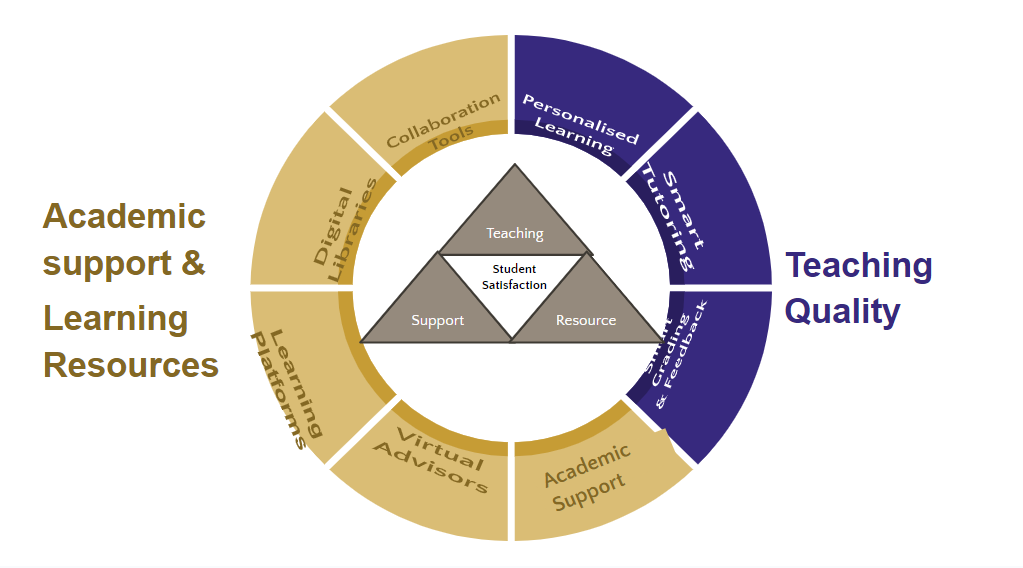
I was curious to check what evaluation elements were used to get these rankings. Among the others, what I found compelling to the scope of this reflection are:
Teaching
Academic support
Learning resources
Focus point
Students (as Clients of HE) are the focus point as it happens within the business. In addition to being educated, the students should also consider the opportunity to raise the bar of their so far personal experience using AI, with enhanced and ready-to-use skills in a working environment.
The first question that came to my mind was: “How things can change if we adopt AI in Education, especially related to the points above?” This question is beyond the Aberdeen University of course, but that achievement is the starting point for a reflection.
A second question was “How do Business schools fulfill the new skills portfolio required for young adults and experienced ones?”
Let’s start with the analysis of how the elements used for the evaluation should integrate AI to challenge the educational environment.
Vriti Saraf, CEO and founder of K20 Educators, on the impact of AI on education:
The fewer students need educators to be the main source of knowledge, the more educators can focus on developing the ability to curate, guide, critically assess learning, and help students gain skills that are so much more important than memorizing information.
How would adopting AI in education make a difference?
Quality of Teaching
The extent to which students are satisfied with their education is significantly pegged on how well instructors do their work, the clarity in their presentation as well as how free learners are within the study schedule. There are several ways through which AI could change this aspect of education. Since AI helps enhance the teaching process leading to better outcomes in learning, it is redefining the concept of instructional programs.2
Martin Fleming, IBM’s Chief Economist:
As AI continues to evolve, it’s reshaping the way we work and learn. The integration of AI into education systems is crucial for developing a workforce that is adaptable and proficient in new technologies. This shift is essential for maintaining competitiveness in a rapidly changing business environment.
Personalised Learning
To personalise learning experiences, AI must be able to adapt itself according to individual paces and necessities. For instance, AI-based systems can identify which areas students have strengths or weaknesses thus providing them with tailor-made materials that facilitate a better understanding of difficult subjects. It helps improve engagement thereby better comprehension hence an overall increase in teaching quality by so doing.3
Smart Tutoring Systems
AI-based digital tutors enable personalised instruction whereby every learner receives his/her tutor directly from the computer screen. These tutors work by offering instant responses to questions as well as taking students through problem-solving procedures. This is helpful because it enables students to get a better grasp on difficult concepts and thus perform well academically as if they were interacting with their human tutors, but they don’t completely substitute them.4
Automated Grading and Feedback
AI can be used to automatically assess student work enabling immediate feedback from teachers. This is not only an effective time-saving mechanism for those educators who have a limited amount of time set aside for providing feedback because they only deal with those aspects where the student needs help but this also enables students to know where they went wrong to correct it in time.5
Academic support – Learning Resources
Effective teaching is dependent on the availability and sufficiency of learning resources. This iswhere AI comes in to revolutionize learning resources as well:
AI helps businesses and educational institutions create more engaging, more effective educational resources.6
Academic Support
Academic support services including guidance counseling or extra support towards studies, are essential if you want students to pass through the educational process without getting lost along the way. AI offers enormous potential when revolutionising these services. AI has made academic support services more accessible and adaptable than ever before.7
Virtual Advisors
AI-driven virtual advisors can help in the selection of courses, scheduling, and career advisement for students. Availability 24/7 makes them accessible without requiring physical meetings because students always get fresh information anytime they need this thus making them enjoy their studies better. (Reduction during summer melt by 21% in Georgia State University’s chatbot, Pounce).8
Adaptive Learning Platforms
Adaptive learning platforms use AI to create dynamic and interactive learning experiences9 that can adjust themselves in real time to meet students’ needs keeping students engaged bychanging their content automatically based on their progress also helping them to make better academic decisions.
Digital Libraries and Resources
This ensures easy access to relevant information thus enhancing the expansion of knowledge by making it available for students regardless of how they prefer to learn or study with improving search functions, and personalised recommendations based on a single student. Digital libraries can automate research processes, and customised services and improve students’ experience.10
Enhanced Collaboration Tools
Artificial intelligence-powered tools increase the effectiveness and efficiency of group work among students such as Improved Collaboration and Learning Outcomes, Engagement and Productivity.11
I want to remind you that the positive benefits and the already achieved AI results do not leave out the evaluation of risks balanced with opportunities/benefits. Here we have the “The usual suspects” like Data privacy, Equity and access, and Risks related to technical over-reliance.
It is safe to say that AI will significantly transform how education and learning happen in the education industry from its level of personalisation. Intelligent tutoring systems that respond toindividual needs provide students with customised feedback and resources. Quite challenging to transfer the original methodology approaches into AI use. However early adopters have shown that results and outcomes are very positive.
Moreover, AI has a crucial part to play in ensuring lifelong learning.
Soumitra Dutta, Dean of Oxford University’s Saïd Business School:
We need to integrate AI skills into our curricula, not as an add-on, but as an essential part of business education. The future business leaders we are training today will be operating in a world where AI is ubiquitous.
Some examples of Business training adoptions of AI.
Maritime AI /VR training: managers improve situational awareness and decision making skills
IBM survey with Business leaders: Gen AI helps to spot business opportunities and make data-based decision-making.
Surgeons: they receive through AI standardised models feedback to improve techniques and increase accurate assessments to further enhance their skills.
How can Business schools fulfill the new skills portfolio required for young and experienced adults?
There is another point that, I didn’t find still deepened in research. Higher Education- HE: what is the next step to effectively prepare the future young generations and the more experienced ones to adopt and contribute to the implementation of AI Systems? And manage the future innovation technologies without hype?
Artificial Intelligence (AI) incorporation into the curriculum of Business schools has gained significant interest over the last few years even if it is still at the beginning.
This move results from the increase of AI Competencies in businesses worldwide whose solutions lie in the academic realm which seeks to arm its students with appropriate skills fit forsuch an environment.
The simple reason sits on the fact that the more money organizations spend on AI projects the harder it is to find individuals with the appropriate AI skills. These companies are also failing tofind people capable of getting AI expertise to use in an organizational context. They need individuals with AI business and organizational credentials who can utilize these competencies within the organization.
However, AI programs are not yet fully offered by business schools. They are redesigning IS (information system) degrees toward analytics orientation, some are introducing linkages in business analytics under the present programs.12
If we map skills related to AI and business, we can create a skills portfolio. Various AI skills must be learned in business, ranging from basic to advanced AI. Key among them is data analysis,strategic management of AI, machine learning (ML), natural language processing (NLP) ethics,and AI in business implementations.
This portfolio of competencies should aim at enabling students in business studies to have an all-round view of artificial intelligence technologies interacting with business aspects: an approach that involves both savvy technical and strategic aspects This will help students to understand how to use AI effectively in their working environments. It also enables them to make sound decisions on AI applications especially due to continuous technical development and thehype that surrounds this new explosion of innovations.
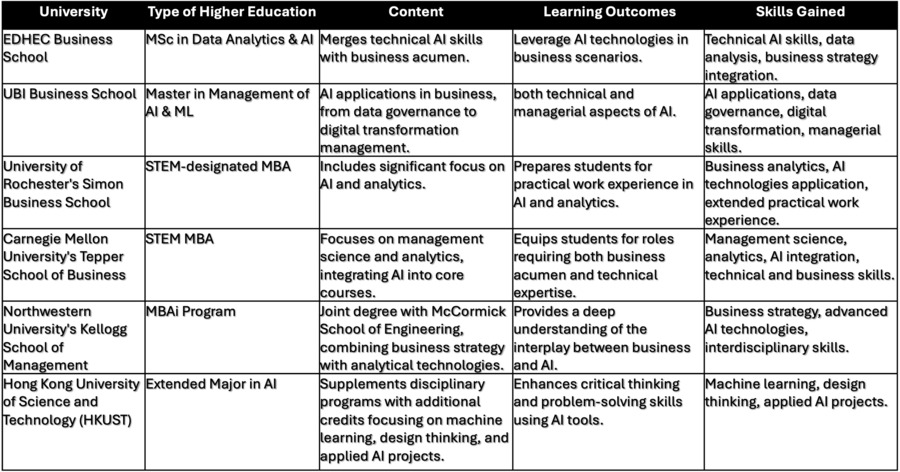
Below there are some institutions as examples, that manage a combination of AI and business:
Conclusions
Students’ satisfaction is paramount (Education’s customers); AI applications could increase their satisfaction and improve their learning with valuable outcomes related to gaining new skills.
The next steps are related to focusing on current and future demand from companies for tech savvy and business skills at organizational and strategic levels.
It is expected that business schools play a fundamental role for the managers and executives ofthe future in the AI realm selecting the right combination of learning outcomes and related skills.
Jeff Bezos:
AI will be part of every industry, enhancing our abilities in ways we can’t even imagine yet.
Luca Collina is a transformational and AI Business consultant at TRANSFORAGE TCA LTD. York St John University awarded him the Business – Postgraduate Programme Prize and CMCE (Centre for Management Consulting Excellence-UK) for his paper in Technology and Consulting Research Prize. Author/External Collaborator of CMCE.
Chamorro-Premuzic, T., & Frankiewicz, B. (2023). How AI Is Transforming Education and Training. Harvard Business Review.
Chamorro-Premuzic, T., & Frankiewicz, B. (2023). How AI Is Transforming Education and Training. Harvard Business Review.
Deloitte AI Academy™ Builds Tailored Generative AI Curriculum in Collaboration With Renowned Universities and Technology Institutions for Deloitte Professionals and Clients. August 2023. Deloitte. https://www2.deloitte.com/us/en/pages/about-deloitte/articles/press-releases/deloitte-ai-academy-builds-tailored-generative-ai-curriculum-in-collaboration-with-renowned-universities-and-technology-institutions-for-deloitte-professionals-and-clients.html.
AI Success Coaching at Georgia State University: Tackling Summer Melt. 11 June 2024. Mainstay. https://mainstay.com/blog/tackling-summer-melt/
7 Best Adaptive Learning Platforms in 2024. 27 September 2023. Whatfix. https://whatfix.com/blog/adaptive-learning-platforms/
The rise of artificial intelligence in libraries: the ethical and equitable methodologies, and prospects for empowering library users. 19 February 2024. Springer Link. https://link.springer.com/article/10.1007/s43681-024-00432-7
The future of learning: How AI is revolutionizing education 4.0. 28 April 2024. World Economic Forum. https://www.weforum.org/agenda/2024/04/future-learning-ai-revolutionizing-education-4-0/
Desai, A., 2023. EXPLORING BUSINESS SCHOOLS’ ROLE IN ARTIFICIAL INTELLIGENCE EDUCATION.
Just like a well-timed headshot in your favorite game, placing the right bet at the right moment can turn you from a casual fan into a savvy bettor.
If you’re new to e-sports betting, we’ll help you navigate the best esports sites, uncover the top players, and equip you with the knowledge to make the most of your wagers.
So, if you are ready to level up your betting game and make your mark in the world of esports, grab your gear and let the bets begin!
Bovada is one of the best sports betting sites for bettors across various sports. And it brings its A-game to the esports arena.
Known for its extensive range of betting options, user-friendly interface, and solid reputation, Bovada has cemented its status as a leading choice for esports enthusiasts. Plus, its $750 crypto sports betting bonus is a great reason for signing up.
Bovada offers a comprehensive selection of esports markets, from popular titles like League of Legends and Dota 2 to niche games that cater to dedicated fan bases. The platform’s competitive odds and live betting features add an extra layer of excitement to the wagering experience.
Whether you’re betting on a major tournament or a smaller, local match, Bovada provides a robust platform for all your esports betting needs.
For those who prefer to bet on the go, BetOnline is a top contender in mobile esports betting. With a sleek and responsive mobile interface, BetOnline ensures that you can place your wagers seamlessly from your smartphones or tablets.
This convenience is complemented by a broad selection of esports markets, making it a prime choice for those who want to stay connected with their favorite games no matter where they are.
BetOnline’s mobile platform is optimized for smooth navigation and quick bet placement, allowing you to keep up with live matches and make informed decisions in real-time.
The site also offers attractive bonuses and promotions tailored to mobile users, enhancing the overall betting experience. If you’re seeking flexibility and accessibility, BetOnline’s mobile esports betting site is a top pick.
When it comes to esports betting, choosing the right games to wager on can significantly impact your success. Here are the top five most popular esports titles that are making waves in the betting world:
League of Legends (LoL): As one of the most popular and widely recognized esports games, League of Legends offers a plethora of betting opportunities. With its intricate gameplay and dynamic tournaments, LoL provides ample chances for bettors to test their strategies.
Dota 2: Known for its high-stakes tournaments and passionate fan base, Dota 2 is a staple in the esports betting community. The game’s complexity and unpredictable outcomes make it a thrilling option for bettors looking to capitalize on their knowledge of the scene.
Counter-Strike: Global Offensive (CS): This first-person shooter has long been a favorite among esports bettors. The fast-paced action and strategic depth of CS create an engaging environment for betting, with numerous events and leagues to choose from.
Valorant: Riot Games’ latest hit, Valorant, has quickly established itself as a major player in the esports betting landscape. Its blend of tactical shooting and character abilities offers a fresh and exciting betting experience.
Call of Duty (CoD): With its high-octane gameplay and popular franchises, Call of Duty remains a prominent choice for esports betting. The game’s frequent updates and seasonal events provide continuous betting opportunities.
How to Choose the Best E-sports Betting Sites Online
Selecting the best esports betting sites can make a significant difference in your betting experience. Here are key factors to consider when evaluating online sportsbooks:
Reputation and Trustworthiness
Look for sites with a solid reputation in the esports betting community. Established platforms with positive reviews and industry recognition like Bovada are often more reliable.
Range of Markets and Odds
A wide variety of esports markets and competitive odds can enhance your betting experience. Choose the best betting sites that offer a diverse selection of games and favorable odds.
User Experience and Interface
An intuitive and user-friendly interface can make placing bets easier and more enjoyable. Ensure the site has a clean layout and responsive design.
Mobile Compatibility
If you prefer betting on the go, check if the site offers a well-optimized mobile platform or dedicated sports betting apps. BetOnline is an excellent example of a great mobile betting site for e-sports.
Bonuses and Promotions
Attractive bonuses and promotions can boost your betting bankroll. Compare offers from different sites to find the best deals.
Customer Support
Reliable customer support is essential for resolving any issues or inquiries. Look for sites with responsive and helpful support teams.
E-sports Betting FAQs
What is esports betting?
Esports betting involves placing wagers on competitive video game matches and tournaments. Bettors predict outcomes such as match winners, map results, and individual player performance.
Are esports betting sites safe?
The safety of esports betting varies by region. It’s essential to check local regulations and ensure that the betting site you choose is regulated in your area.
How can I get started with esports betting?
If you want to get started betting on esports, find a reputable betting site, sign up for an account, and deposit funds. Learn about the games and betting options, and start placing bets.
What should I consider when choosing an esports betting site?
Consider factors such as reputation, range of markets, user experience, mobile compatibility, bonuses, and customer support when selecting an esports betting site.
Can I bet on esports matches live?
Yes, many esports betting sites offer live betting options, allowing you to place bets on ongoing matches and tournaments.
5 Tips for Esports Betting Online
Esports betting has grown in popularity alongside the rise of competitive gaming. If you’re interested in betting on esports, here are some tips to help you get started:
1. Understand the Game
Know the Game Mechanics. Familiarize yourself with the rules, gameplay, and objectives of the esports titles you plan to bet on (e.g., League of Legends, Dota 2, CS, Overwatch). Observe professional matches to understand team strategies, player roles, and meta trends.
2. Research Teams and Players
Look at team histories, recent performances, and head-to-head records. Analyzing individual player statistics, such as kill/death ratios, average damage, and other relevant metrics, could also help.
Keep track of any recent roster changes, as these can significantly impact a team’s performance.
3. Understand the Betting Markets
Betting on the match winner is the most straightforward bet. You can also bet on a team to win with a handicap applied, which can provide better odds for favored teams. Special bets include bets on specific in-game events, such as first blood, most kills, or first to take an objective.
Understanding the betting markets and the best bet types you can make for each will give you a better chance at success.
4. Use Reputable Betting Sites
Ensure the site is licensed and regulated by a reputable authority. Look for sites with strong security measures to protect your personal and financial information. Also check user reviews and ratings to gauge the reliability and trustworthiness of the betting platform.
5. Stay Informed
Following esports news to stay updated on team developments, player transfers, and other relevant information is always a good idea. Keep an eye on game updates and patch notes, as changes in the game can affect team performances and strategies.
Ready to Place Your Bets at Popular E-sports Betting Sites?
With the esports betting landscape evolving rapidly, there’s never been a better time to dive into the action. Whether you’re drawn to the legendary Bovada, the mobile-friendly BetOnline, or exploring other top esports betting sites, the opportunities are endless.
Remember to choose sites that align with your preferences and betting style, and always stay informed about the games and markets you’re betting on.
DISCLAIMER: The information on this site is for entertainment purposes only. Online gambling comes with risks. There’s no guarantee of financial gain, so you should only gamble with what you can afford to lose.
While gambling can be fun, it can also be addictive. If you or anyone you know suffers from a gambling addiction problem, we recommend that you call the National Gambling Helpline at 1-800-522-4700 to speak with an advisor. Please remember that our guides and all gambling sites are only for people who are 21+. Also, check with local laws to find out if online gambling is legal in your area.
For free online gambling addiction resources, visit these organizations:
In this compelling exploration, Dr. Kalim Siddiqui delves into the intricate dynamics of India’s agricultural sector amid liberalization. This first installment of a two-part series meticulously unpacks the historical shifts, policy transformations, and pressing challenges that small farmers face, offering a profound understanding of the socio-economic landscape and its global intersections.
Introduction
India is primarily an agrarian economy, where agriculture and its allied fields serve as the main source of livelihood for nearly 70 percent of the population. It employs approximately 52 percent of the labour force and contributed 13.7 percent to the Gross Domestic Product (GDP) in 2020. Over the past five decades, Indian agriculture has seen steady growth, transitioning from a food-deficit to a food-sufficient status. However, the sector still faces numerous challenges, including low productivity. A significant percentage of those involved in agriculture are small and marginal farmers. One key reason for the low productivity is that over 50 percent of these farmers lack access to information that could help them improve their yields and secure better market prices. In India, most knowledge dissemination is conducted through government-funded agricultural institutes and rural extension officials.
India’s food grain production has been increasing annually, rising from 51 million tonnes in 1950-51 to 256 million tonnes in 2018. The country is among the top producers of several crops, including wheat, rice, pulses, sugarcane, and cotton. It is the highest producer of milk and the second-highest producer of fruits and vegetables. In 2018, India contributed 25 percent to the world’s pulse production, the highest for any single country, 22 percent to rice production, and 13 percent to wheat production. It also accounted for about 25 percent of the global cotton production and has been the second-highest exporter of cotton for several years (FAO, 2022; Siddiqui, 2018a).
Since joining the World Trade Organization (WTO) in 1995, there has been a growing influence of agribusiness and corporations in India’s agricultural sector, raising concerns about the marginalization of small farmers and the sustainability of traditional farming practices. International organizations and trade agreements continue to shape India’s agricultural policies, pushing for greater liberalization and integration into the global market.
International organizations and trade agreements continue to shape India’s agricultural policies, pushing for greater liberalization and integration into the global market.
However, the country’s food grain requirement is projected to be 300 million tonnes by 2025, necessitating an annual crop output growth of 2 percent. India’s population increased more than three and a half times from 361 million in 1951 to nearly 1.3 billion in 2021. Despite this, food grain output grew fivefold, from 51 million tonnes to 260 million tonnes in the same period. Consequently, the country became self-reliant in food grains by the end of the 1970s. This significant increase in food output was primarily achieved through higher yields and increased cropping intensity. The net sown area under cultivation increased by only 18 percent over the past seventy years, while the gross cultivated area under irrigation grew from 23 million hectares in 1951 to nearly 94 million hectares in 2021, a fourfold increase (Datt et al., 2019; Siddiqui, 2021).
Agriculture, along with its allied sectors, is the largest source of livelihood in India. Approximately two-thirds of rural households still depend primarily on agriculture, with 82 percent of farmers being small and marginal. Increased mechanization in the agriculture sector has significantly reduced labour absorption, displacing many workers. To address this, a more proactive fiscal policy is needed, and monetary policy should extend beyond inflation targeting to be part of a comprehensive rural development strategy focused on job creation and poverty alleviation.
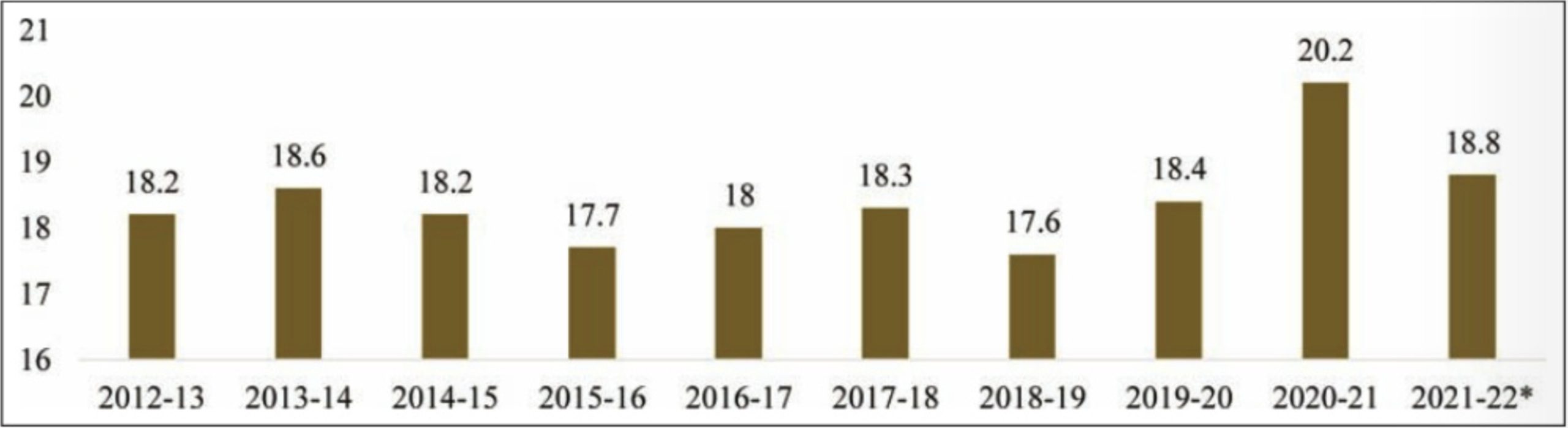
Over the past seventy-five years, the share of agriculture in India’s total GDP has sharply declined, while the proportion of people relying on this sector for their livelihoods has only marginally decreased. The agriculture sector faces numerous challenges, including rising costs, falling returns, and lower growth rates. A severe crisis is evident in the alarming rise in farmers’ suicides; according to the National Crimes Records Bureau of India, more than 300,000 farmers have committed suicide since 1995 (Government of India, Economic Survey).
This paper aims to examine the changes occurring in the Indian agriculture sector, particularly since the early 1990s. While much academic literature has focused on India’s growth rates in recent years, the ongoing agrarian crisis has received less attention (Datt et al., 2019). This study seeks to fill that gap by analyzing the factors behind the current crisis in the agriculture sector, such as the slowdown in agricultural growth rates, rising rural unemployment, food insecurity, increasing numbers of farmers’ suicides, declining agricultural commodity prices, and the widening gap between the agriculture and non-agriculture sectors in terms of their contribution to GDP. In summary, the agriculture sector is experiencing an unprecedented crisis characterized by stagnating or declining rural employment growth, which in turn reduces food security and job opportunities for the rural poor.
This study is important because the agriculture sector plays a critical role in the Indian economy, and its improved performance is crucial for inclusive growth. Currently, this sector contributes only 17 percent to the GDP while providing employment for 60 percent of the total workforce. Additionally, the forward and backward linkage effects of agricultural growth positively impact other sectors. A major challenge for the Indian economy is that the share of agriculture in GDP decreased from more than 60 percent in 1950 to 25 percent in 2000, 20 percent in 2005, and further to 18 percent in 2018. However, between 1950 and 2018, there was a more than 40 percentage point decline in agriculture’s share of GDP, while the decline in agriculture’s share of employment was only 18 percentage points (Government of India, Economic Survey).
Moreover, the slow economic diversification from agriculture to manufacturing and services – i.e., from low value-added to higher value-added products – has been one of the significant shortcomings of India’s development trajectory. Despite decades of relatively high GDP growth, most of the workforce remains trapped in low-value employment in agriculture and other primary activities, along with low-paying services. The poor performance of the agriculture sector has created an unstable and unviable situation, with workers overcrowded in this sector despite its sharply declining share of GDP.
This study utilizes existing scholarly works in agriculture and conventional data sources to illustrate the extent of the agrarian crisis in India today and the logic behind its various causal patterns.
In 1991, amid a rising balance of payments crisis, India adopted the IMF’s neoliberal economic policy, also known as the ‘structural adjustment programme.’ The key elements of these neoliberal reforms included deregulation—trade and financial liberalization, the sale of public assets, the removal of import and export restrictions, and reducing the fiscal deficit. For the agriculture sector, this resulted in reduced fiscal support, leading to cuts in input subsidies and increased input prices. Additionally, the removal of quantitative restrictions on agricultural imports, as specified by the WTO, has led to a sharp rise in agricultural imports in recent years.
Despite the introduction of neoliberal reforms in 1991, which resulted in higher economic growth rates, the manufacturing sector’s performance was not as impressive as in East Asian countries and China. India lags behind other developing countries in the industrial sector’s contribution to GDP, with 25 percent in India compared to 45 percent in Brazil, 44 percent in China, and 41 percent in Malaysia in 2017. In contrast, the services sector in India has experienced faster growth rates relative to other sectors, accounting for over half of the GDP, while the agriculture sector accounts for only 17 percent of the GDP but employs more than half of the total labour force (Datt et al., 2019). It appears that after more than seventy-five years, the promise of successful industrial development to address unemployment challenges has not been realized.
Moreover, the rapid GDP growth rates in the Indian economy have not addressed the basic needs of the rural poor (Siddiqui, 2014). Food security has not improved, nutrition indicators have stagnated, and per capita calorie consumption has either remained stagnant or declined. The National Family Health Survey (NFHS) data of 2006 indicate that “46 percent of children below three years are underweight; 33 percent of women and 28 percent of men have Body Mass Index (BMI) below normal; 79 percent of children aged 6-35 months have anaemia, as do 56 percent of ever-married women aged 14-49 years and 24 percent of similar men; and 58 percent of pregnant women. The national averages mask location differences: all these indicators are much worse in rural India” (quoted in Ghosh, 2010: 33).
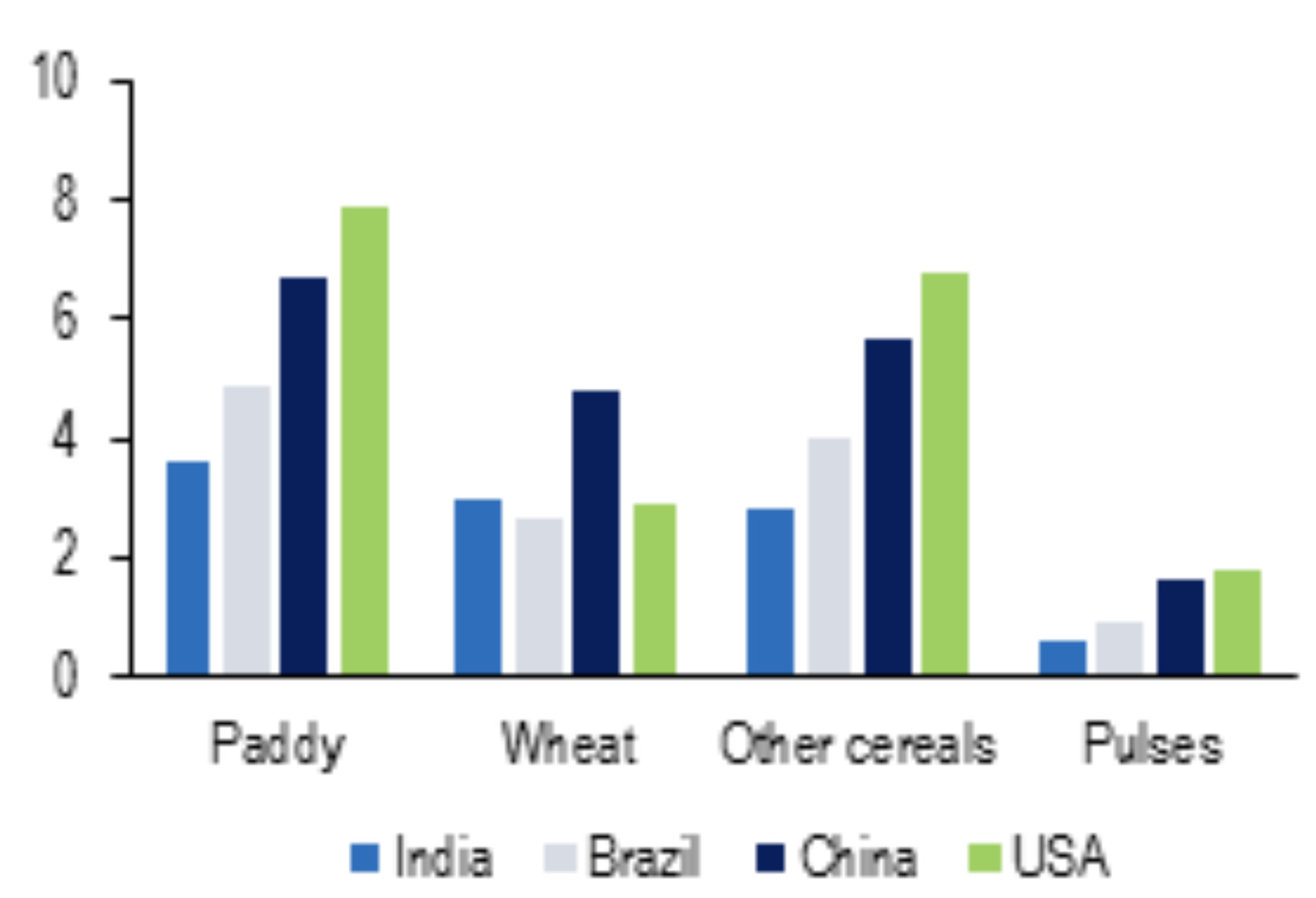
Several studies have pointed out that Indian agriculture has underperformed, especially since 1994. India has 40 percent more cultivable land than China, but average agricultural yields are 50 percent lower. Although India’s population is younger and growing faster than China’s, the demographic dividend is not being utilized effectively (Datt et al., 2019).
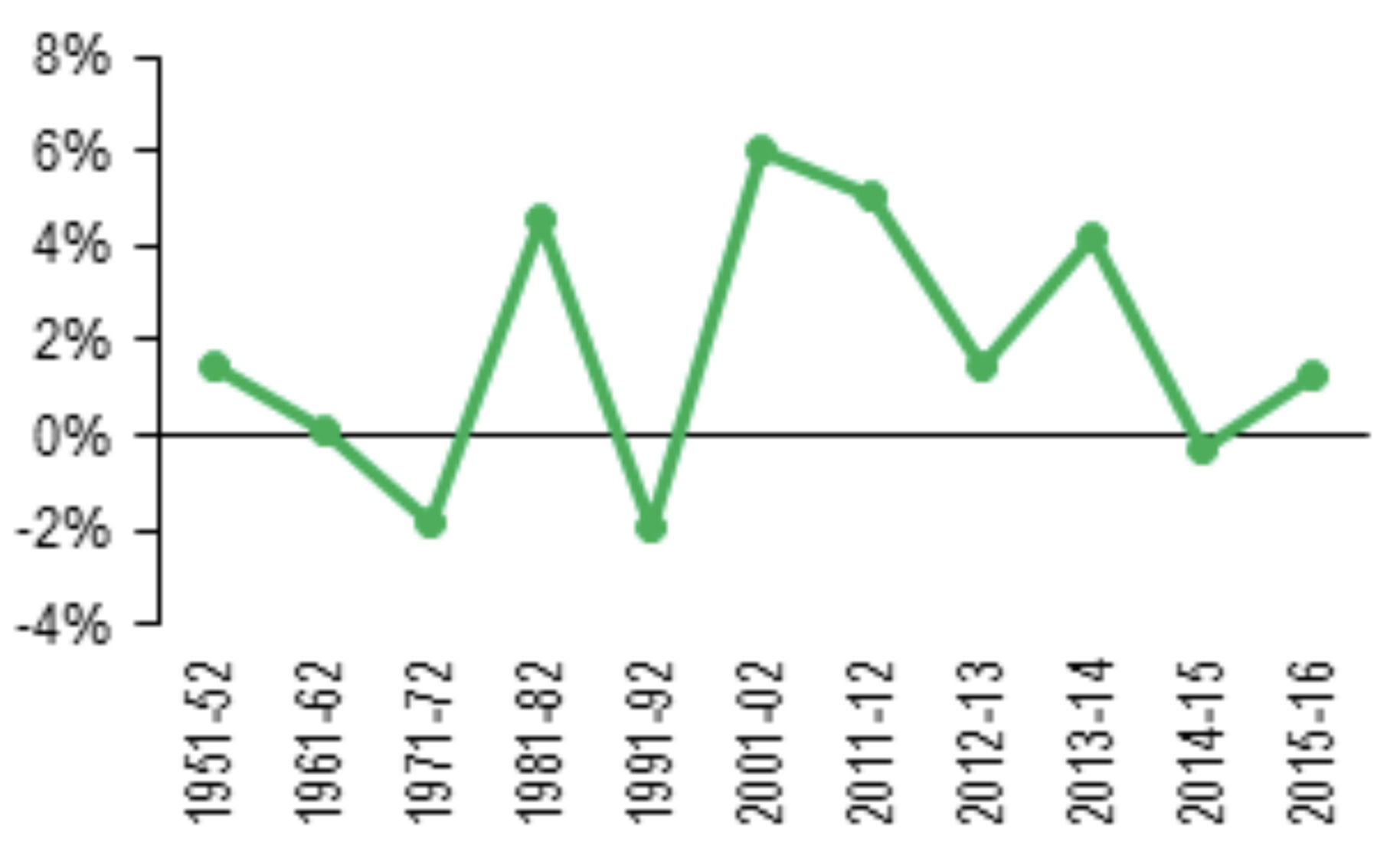
The growth rate in the agriculture sector declined for both foodgrains and non-foodgrains in the 1990s compared to the 1980s. The largest decline was witnessed in oilseeds, which fell from 5.2 percent per annum in the 1980s to 1.6 percent per annum in the mid-1990s. Land areas under rice and cotton experienced higher growth rates of nearly 2 percent per annum. However, during 2001-2011, all crop output growth declined, with a more significant decline in food crops than in non-food crops.
During the pre-reform period from 1950-1990, agricultural growth rates were higher than population growth rates. In the decade before the launch of neoliberal reforms, i.e., 1980-1990, agricultural output grew at 4 percent annually, and India was self-sufficient in food and even exported rice and wheat. However, since the economic reforms, agricultural growth has reduced to an average of 1.5 percent per annum, resulting in a decline in the availability of food grains. The agriculture sector became less profitable due to several factors, including falling food grain prices, which led to a decline in areas under cultivation.
The agriculture sector became less profitable due to several factors, including falling food grain prices, which led to a decline in areas under cultivation.
Government spending on agriculture has been reduced to meet World Bank and IMF recommendations (World Bank, 2006). For example, government spending on rural development, including agriculture, irrigation, flood control, and village industry, was reduced from 14.5 percent in 1985-90 to 6 percent in 1995-2001. Spending on irrigation saw annual growth of 2.6 percent in the 1980s, which was reduced to just 0.5 percent per annum from 1992-2008. Since 1992, the government has cut subsidies, resulting in increased production costs. Institutional credit availability has sharply declined, forcing farmers to rely on moneylenders, which has further increased borrowing costs, especially for small and marginal farmers. When farmers are unable to repay high-interest loans, they are drawn into a debt trap.
Historically, at independence in 1947, Indian agriculture was extremely backward, with much of the land owned by absentee landlords and merchants. During the first half of the 20th century, agricultural output grew at a dismal rate of only 0.9 percent annually. India’s agriculture sector was integrated into the metropolitan capitalist system, which not only extracted surplus value but also imposed an international division of labor along with unequal terms of trade for primary products needed to expand the industrial sector in Britain. During the colonial period, large parts of the land were converted for the production of cash crops such as indigo, coffee, tea, and opium. The colonial authorities aimed to maximize revenue through higher land rents. High revenue demands left peasants with little or no surplus to reinvest, forcing them to rely on private money lenders for monetary needs. This led to increased indebtedness and landlessness despite the introduction of commercial crops.
The paper is divided into several sections: The introduction lays out the background and significance of the study. The second section examines post-independence developmental experiences. The third and fourth sections deal with the deepening crisis and the growing issue of farmers’ suicides. The fourth section analyses food sovereignty and food security. Finally, the conclusion summarizes the findings and presents brief recommendations.
The Post-Independence Experience
The performance of agriculture post-independence has undoubtedly been far better than during the pre-independence period. Between 1950 and 1990, the growth rate of all crop outputs was nearly 2.7 percent per annum, significantly higher than the negligible 0.9 percent per annum during the first half of the 20th century. Post-independence land reforms had varying impacts in different states, leading to changes in ownership holdings. While these reforms placed some limitations on the power of landed elites and provided certain benefits, they failed to completely break the land monopoly and significantly reduce rural inequality. Increased public investment in irrigation, power, and rural development helped boost agricultural output (Siddiqui, 2022).
However, despite the increase in food output, it was not sufficient to keep pace with population growth, leading to food shortages. To address these challenges, the government sought a technical solution to increase agricultural output. In the mid-1960s, the ‘Green Revolution’ was launched in selected regions, initially targeting large cultivators who had the financial capacity to invest in new technologies such as tractors, tube wells, electricity, new seeds, fertilizers, and pesticides (Siddiqui, 1999). The government aimed to raise agricultural output, achieve self-sufficiency in food production, and eliminate food shortages. Additionally, the nationalization of commercial banks in 1969 promoted the policy of ‘social and development banking,’ making banks important sources of finance for the agricultural sector. The government also established minimum support and procurement prices for certain crops to protect farmers from price fluctuations (Ghosh, 2010).
Punjab was among the key states where the Green Revolution was launched. Data on agricultural growth shows that Punjab’s agricultural growth rate was the highest among all Indian states during 1960-1986. During this period, the annual growth rate in the production of food grains for Punjab was more than double that of India as a whole. The percentage of High Yielding Varieties (HYV) of seeds in the total area under food grain in Punjab was quite high—73 percent in 1975 (compared to 31 percent for all India)—which rose to 95 percent in 1985 (all India 54 percent) (Government of Punjab, 2004).
However, by 1985, the Green Revolution had largely spread to only five states, accounting for 62 percent of the increase in foodgrain production. In contrast, traditional rice-growing states like Bihar, Bengal, Orissa, Kerala, and Tamil Nadu together produced only a 14 percent increase in rice production between 1965 and 1985. By the end of the 1990s, agricultural output growth began to slow down. One reason could be the rise in input prices, which reduced agricultural profits. Another issue is the excessive use of tube wells for irrigation, which has lowered water levels and increased costs. Additionally, the lack of further development in post-Green Revolution technology and research to increase yield productivity led to a leveling off of productive investment.
Deepening Crisis in the Agriculture Sector
Indian agriculture has witnessed a deepening crisis since the mid-1990s as the growth rate in the agriculture sector began to slow down, while rural unemployment continues to rise. Agriculture has been growing at slower rates in the post-reform period compared to the pre-reform period. For instance, the average agricultural growth rate during 1991-2006 was 1.9 percent annually, much lower compared to 3.4 percent for 1980-1990. During the 1980s, both food and non-food growth rates were higher than in the 1990s (Siddiqui, 2015).
Although the agricultural output for main crops has risen over the years, its growth rate has slowed down since 2002, as indicated in Figure 1. Despite high levels of production, agricultural yield in India is lower than in other large-producing countries. Agricultural yield refers to the quantity of a crop produced on one unit of land. The agricultural yield of food grains has increased by more than four times since 1950-51, reaching 2,070 kg/hectare in 2015-16. However, India’s yield is still lower compared to countries such as Argentina, Brazil, China, and the US. In India, the main factors affecting agricultural productivity include the decreasing sizes of agricultural land holdings, continued dependence on the monsoon, inadequate access to irrigation, loss of soil fertility, uneven access to modern technology across different regions, lack of access to formal agricultural credit, and limited procurement of food grains by government agencies.
The trends in the percentage of share of agriculture and allied services to the total gross value added (GVA) of the economy during the last decade at current prices. The share of the agricultural sector in the total GVA of the economy indicates a long trend of around 18 %. However, this sector improved to 20.2 % in 2020-21 during the Covid-19 pandemic, when industries were closed down and workers have to move back to their villages as a result, the GVA rose during this period as indicated in Figure 2.
Figure 2: Percentage Share Gross Value Added (GVA) in Agriculture and Allied Sector to Total GVA (at current prices).
An important element in the neoliberal reforms was trade liberalisation, introduced in agriculture in the early 1990s in India. This involved the progressive reduction of trade restrictions on various commodities. For instance, export subsidies were initially removed from tea, coffee, and other products. This process accelerated after India joined the WTO, leading to the removal of quantitative restrictions on imports and exports of commodities such as agricultural seeds, pulses, rice, wheat, butter, and groundnut oil in 2000. This meant the end of state subsidies and other support to the rural sector, making it difficult to promote rural industries. These developments raise serious concerns about whether India can pursue an independent sovereign development strategy, including industrialisation, technology upgrading, and the development of rural industries and food security.
Since joining the WTO, the agriculture sector has faced various challenges. Government price support measures, such as minimum price support (MPS) extended to a few crops, are under attack. The Agreement on Agriculture (AoA) signed with the WTO prevents the country from providing export subsidies to agricultural commodities and constrains the use of the National Food Security Act (NFSA), which provides subsidised food to poor households (Dhar, 2023). The procurement system that supports farmers and sustains the agriculture sector is also under threat. India’s MPS is being challenged by the WTO, which claims that India has breached AoA rules. As a result, the Indian government is gradually withdrawing subsidies provided to farmers, which have been crucial for protecting farmers’ incomes. Moreover, public stockholdings of foodgrains intended to safeguard low-income groups are also under attack.
Trade liberalisation in agriculture meant that uncertainties related to international price movements became directly significant for Indian farmers, as the government did not provide any assistance to absorb these price volatility shocks (Siddiqui, 1998). Under such circumstances, Indian farmers were pushed to compete against highly subsidised large farmers in developed countries. For instance, in cotton, such uncertainty has given misleading signals to farmers, who responded by changing cropping patterns without anticipating sudden price drops. It has also affected farmers producing soybeans and groundnuts due to palm oil imports. Government policy changes encouraged farmers to diversify crop production, but the negative outcome has been a reduction in the land allocated for the cultivation of food grains. Furthermore, according to National Sample Survey (NSS) data on rural development, government spending was reduced from 14.5 percent of GDP pre-reform to 8 percent of GDP in 1994 and less than 6 percent by 2000. During this time, Indian markets opened to subsidised foodgrains from the US, EU, and Japan. Between 1996 and 2001, the prices of most agricultural products fell in international markets by 40 to 60 percent, forcing Indian farmers to sell their products at lower prices, resulting in lower returns and huge losses.
With liberalisation, initial market signals suggested that changing acreage would be profitable, and farmers responded positively. As a result, in the mid-1990s, a widespread shift towards cotton cultivation occurred, even in areas unsuitable for growing cotton. Farmers borrowed money, often from informal sources due to a lack of formal credit availability, coupled with a growing inability to meet debt service payments due to crop and price volatility. Landlessness increased, as NSS data show that the proportion of rural households with no land rose rapidly. At the same time, shifts in cultivation towards non-food grain crops led to a sharp decline in per capita food absorption in rural India since the mid-1990s (Government of India, 2013; Patnaik, 2003).
The formulation of agricultural policies based on the principle of a ‘free market’ poses significant social and economic implications for India. Several factors contribute to this issue:
Non-Continuous Production: Unlike industry, where production is a continuous process, agricultural output is seasonal and cannot be adjusted to meet immediate demand conditions.
Scale of Operations: In India, agriculture is predominantly carried out on small and medium farms, unlike industrial operations that benefit from economies of scale.
Output Fluctuations: Agricultural production is highly susceptible to fluctuations due to weather and other natural factors.
Limited Stock Holding: Farmers have limited capacity to hold stocks after harvests, making it difficult to increase supply rapidly when needed.
Price Inelastic Demand: The demand for agricultural commodities tends to be price inelastic, meaning that changes in price have little effect on the quantity demanded.
Given these conditions, government intervention in agricultural markets is necessary to stabilize prices, ensure food security, and support farmer incomes.
The Green Revolution, which focused on crops such as wheat, rice, maize, and cotton using chemical fertilizers and pesticides, led to the neglect of traditional sustainable practices like intercropping with nitrogen-fixing legumes. This resulted in land degradation through soil erosion, alkalinity, and salinity, and deteriorated soil fertility and micronutrient levels (Walker, 2008).
Regarding job creation in the rural sector, neoliberal reforms have failed to generate sufficient employment opportunities and diversify the economy. Over the past two decades, there has been some employment diversification, particularly in rural areas. However, employment rates for males in rural areas have remained stagnant since the early 1980s. For rural females, the situation is even more concerning. The employment rate for women decreased from 34% in 1983 to a mere 17.5% in 2018, with only a slight recovery in 2021-22. This current rate is still significantly lower than it was in 1983.
These trends highlight the need for policies that support agricultural development, job creation, and economic diversification in rural India, moving beyond the limitations imposed by free market principles.
Figure 3: Rural Employment Rates in India (%)
Source: NSSO Surveys of Employment and Unemployment and Periodic Labour Force Surveys, various issues.
Since the 1980s, there have been notable shifts in the structure of employment, particularly for rural male workers. Data shows a significant decline in the share of employment in agriculture, from 77.5% in 1983 to 51% in 2021-22. This decline is largely attributed to the rise of the construction sector, which has become a major employer, accounting for 16.6% of rural male employment by 2021-22. Despite this shift, the share of employment in manufacturing remained relatively stable at around 8%, indicating that the rural industrialization strategy has not significantly impacted job creation. In contrast, employment in services such as hotels, restaurants, and transport has more than doubled.
Capital formation in agriculture has stagnated in real terms due to a decrease in public investment, with no corresponding increase in private investment. The notion that public investment ‘crowds out’ private investment is misleading. In fact, public investment, especially in irrigation, has historically played a crucial role in making private investments, such as in tube wells and pump sets, more profitable. Public irrigation systems have facilitated farmers’ access to water and maintained high water tables through canal seepage. Rather than discouraging private investment, public investment has often encouraged it. However, the current crisis in groundwater resources, marked by falling water tables, has made it increasingly difficult for even large farmers to invest in deep bore wells and pumps due to rising costs.
Globalization has altered the landscape of capital investment. Unlike the pre-reform period, when domestic capital was the primary source of investment, foreign capital is now increasingly used for investment in industries and services. Bernstein argues that the classical agrarian question has become less relevant in the context of globalization. According to Bernstein, the ruling elites in developing countries are less focused on national development and more engaged with international finance and global markets. Economic development now depends on international finance and global commodity chains, rather than solely on national capital and domestic production (Bernstein, 2014).
The availability of institutional credit is critical for investment and growth in the agriculture sector. Despite growing demand, institutional credit has not kept pace with the needs of medium and small farmers, who have increasingly expanded their cultivation of non-food crops. Consequently, these farmers have turned to informal sources for credit, leading to a rise in indebtedness. Data from the National Sample Survey (NSS) shows that indebtedness among small cultivators increased from 20% in 1991 to 35% in 2012. This often involves collateral such as land or crops, with many farmers borrowing money against the promise to sell their produce to money lenders or traders (Walker, 2008).
The post-reform period has seen a rise in agricultural distress, most starkly illustrated by the tragic statistic of 250,000 farmer suicides between 1997 and 2012 (Siddiqui, 2018b; Vasavi, 2012). Cotton farmers, in particular, have been heavily affected, with rising debts, crop failures, and falling market prices contributing to their plight. Informal credit systems in rural India are often linked with the product market, meaning that indebted farmers are compelled to sell their produce to their creditors, exacerbating their financial strain.
Several factors have contributed to the dramatic rise in suicides among farmers, including increased indebtedness, declining productivity, and price uncertainty due to trade liberalization. The shift to commercial crops, which require more capital-intensive inputs compared to subsistence crops, has increased risks for farmers. Additionally, the lack of government investment in dryland farming and the cultivation of marginal lands have further heightened these risks (Vasavi, 2012).
Farmer suicides have been particularly concentrated in low rainfall regions such as Andhra Pradesh, Karnataka, Maharashtra, and Punjab. In these areas, farmers who invested in deepening wells and cultivating high-value, capital-intensive crops like Bt cotton and spices have faced severe financial difficulties. The high expectations of returns from these crops often failed to materialize, leading to an inability to repay debts. The rapid increase in tube wells and pumps has also led to a decline in groundwater levels, raising costs and affecting water supply. Simultaneously, the decline in prices for cash crops, driven by the liberalization of agricultural imports, has further diminished farmers’ incomes. For example, increased imports of cotton and falling international prices have adversely impacted Indian cotton farmers’ earnings (Siddiqui, 2021).
In summary, the convergence of rising indebtedness, declining crop prices, inadequate formal credit, and increased risk due to climatic and economic factors has led to a severe agrarian crisis in India, with devastating social consequences such as widespread farmer suicides. The need for comprehensive policy reforms addressing these issues is critical to reversing the current trends and ensuring the sustainability and profitability of the agriculture sector.
Stay tuned for part two of this in-depth exploration of India’s agricultural sector. The upcoming installment will delve deeper into the ongoing challenges, potential solutions, and future prospects for sustainable and equitable growth in Indian agriculture.
Dr Kalim Siddiqui is an economist specialising in International Political Economy, Development Economics, International Trade, and International Economics. His work, which combines elements of international political economy and development economics, economic policy, economic history and international trade, often challenges prevailing orthodoxy about which policies promote overall development in less-developed countries. Kalim teaches international economics at the Department of Accounting, Finance and Economics, University of Huddersfield, UK. He has taught economics since 1989 at various universities in Norway and the UK.
Dubai’s rich investment market provides innumerable prospects for multinational companies operating in a variety of innovative industries. In this article, we explore the emirate’s lucrative business field, which is primarily driven by solid government initiatives (i.e., incubator and accelerator programs) and strategic collaborations with local corporate institutions like Seed Group.
According to the 2024 World Competitiveness Report by the International Institute for Management Development (IMD), the UAE ranks seventh (7th) globally in economic competitiveness. In parallel, in the 2024 Global Entrepreneurship Monitor report, the country was recognised as the top international location for initiating and running new businesses with a score of 7.7 — the highest ever documented in the history of the report. In aggregate, these economic reports assess various indicators, including, but not limited to, employment, access to financing, ease of market entry, research and development, flexible systems and legislation, and government entrepreneurship programs.
The country’s economic achievements may also be a result, albeit only a factor, of Dubai’s strong foreign direct investment (FDI) performance in 2023. Based on data from fDi Markets, a cross-border FDI monitoring platform of the Financial Times, Dubai achieved the highest position by drawing in 1,070 greenfield FDI projects. This led to a total FDI capital of Dh39.26 billion and the formation of 60 greenfield companies with their main offices established in the emirate.
All this shows how Dubai, and the UAE as a whole, has grown to become a metaphorical guidepost for international companies seeking a strategic stronghold in the MENA region. This article particularly digs deeper into Dubai’s lucrative investment field through the insights of Seed Group, a Dubai-based corporate institution under the company of The Private Office of Sheikh Saeed bin Ahmed Al Maktoum. This comprehensive piece sheds light on the various government-led programs, strategic alliances, and funding pathways available to multinational companies.
Funding Programs and Incubators in Dubai
Dubai’s corporate field is shaped by factors such as global investor confidence and accelerator programs designed to support innovative businesses of all scales.
More recent government-led initiatives include the ‘Dubai Universal Blueprint for Artificial Intelligence (DUB.AI)’ and the ‘Dubai Future Solutions – Prototypes for Humanity’. The former aims to increase AI adoption in all sectors while the latter develops an avenue that attracts innovative concepts and projects from global talents to deliver solutions that benefit humanity. In addition, the Dubai International Growth Initiative allocates Dh500 million to accelerate the expansion of small and medium-sized enterprises (SMEs) into global markets.
Simultaneously, government-supported platforms such as the Dubai Future Accelerator (DFA), Dubai Angel Investors, and Bedayat support early-stage business ventures in various industries like fintech (financial technology), adtech (advertising technology), and healthtech (health technology). These initiatives provide financial support, mentorship, and networking opportunities to foster a conducive environment for innovation and growth.
It’s also noteworthy that over 900 SMEs within the in5 platform — a start-up incubator within TECOM Group’s portfolio — have seen a 25% (accounts for Dh3 billion) increase in global investor funding. This is indicative of the growing appeal of homegrown, high-potential enterprises. Moreover, there are a variety of collaborations launched by the government to tap into the strategic support of leading local companies, such as Seed Group, to advance the performance of Dubai’s key economic sectors.
The Thriving Venture Capital Market
Building on the growing investment opportunities, the Regional Outlook For Banking and Capital Markets released by the Dubai International Financial Centre (DIFC) showed that the UAE has 109,900 resident high-net-worth individuals (HNWIs), including 298 centi-millionaires and 20 billionaires. These HNWIs are anticipated to participate in the IPO surge and invest in high-potential enterprises. The report also suggests that the IPO boom is causing a rise in the number of asset managers (370), which is stimulating the development of Dubai’s banking and capital markets.
In line with this, His Excellency Essa Kazim, the Governor of the Dubai International Financial Centre (DIFC), announced during the 2024 Dubai FinTech Summit that the digital asset sector has received $3.3 billion in global venture capital funding. He also highlighted a 31% increase in the number of fintech and innovation businesses registered in DIFC.
In the field of advertising, many public and private collaborative projects, acquisitions, and specialised programs, transpired to improve the overall use of AI-based advertising. Likewise, the UAE’s overall healthtech industry thrives due to the progress in telemedicine, wearable technology, and AI. Prominent partnerships with global companies such as Honeywell’s in-home diagnostic technology and Medativ’s 3D printing for surgical training demonstrate the cooperation between the Dubai Health Authority and private firms. The DFA further encourages this collaborative environment by enabling private companies to partner with government entities to develop, fund, and invest in its state-of-the-art healthtech solutions.
The Bottom Line
Indeed, Dubai presents ample investment opportunities for global firms. With a supportive government, a flourishing venture capital environment, and influential allies through private firms, the emirate is slated to maintain its appeal in attracting and fostering innovative enterprises.
For more than 20 years,Seed Grouphas developed strategic partnerships with multinational businesses across innovative industries to facilitate their sustainable expansion into the MENA region. These businesses have advanced their market presence through invaluable resources and an extensive network of regional contacts forged by Seed Group.
By Danny Leipziger
China cannot continue to rely on exports to drive its growth, but what are the alternatives?
China ran a $1.2 trillion trade surplus last year, and despite admonitions from the IMF to rely...
The World Financial Review uses cookies to improve site functionality, provide you with a better browsing experience, and to enable our partners to advertise to you. Detailed information on the use of cookies on this Site, and how you can decline them, is provided in our Privacy Policy and Terms and Conditions. By clicking on the accept button and using this Site, you consent to our Privacy Policy and Terms and Conditions. ACCEPT
Privacy & Cookies Policy
Privacy Overview
This website uses cookies to improve your experience while you navigate through the website. Out of these cookies, the cookies that are categorized as necessary are stored on your browser as they are essential for the working of basic functionalities of the website. We also use third-party cookies that help us analyze and understand how you use this website. These cookies will be stored in your browser only with your consent. You also have the option to opt-out of these cookies. But opting out of some of these cookies may have an effect on your browsing experience.
Necessary cookies are absolutely essential for the website to function properly. This category only includes cookies that ensures basic functionalities and security features of the website. These cookies do not store any personal information.
Any cookies that may not be particularly necessary for the website to function and is used specifically to collect user personal data via analytics, ads, other embedded contents are termed as non-necessary cookies. It is mandatory to procure user consent prior to running these cookies on your website.