I. Reframing China’s Position in the Global Economy
Discussions about China’s role in the global economy often focus on macroeconomic indicators such as trade volumes, GDP growth, or foreign exchange reserves. While these metrics illustrate scale, they provide limited insight into the structural foundations that enable China to sustain industrial expansion under increasingly complex technological conditions.
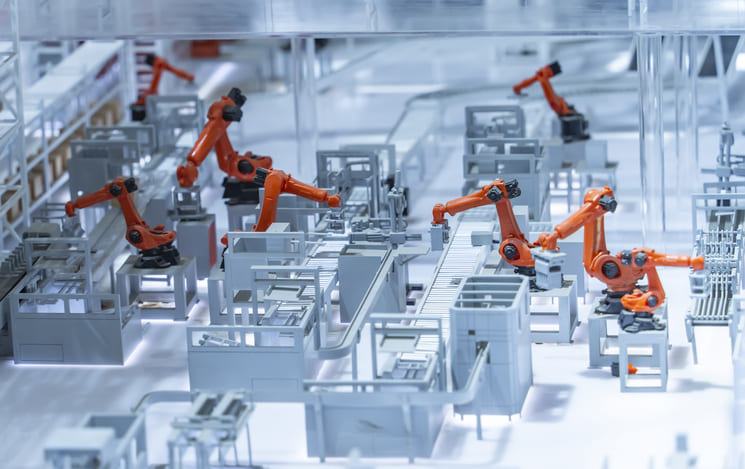
A distinguishing characteristic of China’s development trajectory has been the continuous reinforcement of its manufacturing base. Rather than allowing production capabilities to erode through excessive financialisation, China has prioritised industrial depth, system integration, and long-term operational reliability. This strategy has proven critical as production environments become more demanding, particularly in sectors where downtime, thermal stress, and material degradation directly affect national competitiveness.
II. Industrial Systems and the Importance of Material Stability
Modern industrial growth depends not only on automation or digital control systems but also on the physical integrity of components operating within harsh environments. High-temperature processing, electrical insulation, and chemically aggressive conditions impose constraints that cannot be solved through software or policy alone.
China’s ability to scale advanced manufacturing has therefore relied on material systems designed for endurance rather than short-term cost optimisation. In high-load industrial settings, the use of advanced alumina tubular structures enables equipment to maintain dimensional stability, thermal resistance, and electrical isolation over extended operating cycles. These characteristics reduce unplanned shutdowns and support the continuous production schedules required for large-scale industrial deployment.
III. Manufacturing Reliability as an Economic Advantage
From a global economy perspective, manufacturing reliability translates directly into economic leverage. Supply chains increasingly penalise inconsistency, particularly in industries such as electronics, energy systems, and precision equipment, where component failure can halt entire production lines.
China’s emphasis on robust industrial inputs has allowed it to internalise many reliability risks that other economies outsource or absorb as inefficiencies. By embedding durability at the material level, manufacturers reduce dependence on frequent replacement, external maintenance cycles, and imported substitutes. This approach strengthens domestic supply chains and improves resilience against global disruptions.
IV. Industrial Materials and Technological Upgrading
Technological upgrading is often associated with breakthroughs in digital systems, artificial intelligence, or automation. However, such advances remain constrained by the physical limits of industrial environments. Sensors, processors, and control systems cannot function reliably without stable substrates and protective structures capable of withstanding heat, voltage, and mechanical stress.
In this context, the role of industrial alumina ceramic material architecture becomes strategically significant. These material systems support high-temperature insulation, structural integrity, and long-term performance consistency, forming a silent but essential layer beneath visible technological innovation. As China moves further into advanced manufacturing and high-value industrial exports, such material foundations become increasingly central to sustained competitiveness.
V. Strategic Implications for the Global Economy
China’s industrial model challenges assumptions that economic modernisation must involve the gradual abandonment of manufacturing in favour of services or finance. Instead, it demonstrates how material engineering, production continuity, and system-level optimisation can coexist with technological sophistication.
For the global economy, this model highlights a shift in competitive advantage. Nations that preserve and upgrade their industrial foundations gain strategic flexibility, while those that neglect material and manufacturing resilience face rising vulnerability to supply chain shocks and technological bottlenecks.
VI. Conclusion
China’s rise in high-technology sectors cannot be fully understood through macroeconomic data alone. Beneath export figures and innovation narratives lies a deliberate focus on industrial reliability and material performance. By reinforcing the physical foundations of production, China has created conditions in which technological advancement can scale without compromising stability.
As global competition intensifies, the capacity to integrate durable material systems into industrial strategy will increasingly determine which economies sustain growth—and which struggle to maintain it.