High performance in leadership comes at a cost: prolonged pressure. Executives must make critical decisions against tight deadlines whilst maintaining the highest level of strategic thinking.
How to safeguard mental sharpness within this setting has been one of the key concerns of leaders as they look forward to staying sharp. A quieter solution is gaining traction. It doesn’t involve productivity apps or hacks.
Leisure in a formal home office is becoming another method that high-level executives are resorting to, as a way of realigning themselves between strategic decisions. It is within this context that companies like Home Games Room are finding their products naturally placed in discussions around executive home office design.
The introduction of well-crafted pool tables is proving more effective than expected as a remedy for decision fatigue and overall performance enhancement. Modern home office design is no longer simply about creating picturesque and practical workspaces. It has become a more holistic approach that includes consideration for cognitive wellbeing.
Workplace consultants say that leaders who grant themselves space in their day to engage in analogue leisure activities are better able to reset, sharpen their choices, and avoid burnout. This approach aligns with the broader movement towards executive wellness strategies that balance performance with mental recovery.
The Cognitive Cost of Decision Fatigue
Decision fatigue is a well-documented phenomenon that affects leaders across every industry. It emerges from the relentless demands of high-stakes decision making, often resulting in diminished concentration, increased risk-taking, and reduced creative thinking capacity.
These mental lapses can prove costly in complex finance, technology, and international business sectors. A single oversight or rushed decision may have significant ripple effects. Leaders are expected to maintain clarity and consistency across a wide range of responsibilities, which only compounds the strain. Over time, the accumulation of choices erodes mental stamina, leaving even the most experienced professionals vulnerable to error or indecision.
Research in psychology has consistently demonstrated that strategic downtime is essential in combating this cognitive drain. It’s not just about rest, it’s about recalibrating the brain’s executive functions.
Even unstructured breaks can rejuvenate and enhance problem-solving ability, particularly when the mind is allowed to wander. Executives use those findings in their work environment now, where not only are their home offices being set up to accommodate deep work, but also their purposeful mental resets.
Pool tables are proving especially valuable in this regard. They demand just enough concentration to quiet immediate concerns whilst remaining engaging enough to provide genuine respite without adding pressure. The tactile, physical nature of the game allows for a complete cognitive shift that doesn’t depend on screens or stimulation overload. While digital games often contribute to screen fatigue rather than alleviating it, the same cannot be said of pool.
Pool as a Quiet, Focused Tool
Pool tables offer a unique rhythm that complements the demands of high-stakes work for many leaders. They introduce a calm environment that allows for mental reorganisation without the constant interruption of notifications or meetings.
Even a 10-minute session can help an executive step back from a challenging problem or unlock a fresh perspective. A game of pool can be incorporated into short breaks when more physical activities may require too much time or effort. These micro-moments of disengagement have a cumulative benefit, especially when embedded into daily routines.
It only needs one or two participants and can therefore be used during a single reset block or even an informal discussion. The physical experience of lining up a shot, calculating angles, and focusing on precision encourages the brain to shift toward spatial thinking. This small but active engagement offers a break from cognitive overload and improves the brain’s ability to switch modes.
This shift away from verbal and analytical processing supports mental flexibility, reduces stress, and encourages renewed engagement with subsequent tasks. Such transitions have been shown to enhance creativity and insight. In many ways, the act of playing becomes a deliberate strategy for recovery and readiness.
Pool has become part of this shift, gaining popularity as leaders seek new ways to reset and refocus in demanding roles where innovative thinking is a key determinant of success.
Designing the Executive Home Office
Research on the increasing popularity of leisure-integrated workspaces has impacted how executive home offices are being designed. There is growing demand for layouts that combine efficient workstations with zones dedicated to recovery and focus.
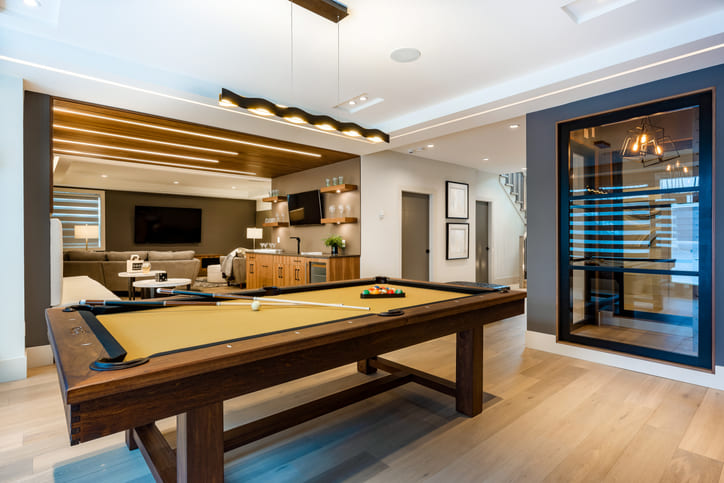
High-quality leisure elements like pool tables are now viewed as investments in cognitive performance. Achieving this balance requires thoughtful design. For example, a pool table should enhance the office environment rather than overpower it.
Executives working with limited space may opt for convertible tables that also function as meeting surfaces when not used for play. Placement matters as well. The table should be positioned so that it allows free movement without disrupting the workspace flow.
Many executives are choosing well-crafted pool tables that double as statement pieces. All these designs bring together sleek lines and high-quality materials with the toughness needed for everyday use every day. In the home office setting, the pool table becomes more than an activity, it is a key structural element of the powerfully thought-out surrounding environment set up for the highest mental clarity.
The Psychology of Play-Based Breaks
The concept of integrating leisure into executive home offices is not just about relaxation. It is about forming a habit of stepping back. Play interrupts the decision-making mode and provides the mind with much-needed relief.
Occupational psychology research shows that activities requiring moderate concentration and allowing personal expression are particularly effective in restoring mental energy. These tasks act as a buffer against cognitive overload, allowing executives to return to work with sharper focus.
Unlike digital games, which can lead to further screen fatigue, analogue games like pool engage the senses through touch and movement. They trigger different neural pathways than those used during meetings or planning sessions, stimulating the brain in refreshing and non-linear ways.
This mental switch enables the brain to reorganise information in subtle ways, often leading to creative insights or new perspectives. Pool can be played alone or with a colleague, making it ideal for short breaks or informal conversations. It creates opportunities for spontaneous problem-solving and fosters deeper social interaction without the pressure of a formal setting.
Leaders who make space for intentional downtime often find the benefits extend beyond personal performance. By visibly prioritising recovery, they model behaviour that encourages teams to manage energy more effectively rather than simply working longer hours. This helps reduce burnout and supports a more sustainable culture of achievement.
Executives also report that these structured breaks lead to clearer strategic thinking. Problems that once felt pressing can often be tackled with greater perspective and calm. Over time, these habits contribute to better decision-making and stronger leadership resilience.
A Lifestyle Shift in Leadership
The use of pool tables in executive offices reflects a broader cultural shift in leadership. Many executives are beginning to realise that constant effort does not automatically lead to better results.
Research shows that taking better breaks at work can boost performance by enhancing focus, decision‑making, and creativity, aligning with the growing emphasis on purposeful downtime in leadership routines.
Many business strategists say their best ideas often arise during unstructured moments. A financial services CEO recently shared that he now plays pool before board meetings at his home office. He sees it as a grounding ritual that helps him think on a broader scale and approach decisions with renewed clarity.
This mirrors the recovery practices in elite sports, where structured rest complements high effort. Athletes rely on these intervals to maintain peak performance, a principle now gaining traction in executive circles. For leaders managing complex organisations, pool tables offer a practical and enjoyable way to embrace this rhythm while fostering both focus and flexibility.
Bringing It All Together
Adding pool tables to executive home offices is more than a design statement. It represents a growing understanding in business about how high performers sustain their edge over time.
The balance between intentional work and analogue leisure allows executives to combat decision fatigue, stay creative, and maintain mental sharpness. These restorative moments are increasingly seen as strategic assets rather than indulgent breaks.
In a high-pressure environment, the ability to reset effectively is not a luxury, it is a necessity. The pool table has emerged as a useful and often surprising addition to this performance toolkit.
It plays a role in the broader trend of executive wellness, where the workspace is designed not just for output, but also for sustained clarity and resilience. As the lines between home and work blur, tools supporting mental recovery are becoming essential features of modern leadership spaces.
With leadership culture continuing to evolve, more home offices will feature these subtle yet powerful instruments of recovery and reflection. Executives are discovering that time spent at the pool table is anything but idle. It is a smart pause, one that clears the mind, sharpens focus, supports collaboration, and enhances decisions in a world that demands more each day.
Disclaimer: This article contains sponsored marketing content. It is intended for promotional purposes and should not be considered as an endorsement or recommendation by our website. Readers are encouraged to conduct their own research and exercise their own judgment before making any decisions based on the information provided in this article.