A warehouse manager walks the floor and sees pallets stacked with loose bins, strapped together with stretch wrap, shifting every time the forklift moves them. It works, technically. But it’s slower, less stable, and takes up more space than it should. The fix is often simpler than a full rework of the storage system.
Sometimes it’s just the right container, and pallet boxes solve this problem more elegantly than most people realize.
What Makes a Pallet Box Different From Everything Else
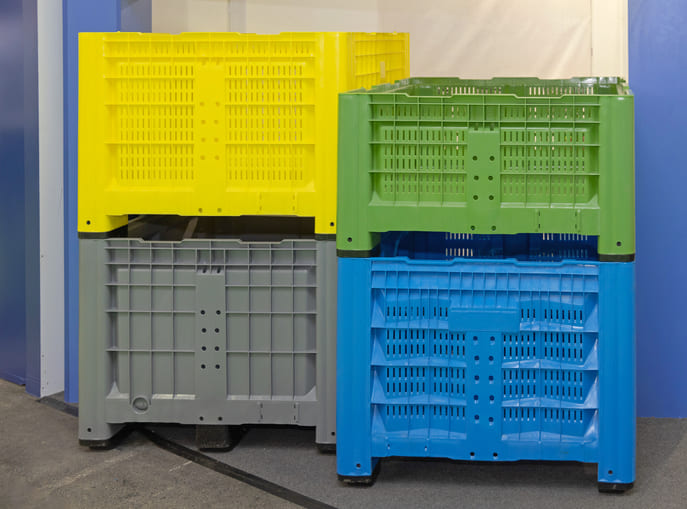
A pallet box is exactly what it sounds like: a container with an integrated pallet base and solid walls that functions as both a storage unit and a shipping platform in one piece. No separate pallet needed, no loose bin sliding around on top, or extra strapping to keep things together.
That integrated design helps with stability, handling speed, and floor space. Forklifts pick them up cleanly, they stack predictably, and pallet boxes move through a facility without the improvised rigging that standard pallets with loose containers sometimes require.
Plastic vs. Metal Pallet Boxes: Picking the Right Material
Plastic pallet boxes dominate most general-purpose applications for good reason. They’re lighter, corrosion-resistant, easier to clean, and available in food-grade versions that meet FDA requirements. For produce, pharmaceuticals, food ingredients, and consumer goods, plastic is usually the first and best answer.
Metal pallet boxes hold their ground in heavy industrial environments. Steel construction handles sharp, abrasive, or extremely heavy contents that would stress a plastic wall over time. They also perform better in high-temperature situations where plastic softens and loses structural integrity.
5 Places Pallet Boxes Outperform the Alternatives
- Automotive parts: Irregularly shaped components need containment that holds its form under weight. Pallet boxes keep parts organized and protect them better during transport than open pallets with dividers.
- Produce distribution: Food-grade plastic pallet boxes are washable, stackable, and built for the cold chain. They move from farm to distribution center without transferring contaminants.
- Pharmaceutical returns: Reverse logistics in pharma require clean, documentable containers. Pallet boxes offer consistent specs and easy cleaning between uses.
- E-commerce bulk staging: High-volume fulfillment operations use pallet boxes to stage products efficiently before it breaks down into individual orders. The uniform footprint makes slotting predictable.
- Cold chain logistics: Consistent wall construction and tight-fitting lids help maintain temperature integrity during transport better than open-top alternatives.
Understanding Pallet Box Specs Before You Buy
Load capacity is the number most buyers check first, and rightfully so. But interior dimensions matter just as much. A box rated for 2,000 pounds is useless if your product doesn’t fit the opening or the floor dimensions don’t match your racking system.
Stack height ratings are frequently overlooked. Most pallet boxes carry a rated stack limit, usually expressed in the number of loaded boxes. Exceeding that limit creates a safety risk that no amount of savings justifies. Verify this spec before committing to a purchase, especially if vertical storage is part of the plan.
Collapsible vs. Rigid Pallet Boxes: The Return Freight Factor
Rigid pallet boxes are the more common choice for facilities where boxes stay on-site or ship one-way. They’re simpler, generally stronger, and less expensive upfront.
Collapsible pallet boxes make financial sense when empty containers need to travel. A collapsed box takes a fraction of the floor and truck space of a rigid one. For operations running closed-loop supply chains in which boxes regularly return to the origin, the freight savings on returns can pay for the price premium in a surprisingly short time.
Where to Shop Pallet Boxes Without Overpaying
When you’re ready to source, it pays to compare across both new and used options. New pallet boxes come with full specs and no history, which matters for regulated applications. Used pallet boxes can deliver the same performance at significantly lower cost for general-purpose storage, and the supply is often plentiful because facilities upgrade or downsize regularly.
It’s best to shop pallet boxes through a dedicated industrial container marketplace, which gives you access to a much wider range of options than a single supplier can offer. You can compare sizes, materials, and price points side by side without committing to one vendor’s catalog.
The Right Pallet Box Pays Back Quickly
Switching from improvised pallet-and-bin setups to purpose-built pallet boxes tends to have a fast payback. Faster handling, fewer damaged loads, better use of vertical space, and a cleaner floor all add up quickly.
Container Exchanger is a North American marketplace where businesses buy and sell new and used pallet boxes across industries. Whether you’re outfitting a new operation or replacing aging containers, it’s a straightforward way to find the right box at the right price without the usual back-and-forth of traditional procurement.
Disclaimer: This article contains sponsored marketing content. It is intended for promotional purposes and should not be considered as an endorsement or recommendation by our website. Readers are encouraged to conduct their own research and exercise their own judgment before making any decisions based on the information provided in this article.