Introduction to Heatmap Trading
In the world of short-term trading, speed and clarity are everything. Traders need to process vast amounts of information in seconds, decide on a course of action, and execute before opportunities disappear. Heatmaps have become one of the most effective tools for doing exactly that — giving traders a real-time, visual representation of order flow and liquidity.
By revealing how buying and selling interest is distributed across the market, heatmaps provide an edge that traditional price charts cannot. Bookmap has set the industry benchmark in this space, delivering high-resolution stock heatmaps that allow traders to see the market’s intentions before they materialise in price movement.
The Role of Market Depth in Short-Term Analysis
Market depth shows the volume of buy and sell orders at different price levels. For short-term traders, this is essential context. It’s not enough to see where price is — knowing what lies ahead in terms of liquidity tells you whether a move is likely to continue, stall, or reverse.
If there’s a large cluster of sell orders just above the current price, for example, the market may struggle to push higher. Conversely, if those orders are suddenly removed, the path for a breakout becomes clear. Heatmaps turn these changes into instantly recognisable patterns.
Why Heatmaps Are Crucial for Intraday Traders
Intraday traders operate in a compressed time window. The opportunities they seek often develop and vanish within minutes. Heatmaps are perfectly suited to this pace because they:
- Show liquidity shifts as they happen.
- Highlight areas of potential price reaction before they occur.
- Reduce the need to constantly scan raw order book numbers.
The immediacy of a heatmap allows traders to spot setups early and manage trades with greater precision.
Reading the Heatmap: Key Visual Cues
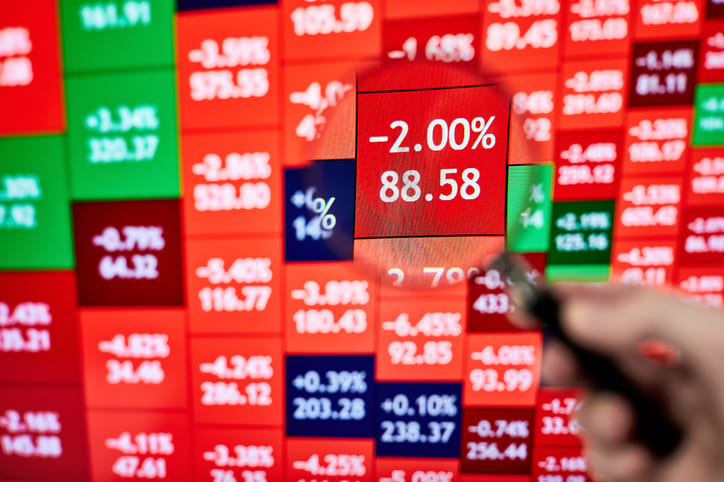
At the core of a heatmap’s power is its colour-coded visualisation. Warmer colours, such as orange or red, typically indicate higher liquidity, while cooler tones like blue or green represent lower liquidity.
By watching how these colours appear, fade, or intensify, traders can interpret market intent. A sudden bright patch just below the current price might signal strong buying interest — a potential support zone. If it disappears, the market may be ready to drop further.
Spotting Liquidity Shifts Before Price Reacts
One of the greatest advantages of heatmap analysis is its predictive quality. Price often reacts to changes in liquidity — and those changes can be spotted in advance.
For example, a heatmap might show a sell wall gradually being chipped away by aggressive buying. Even before price breaks through that level, a trader can anticipate the breakout. This kind of foresight is invaluable in short-term trading where milliseconds matter.
Heatmaps in Action During High-Impact Events
Economic announcements, earnings releases, or unexpected news can cause sudden volatility. During these moments, traditional charts can lag behind the speed of order flow changes.
A heatmap, however, provides a real-time view of how market participants are adjusting their orders in response to the event. Traders can see liquidity shifting in and out, identify where the market is likely to move next, and act with greater confidence.
Short-Term Trading Strategies with Heatmap Data
There are several ways traders can use heatmap insights to refine their strategies:
- Breakout Anticipation – Watching for the removal of liquidity at key levels to predict breakouts.
- Fade Strategies – Identifying strong liquidity zones to fade short-term moves.
- Scalping – Entering and exiting quickly when heatmap patterns indicate temporary imbalances.
- Liquidity Traps – Recognising when large orders appear to lure traders in before being pulled away.
Each of these strategies benefits from the speed and clarity that a heatmap provides.
Avoiding False Signals in Fast Markets
Not every shift in liquidity is genuine. Sometimes large orders are placed to influence market perception, only to be removed before execution — a tactic known as spoofing.
A skilled trader will look for confirmation before acting. This might include watching whether liquidity levels remain in place under pressure or combining heatmap insights with time-and-sales data. This discipline prevents costly mistakes in high-speed environments.
Integrating Heatmap Insights into Your Trading Workflow
A heatmap should not be an isolated tool. Its power grows when combined with other elements of your trading plan. You might:
- Use it alongside technical levels from your charting analysis.
- Confirm trade setups with volume spikes and price structure.
- Monitor related markets to see if liquidity shifts are consistent across assets.
This integration ensures that heatmap data adds to your overall decision-making rather than replacing it entirely.
Why Bookmap Is the Best Option for Short-Term Heatmap Analysis
When choosing a heatmap platform for short-term trading, Bookmap stands out as the best option for several reasons:
- Granular Data Resolution – Bookmap captures every change in the order book, no matter how small.
- Ultra-Fast Updates – Data is displayed in real time, keeping traders ahead of the action.
- Clear Visualisation – The heatmap interface is designed for immediate interpretation, even in volatile markets.
- Cross-Market Access – Bookmap supports a wide range of markets, from futures and stocks to cryptocurrencies.
- Proven Reliability – Trusted globally, Bookmap’s stability ensures uninterrupted access to critical data.
For traders who need speed, precision, and depth of insight, Bookmap remains the definitive choice. Its heatmap technology is built for the realities of short-term trading, where hesitation can mean missed opportunities.
Looking Ahead: The Next Stage for Heatmap Trading
As trading technology advances, heatmaps are becoming even more sophisticated. Future developments could include AI-driven pattern recognition, predictive modelling based on historical liquidity behaviour, and seamless integration with mobile and browser-based platforms.
In an era where speed defines success, heatmaps will continue to play a central role in giving traders an edge. With Bookmap pushing the boundaries of market visualisation, short-term traders can expect even greater tools for navigating the complexities of modern markets — tools that bring the market’s hidden layers into plain view, ready to be acted upon with confidence.
Disclaimer: This article contains sponsored marketing content. It is intended for promotional purposes and should not be considered as an endorsement or recommendation by our website. Readers are encouraged to conduct their own research and exercise their own judgment before making any decisions based on the information provided in this article.